
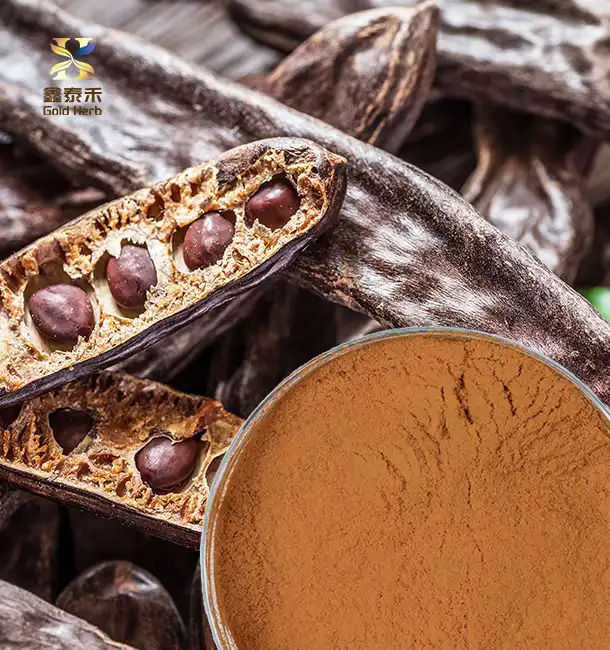
Carob Extract
Plant Part:Fruit Pod
Appearance:Brown to Dark Brown Powder
Extract Ratio:10:1 / 20:1 / Customized
Particle Size:95% Pass 80 Mesh
Test Methods:HPLC / UV-Vis, As Applicable
Shelf Life:24 Months, Subject to Stability Verification
Packaging:1 kg Foil Bag / 25 kg Fiber Drum

- Free Samples
- Quality Assurance
- 24/7 Customer Service
Product Introduction
Carob extract powder is derived from the pods of the carob tree (Ceratonia siliqua L.), a member of the legume family native to the Mediterranean region. The pods undergo a process of extraction, filtration, concentration, and drying to produce a brown powder.
Carob pods naturally contain polyphenols, tannins, carbohydrates, and dietary fiber. The specific composition may vary depending on the origin, maturity, and processing methods used.
Gold Herb offers carob extract powder; specific product grades and batch-specific technical specifications can be confirmed prior to placing an order.
Request COA | Request Sample | Get Bulk Quote
Product Specifications
| Product Name | Carob Extract Powder |
| Botanical Name | Ceratonia siliqua L. |
| Family | Fabaceae |
| Plant Part | Fruit Pod |
| Appearance | Brown to Dark Brown Powder |
| Extract Ratio | 10:1 / 20:1 / Customized |
| Particle Size | 95% Pass 80 Mesh |
| Test Methods | HPLC / UV-Vis, As Applicable |
| Shelf Life | 24 Months, Subject to Stability Verification |
| Packaging | 1 kg Foil Bag / 25 kg Fiber Drum |
Final specifications are confirmed against the selected grade and batch COA.
Botanical Source and Composition
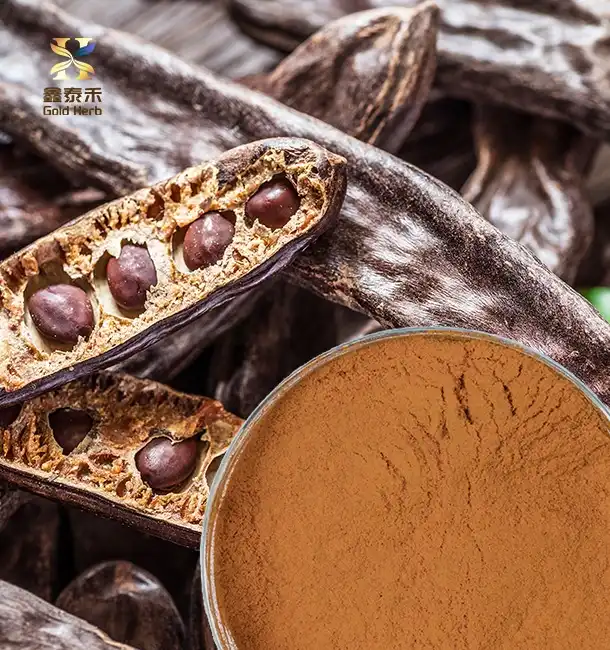
Carob Extract Powder is obtained from the fruit pods of Ceratonia siliqua L. The pod pulp contains phenolic compounds, tannins, natural sugars, and dietary fiber. Reported phenolics include gallic acid and catechin.
The finished powder composition depends on raw material maturity and extraction conditions. Product specifications should clearly identify the source material, particularly whether the ingredient is made from whole pods, pulp, or seeds, as these represent different Carob ingredients.
Applications
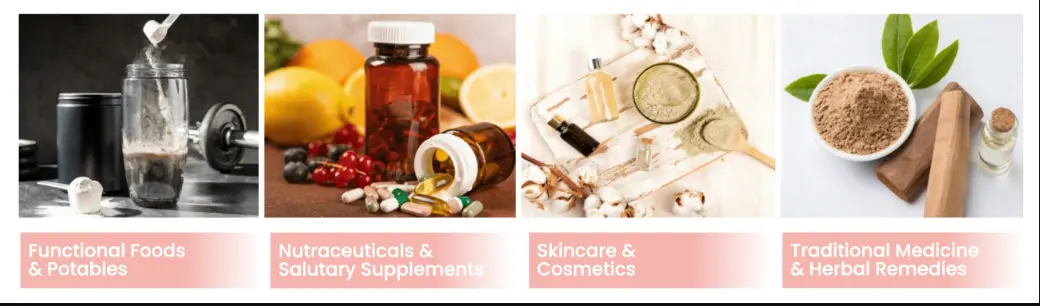
Dietary Supplements
Used in capsules, tablets, and botanical blends. Key selection criteria include polyphenol content, moisture, residual sugars, and particle size.
Food and Beverages
Considered for dry mixes and selected food formulations. Color, taste, solubility, and carbohydrate content should be assessed during product development.
Cosmetics and Personal Care
Used as a plant-derived ingredient in personal care formulations. Raw material origin, extract characteristics, color, odor, and compatibility with the finished formula determine its suitability.
Packaging and Storage
| Small Package | 1 kg Aluminum Foil Bag |
| Bulk Package | 25 kg Fiber Drum |
| Shelf Life | 24 Months |
| Storage | Cool and Dry Conditions |
Keep the package sealed after opening. Avoid moisture, direct sunlight, and prolonged exposure to unsuitable storage conditions.

About Gold Herb
Gold Herb handles botanical extract sourcing, product specification review, quality inspection, and batch documentation for international ingredient buyers.
For Carob Extract Powder inquiries, please provide the required extract ratio, target polyphenol specification, and estimated quantity.
Email: info@newgoldherb.com
Frequently Asked Questions
1. What is the botanical name of Carob?
The botanical name is Ceratonia siliqua L., from the Fabaceae family.
2. Is Carob Extract made from the fruit or the seeds?
This grade is made from carob fruit pods. Seed-derived products are classified separately.
3. How does Carob Extract differ from Locust Bean Gum?
The main difference is the plant part and composition. Carob Extract comes from the fruit pods, while Locust Bean Gum is produced from the seed endosperm and consists mainly of galactomannan.
4. Does Carob Extract contain natural sugars?
Yes. Carob pods naturally contain sucrose, glucose, and fructose. Residual levels in the finished extract depend on processing.
5. Which phenolic compounds can be found in Carob Extract?
Gallic acid and catechin are among the reported phenolic constituents. Their concentrations are not fixed and require analytical confirmation.
6. Does a 10:1 extract guarantee a specific polyphenol content?
No. The extract ratio describes the raw material-to-extract relationship, not the concentration of polyphenols. These values must be specified separately.
7. How can total polyphenols and individual compounds be tested?
The Folin-Ciocalteu assay is commonly used for total polyphenol content. HPLC is used when individual compounds, such as gallic acid, need to be quantified.
8. Can Carob Extract be supplied with a gallic acid specification?
A gallic acid-standardized grade can be discussed based on the required content, production feasibility, and agreed HPLC method.
9. Will Carob Extract dissolve completely in water?
Not all carob extracts have the same solubility. The result depends on the extract composition and processing conditions, so the intended application should be tested with a sample.
10. What is the standard particle size?
The standard specification is 95% passing 80 mesh. Finer or coarser grades can be discussed according to the application.
Send Inquiry
You may like