Food Grade Vitamin B
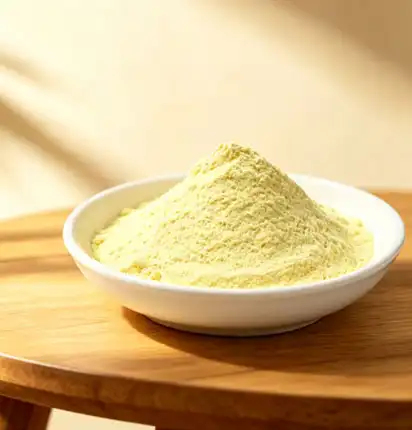
Appearance: Yellow to light yellow free-flowing powder
Grade: Food Grade / Nutraceutical Grade
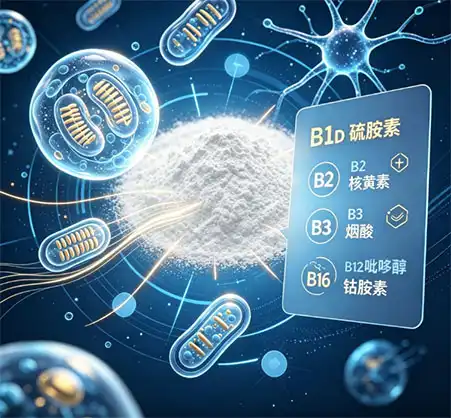
Active Ingredients: Vitamin B1, Vitamin B2, Vitamin B3, Vitamin B5, Vitamin B6, Vitamin B7, Vitamin B9, Vitamin B12
Assay: Customized according to formulation
Solubility: Water soluble
Storage: Store in a cool, dry place away from light and moisture
Shelf Life: 24 Months
Packaging: 1 kg Aluminum Foil Bag; 5 kg Bag; 25 kg Fiber Drum

- Free Samples
- Quality Assurance
- 24/7 Customer Service
Product Introduction
Food Grade Vitamin B Ingredients Supplier | Bulk B2B Raw Materials
Gold Herb supplies food-grade Vitamin B ingredients for dietary supplement manufacturers, food and beverage companies, nutrition brands, and ingredient distributors.
The Vitamin B category includes several individual nutrients, each with its own chemical form, specification, assay, and formulation considerations. Buyers can source a specific B vitamin for a targeted formula or select several B vitamins for a broader nutritional product.
For supplier evaluation and formulation development, Gold Herb can provide product specifications, samples, COA documents, and technical information. Bulk supply is available according to the confirmed product specification and order requirements.
Vitamin B Ingredients Available
Vitamin B is a group of individual vitamins rather than a single raw material. Commonly sourced ingredients include:
| Vitamin | Common Ingredient Name | Typical B2B Use |
|---|---|---|
| Vitamin B1 | Thiamine | Vitamin and nutritional formulas |
| Vitamin B2 | Riboflavin | Multivitamins and fortified products |
| Vitamin B3 | Niacin / Nicotinamide | Nutritional and food formulations |
| Vitamin B5 | Pantothenic Acid | Vitamin blends and premixes |
| Vitamin B6 | Pyridoxine | Supplement and multivitamin formulas |
| Vitamin B7 | Biotin | Low-dose vitamin formulations |
| Vitamin B9 | Folic Acid / Folate | Supplements and food fortification |
| Vitamin B12 | Cobalamin | Low-dose nutritional products |
The available form and specification depend on the individual ingredient. Buyers should identify the exact Vitamin B material required before requesting a commercial quotation.

Food Grade Vitamin B Raw Material Specifications
Because the Vitamin B category contains different substances, specifications are confirmed separately for each product.
| Parameter | General Information |
|---|---|
| Product Category | Vitamin B Ingredients |
| Grade | Food Grade |
| Form | Powder |
| Product Type | Individual Vitamin B Ingredients |
| Assay | Product-specific |
| Analytical Method | HPLC or applicable method |
| Appearance | Product-specific |
| Packaging | Foil Bag / Fiber Drum |
| Sample | Available upon request |
| COA | Available for applicable products |
| Shelf Life | Based on individual product specification |
The final specification should always be reviewed against the selected Vitamin B ingredient and its corresponding COA.
Vitamin B Is a Category, Not One Standardized Ingredient
For raw-material purchasing, the distinction between the individual B vitamins matters.
Vitamin B1 is not interchangeable with Vitamin B2, B6, or B12, and their commercial specifications cannot simply be grouped under one generic standard.
The same applies to Vitamin B Complex. A complex product contains multiple B vitamins, while an individual Vitamin B ingredient gives the manufacturer independent control over the amount of each component.
This distinction is useful when preparing a purchasing specification, comparing supplier quotations, or qualifying a new raw material.

Choosing a Vitamin B Ingredient for a Formula
The ingredient name is only the starting point. A formulation team should normally confirm several additional parameters.
Chemical Form
Identify the exact form required for the finished product. The selected form should be compatible with the formulation and the regulatory requirements of the target market.
Assay
The active-content specification determines the amount of raw material required during formulation. A clearly defined assay also makes supplier-to-supplier comparison easier.
Physical Characteristics
Powder properties can affect weighing, blending, dispersion, and manufacturing consistency. These factors become particularly relevant when a Vitamin B ingredient is used at a relatively low inclusion level.
Processing Conditions
Manufacturers should consider the conditions experienced by the ingredient during production, including heat, moisture, pH, light exposure, and processing time where relevant.
Finished Product
Requirements may differ between tablets, capsules, powdered nutrition products, fortified foods, beverages, and premixes. The intended format should therefore be stated when requesting a specification.

Vitamin B Applications
Food-grade Vitamin B ingredients can be incorporated into a range of commercial products.
Multivitamins
Several B vitamins can be combined with other vitamins and minerals in comprehensive nutritional formulas.
Single-Vitamin Products
When a product is built around one particular vitamin, sourcing an individual B vitamin allows the manufacturer to control its inclusion level directly.
Capsules and Tablets
Individual Vitamin B ingredients can be incorporated into solid-dose supplement formulations, subject to the characteristics of the selected material.
Powdered Nutrition Products
Vitamin B ingredients may be blended with minerals, botanical ingredients, amino acids, or other nutritional raw materials for powdered formulas and sachets.
Fortified Foods
Applicable Vitamin B ingredients can be used in food fortification where permitted by the regulations governing the target market.
Beverage Premixes
Selected Vitamin B materials may be suitable for powdered or liquid beverage systems. Before production, formulators should evaluate the ingredient's behavior under the actual processing and storage conditions.
Vitamin Premixes
Manufacturers can combine several B vitamins with other micronutrients to create premixes for downstream production.

Individual Vitamin B vs. Vitamin B Complex
The two purchasing approaches serve different formulation needs.
| Requirement | Individual B Vitamin | Vitamin B Complex / Premix |
|---|---|---|
| Control of each vitamin | High | Depends on preset composition |
| Formula flexibility | High | More limited |
| Handling multiple ingredients | More involved | Simplified |
| Suitable for custom formulas | Yes | Depends on composition |
| Suitable for standardized blends | Yes | Yes |
For a formula with specific levels for each vitamin, individual ingredients may offer greater control. When convenience and a predefined combination are more important, a suitable premix can reduce the number of separate raw materials handled during production.
Quality Documentation for Supplier Qualification
A commercial Vitamin B ingredient should be supported by documentation that allows the buyer to compare the material with its internal specification.
Depending on the selected product and project requirements, documentation may include:
- Certificate of Analysis (COA)
- Product specification
- Batch information
- Assay results
- Relevant physical and chemical parameters
- Microbiological information where applicable
- Heavy metal information where applicable
- Additional technical documentation when required
The exact documentation package is product-specific. Buyers can state their qualification requirements when making an inquiry.
Sample Evaluation
A sample provides an opportunity to assess the raw material before moving to regular procurement.
For a new Vitamin B project, the evaluation process may include:
Specification review → sample request → laboratory evaluation → formulation testing → supplier approval → commercial order
The scope of testing can be determined by the buyer's internal quality procedure and the requirements of the finished product.
Bulk Vitamin B Supply
Commercial orders can be arranged after the required ingredient and specification have been confirmed.
Packaging is selected according to the product and purchasing volume. Common options include sealed foil bags for smaller quantities and fiber drums for larger commercial orders.
For recurring procurement, buyers can provide their expected annual or regular purchasing volume so that the supply requirement can be evaluated more accurately.

Information to Include in a Vitamin B RFQ
A detailed inquiry helps avoid unnecessary back-and-forth during supplier qualification.
Please provide:
- Vitamin: B1, B2, B3, B5, B6, B7, B9, B12, or another specified material
- Chemical form: required form where applicable
- Assay: target specification
- Application: supplement, food, beverage, or premix
- Quantity: sample, trial order, or bulk volume
- Destination: target country or market
- Packaging: preferred format if applicable
- Documentation: COA, specification, or other required documents
Gold Herb can review the inquiry against the appropriate Vitamin B raw material instead of treating the request as a generic “Vitamin B” product.

Frequently Asked Questions
What are the main Vitamin B ingredients?
The commonly recognized B vitamins include B1, B2, B3, B5, B6, B7, B9, and B12. Each is a separate nutritional ingredient.
Is Vitamin B Complex the same as Vitamin B?
No. Vitamin B is the name used for a group of vitamins, while Vitamin B Complex generally refers to a product containing several B vitamins.
Can I buy Vitamin B1, B2, B6, or B12 separately?
Yes. Individual B vitamins can be sourced when the formulation requires independent control of each ingredient.
Are food-grade Vitamin B materials suitable for supplements?
Food-grade materials may be used in applicable supplement formulations, provided that the selected ingredient and finished product comply with the requirements of the target market.
Can Vitamin B ingredients be used in beverages?
Some Vitamin B materials can be incorporated into beverage formulations. Suitability should be assessed against the specific ingredient, beverage system, processing conditions, and regulatory requirements.
Can I request a sample?
Yes. Samples can be arranged for formulation testing and supplier qualification.
Do you provide a COA?
COA documentation is available for applicable products and batches.
What is the typical packaging?
Packaging depends on the product and order quantity. Foil bags and fiber drums are common options for B2B ingredient supply.
What is the shelf life?
Shelf life varies by individual Vitamin B ingredient. The applicable product specification should be used to confirm the shelf-life period and storage requirements.
How can I get a bulk quotation?
Send the exact Vitamin B ingredient, required specification, estimated quantity, application, destination market, and documentation requirements to Gold Herb.
Request Food Grade Vitamin B Samples or Bulk Quote
If you are looking for a Vitamin B ingredients supplier for supplement, food, beverage, or premix production, contact Gold Herb with your target specification and purchasing volume.
We can support:
- Product specification review
- Sample evaluation
- COA documentation
- Technical information
- Bulk packaging
- Commercial quotation
Email: info@newgoldherb.com
For faster quotation, please include the exact Vitamin B ingredient, assay requirement, estimated quantity, application, and destination market in your inquiry.
Send Inquiry