
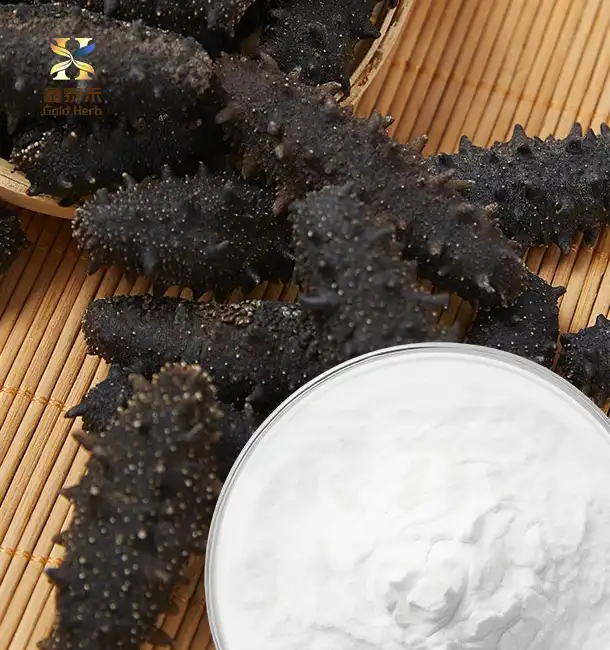
Sea Cucumber Egg Peptides
Product Type:Marine Protein Hydrolysate
Processing Method:Protein Hydrolysis
Appearance:Powder
Shelf Life: 24 months (under recommended storage conditions).
Packaging:1 kg aluminum foil bag、 25 kg fiber drum Food-grade inner PE bags

- Free Samples
- Quality Assurance
- 24/7 Customer Service
Product Introduction
Sea cucumber egg peptide is produced through the protein hydrolysis of sea cucumber eggs. The final product is a powder containing peptide components and amino acids.
Gold Herb offers sea cucumber egg peptide to manufacturers of dietary supplements and functional foods who are seeking peptide ingredients of marine origin.
Request COA | Request Sample | Get Bulk Quote
Product Specifications
| Product Name | Sea Cucumber Egg Peptides |
| Raw Material | Sea Cucumber Eggs |
| Product Type | Marine Protein Hydrolysate |
| Processing Method | Protein Hydrolysis |
| Appearance | Powder |
| Shelf Life | 24 months (under recommended storage conditions) |
| Packaging | 1 kg aluminum foil bag、 25 kg fiber drum Food-grade inner PE bags |
Please refer to the current product specification and batch COA for actual values.
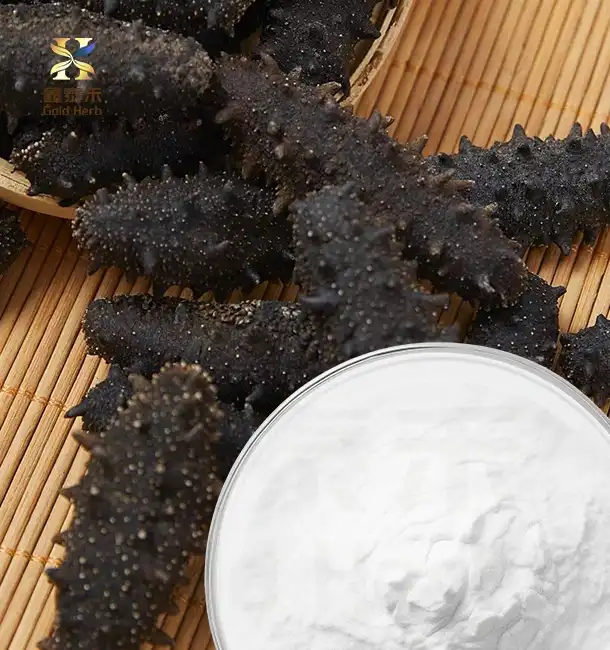
Raw Materials, Processing, and Transportation
Raw Materials
Sea Cucumber Egg Peptides are produced from sea cucumber eggs. Raw material checks focus on species, origin, freshness, and incoming quality.
Processing
The raw material is cleaned and prepared before protein hydrolysis. The hydrolysate is then filtered, concentrated, and dried into powder. Enzyme selection and processing conditions influence the peptide composition and molecular weight distribution.
Packaging and Transportation
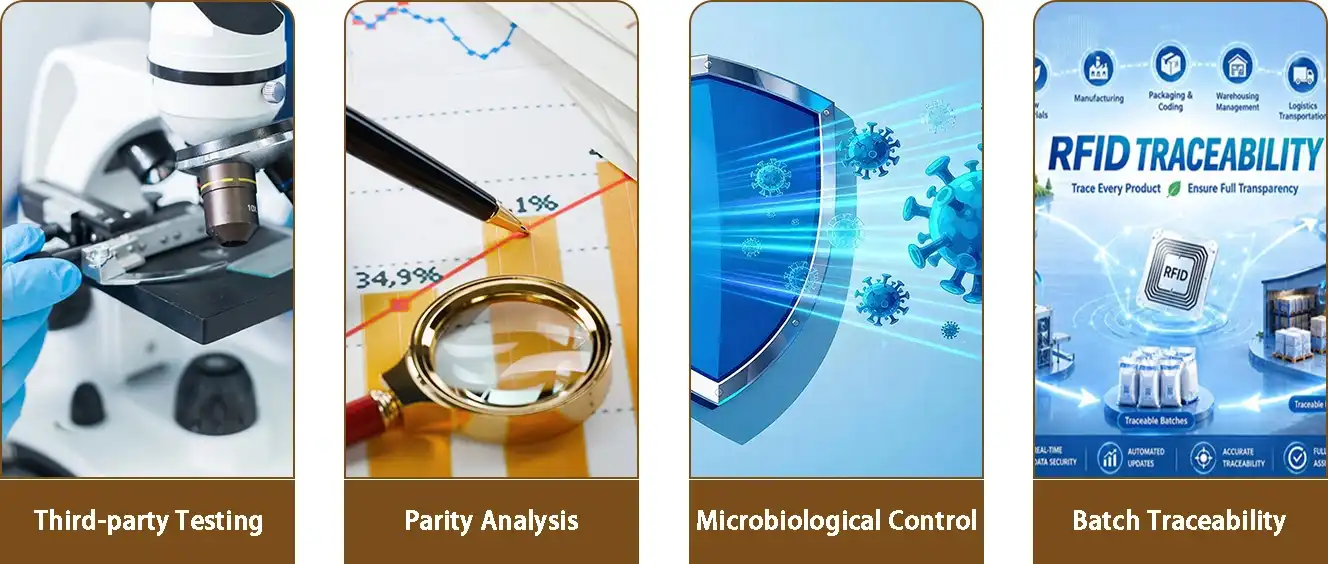
Packaging is selected according to product requirements and order specifications to protect the powder during storage and transit. Shipment arrangements consider order quantity, destination, and applicable transport requirements. Batch documentation, including the COA, is prepared according to the order.
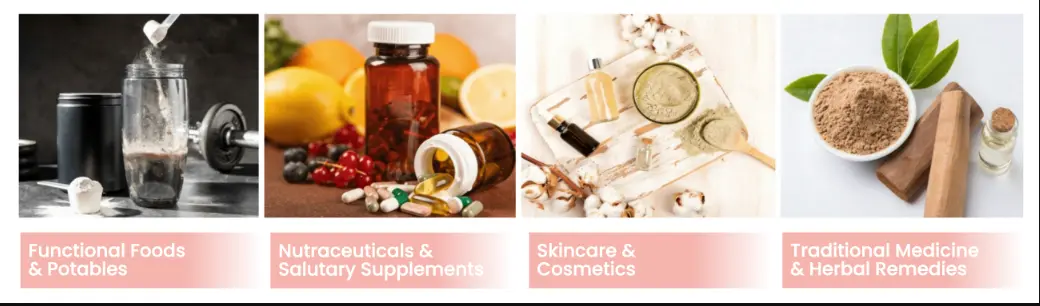
Applications
Dietary Supplements
Sea Cucumber Egg Peptides can be incorporated into marine protein powders, peptide blends, and other dietary supplement formulations. Peptide composition, protein content, and solubility are key factors in ingredient selection.
Functional Foods
Used in functional food formulations featuring marine-derived proteins and hydrolyzed peptides. Taste, dispersibility, and processing stability should be evaluated to meet specific product requirements.
Marine Peptide Blends
Sea Cucumber Egg Peptides can be combined with other marine protein hydrolysates in blended ingredient formulations. Peptide profile, specification consistency, and compatibility with other ingredients are important considerations during development.
Sea Cucumber Egg Peptides vs. Conventional Sea Cucumber Peptides
| Feature | Egg Peptides | Conventional Sea Cucumber Peptides |
|---|---|---|
| Raw Material | Sea cucumber eggs | Commonly sea cucumber body wall |
| Protein Source | Egg proteins | Body wall proteins |
| Processing | Protein hydrolysis | Protein hydrolysis |
| Composition | Egg-derived peptides | Body wall-derived peptides |
The distinction starts with the raw material. The two ingredients should be identified and evaluated separately rather than assigned the same composition profile.
About Gold Herb
Gold Herb supplies botanical extracts, nutraceutical raw materials, and functional ingredients to global B2B customers.
We handle raw material sourcing, quality inspection, specification review, and batch documentation to meet product and purchasing requirements.
Request COA | Request Sample | Get Bulk Quote
Frequently Asked Questions
1. What are Sea Cucumber Egg Peptides?
Marine peptides produced through the hydrolysis of sea cucumber egg proteins.
2. What is the raw material?
Sea cucumber eggs (ova). The source species should be identified in the product specifications.
3. How are they produced?
Through enzymatic hydrolysis, filtration, concentration, and drying.
4. How do egg peptides differ from regular sea cucumber peptides?
Egg peptides come from sea cucumber eggs, while conventional peptides typically come from body wall tissue.
5. What affects molecular weight?
Enzyme type, hydrolysis conditions, and separation techniques.
6. How is peptide content measured?
Using a specified analytical method, which should be stated in the test report.
7. Are peptide content and protein content the same?
No. They are different measurements and should be reported separately.
8. How is molecular weight distribution analyzed?
SEC or GPC analysis is used to determine peptide molecular weight profiles.
9. What are the main applications?
Dietary supplements, functional foods, and marine peptide formulations.
10. Are samples and COA available?
Contact Gold Herb for sample arrangements and batch-specific COA.
11. What information is needed for a quotation?
Peptide content, molecular weight range, order quantity, and packaging requirements.
Contact Gold Herb
For Sea Cucumber Egg Peptides product details, COA, samples, and bulk orders, contact Gold Herb.
Email: info@newgoldherb.com
Send Inquiry
You may like