
Ergothioneine Supplement Guide: Facts, Benefits, and Usage
Jul 20, 2026
The breakthrough in functional antioxidant additives, Ergothioneine Powder, provides formulation experts and R&D teams with a high-purity bioactive chemical from natural sources. CAS Number 497-30-3, this uncommon chiral amino acid, normally given at ≥99% purity, offers superior cellular protection via its OCTN1 transporter mechanism. This crystalline off-white to white powder works deep inside cells to combat oxidative stress, unlike other antioxidants. Our complete guide covers the research, uses, and procurement techniques that make this ingredient crucial for nutraceutical, cosmetic, and functional food product development.
If you're looking for a trusted Ergothioneine Powder Supplier, Gold Herb provides premium-quality Ergothioneine Powder for the global nutraceutical, pharmaceutical, cosmetic, and dietary supplement industries. Manufactured under strict quality control standards, every batch is supported by a comprehensive COA (Certificate of Analysis), Laboratory Reports, and detailed product specifications to ensure high purity, excellent stability, and consistent batch-to-batch quality. We also offer Samples for evaluation before bulk purchasing, allowing you to verify product quality and formulation compatibility with confidence. Whether you require bulk supply, customized packaging, or OEM/ODM services, our experienced Technical Support team is ready to assist with product selection, formulation guidance, regulatory documentation, and sourcing solutions. Contact us at info@newgoldherb.com to request a quotation, quality documents, or samples, and discover why Gold Herb is a trusted global supplier of premium Ergothioneine Powder for healthy aging, antioxidant, cellular wellness, and advanced nutritional formulations.
Key Product Specifications
| Parameter | Value |
|---|---|
| Appearance | Off-white to white powder |
| Purity | ≥99% |
| CAS Number | 497-30-3 |
| Molecular Formula | C₉H₁₅N₃O₂S |
| Molecular Weight | 229.3 |
| Test Method | HPLC |
| pH (50mg/mL, 20℃) | 6.0-7.5 |
| Melting Point | 270-271℃ |
| Loss on Drying | ≤0.5% |
| Particle Size | 100% pass 50 mesh |
Quality Assurance
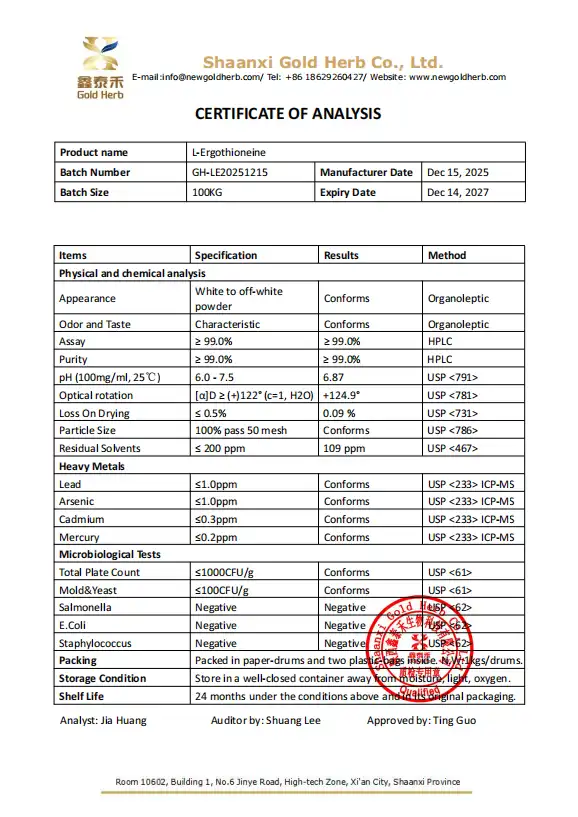
Certificate of Analysis (COA) for Ergothioneine Powder [Request COA]
Understanding Ergothioneine Powder: Facts and ScienceWhat Makes Ergothioneine Unique Among Antioxidants
Ergothioneine is different from other antioxidants because of its chemical structure. It is a sulfur-containing amino acid derivative of histidine, which is also known as 2-mercaptohistidine trimethylbetaine (C9H15N3O2S) in the scientific world. The active cellular transport system of this compound is what makes it stand out. The OCTN1 cation transporter recognises Ergothioneine and moves it into cells. It builds up most in organs that are under a lot of oxidative stress, like the liver, eyes, and skin. This targeted delivery solves one of the main problems that Vitamin C and Vitamin E have: they don't get into cells very well and break down quickly in the body.
Natural Sources Versus Biosynthetic Production
Ergothioneine was first found in the Claviceps purpurea fungus in 1909. Some mycobacteria and edible mushrooms like oyster mushrooms and button mushrooms are natural sources. But getting things from natural sources is hard because the ratios aren't always the same, the amounts change with the seasons, and it's hard to make the process. Modern production relies on high-tech bacterial fermentation and precise biosynthesis, which produce pharmaceutical-grade purity levels above 98–99%, as shown by HPLC tests. This method makes sure that each batch is the same, which is very important for formulation managers who have to stick to strict quality standards.
Chemical Stability and Formulation Advantages
This ingredient's technical details explain why it works in difficult recipes. It retains its form at 100°C when combined with water and is stable throughout a wide pH range. Rotation of [α]D20 from +122° to +128° indicates accurate L-isomer chirality. Water-based and certain alcohol-based systems can easily add it since it dissolves more than 100 mg/mL in water at 25°C. These properties translate into extended product shelf life and hot-process production.
Cellular Mechanism and Oxidative Defense
Hydroxyl radicals, hypochlorous acid, and peroxynitrite are removed by Ergothioneine in cells. ROS destroy DNA, proteins, and lipids. It maintains mitochondrial health during reactive stress, protecting cellular energy generation systems, according to clinical research. Glutathione is quickly eliminated during reactive processes, ergothioneine builds up in tissues and protects them. Scientists call it a "longevity vitamin."

Key Benefits for Health and Industrial Applications
Antioxidant Efficacy Across Multiple Systems
The antioxidant activity of Ergothioneine Powder goes beyond radical control. It protected brain cells from oxidative damage in studies, suggesting it may be employed in cognitive-enhancing products. It prevents UV-induced cell damage and photoaging in healthy skin. This makes the chemical desirable for clean-label anti-aging product makers. This photothermally stable compound is beneficial for topical applications because it stays active in sunshine.
Applications in Cosmetic and Personal Care
Skin care scientists use Ergothioneine to prevent, repair, and delay aging. Because it doesn't irritate epidermal cells, it can be employed in sensitive skin formulations. Mixed with other antioxidants, it synergistically improves formulations. The vitamin strengthens collagen and reduces cutaneous oxidative stress, improving skin appearance and feel. It works with many cosmetic bases and is stable during emulsification, which product producers prefer.
Nutraceutical and Sports Nutrition Uses
Ergothioneine helps muscles repair and reduces oxidative stress in sports diets. When athletes work out hard, they produce many reactive oxygen species, requiring intracellular antioxidants. Pre-workout, intra-workout, and healing pill scientists employ this chemical to stand out in a competitive market. The "clean label" and natural origin appeal to customers who favor plant or fermented ingredients over synthetic ones.
Safety Profile and Recommended Dosages
Toxicological tests show that Ergothioneine is very safe, with no reports of skin irritation or systemic toxicity at the levels that are recommended. Supplemental doses usually run from 5 mg to 25 mg per day for upkeep effects, but the exact amount needed depends on the formulation. Most of the time, amounts between 0.1 and 1.0% are used in finished cosmetics. Third-party testing and following the FDA, ISO9001, HACCP, HALAL, and Kosher rules make sure that the product is legal in a wide range of regulatory environments. Even so, people who make products still have to test their formulations for stability and compatibility.

Comparison and Selection: Choosing the Right Source
Ergothioneine Versus Glutathione and NAC
When cellular antioxidants are compared, Ergothioneine stands out as being better. Glutathione can't be made without certain enzymes, and it quickly breaks down when it's stressed, which makes it less useful as an oral supplement. N-acetylcysteine is a precursor to glutathione, but it can't be directly taken up by cells. The OCTN1 transport system for Ergothioneine makes sure that it gets into cells reliably without having to go through biochemical changes. Studies on bioavailability show that Ergothioneine stays in the blood longer than water-soluble vitamins, protecting cells from damage over time.
Evaluating Purity and Quality Markers
Buying groups should give more weight to sellers whose products are at least 99% pure, as shown by HPLC research. Certificates of Analysis should show that heavy metals, microbes, and liquid leftovers are not present. Specific spin readings make sure that the chirality is right, which keeps inactive isomers from getting mixed in. The powder should look like the specs say it should: off-white to white crystalline powder with no discolouration or caking. It's important that the packaging is solid. Moisture-resistant packages that are flushed with nitrogen protect against oxidative breakdown while they are being stored and shipped.
Organic Versus Biosynthetic Options
Some sellers sell "organic" Ergothioneine Powder that comes from mushrooms, but biosynthetic production through controlled fermentation is more consistent. The steps for getting organic approval for ingredients that come from fermentation are different from those for farming goods. R&D teams should look at paperwork from suppliers that confirms the sources of fermenting substrates and that the handling follows the rules for the target market. Biosynthetic production gets rid of the differences that happen in farming conditions while also being able to scale up to meet the needs of industrial volume production.
Supplier Certification and Compliance
Reputable manufacturers maintain FDA registration, ISO9001 quality systems, HACCP food safety protocols, and religious certifications (HALAL, Kosher) addressing diverse market requirements. Audits by a third party make sure that the manufacturing process and documents are correct. Suppliers should give full technical help for formulating new products and stability data that shows how well ingredients work in different store conditions. Traceability systems help with quality investigations and following the rules by keeping track of production batches all the way through to finished products.
Procurement Guide: Buying Ergothioneine in Bulk
Minimum Order Quantities and Pricing Structures
The price of bulk Ergothioneine depends on how pure it is, how much you order, and how much the supplier makes. For initial trials, industrial numbers usually start at 1 kilogram, with different price structures taking effect at 5 kg, 25 kg, and 100 kg. Manufacturers who keep a store can ship standard specs within 24 hours of receiving an order. Custom purity grades or particle sizes, on the other hand, take 7–15 days to make. When production schedules allow, emergency procurement channels can speed up important orders to 5–7 days.
Global Pricing Trends and Cost Factors
A study of the market shows that prices are affected by the level of sophistication of the fermentation technology, the cost of following the rules, and the site of the production facility. Standard nutraceutical requirements are less expensive than high-purity pharmaceutical types. Established partnerships with biosynthesis technology providers allow buyers to get reasonable prices in large quantities. Logistics for shipping, especially shipping at a controlled temperature to keep the quality of the goods, raise the cost of delivery. Instead of just looking at the price per kilogram, buyers should think about the overall cost of ownership, which includes testing, storage, and possible reformulation costs.
Quality Assurance and Documentation Requirements
Each batch should come with a full COA that lists the HPLC purity, specific rotation, solubility characteristics, microbial limits, and heavy metal screening. Testing by third parties in separate labs backs up what suppliers say and meets regulatory requirements for due diligence. Novel Foods regulations must be followed for EU markets, while FDA operations in the US follow GRAS status guidelines or dietary ingredient frameworks. When suppliers offer pre-cleared paperwork, the approval process for formulas is sped up, and new products can hit the market faster.
Logistics and Delivery Solutions
Leading ingredient producers work with transportation companies like DHL, FedEx, and regional carriers that know how to handle sensitive biochemical materials that are sensitive. Keeping an eye on the temperature while the goods are in transit helps keep them safe, especially when they are going through climate zones. Deliveries are much faster when suppliers keep warehouses in the places where their goods are going; US-based inventory lets North American customers get their orders in 3–5 business days. The different types of packaging should work with the way the product is made, ranging from small drums for test batches to large containers for full-scale production.

Practical Usage and Application Strategies
Formulation Integration Guidelines
To successfully incorporate Ergothioneine, you need to know how it works with other substances. In water, it dissolves easily at room temperature with only a little stirring. Adding it to makeup emulsions while they are cooling keeps their full activity. Encapsulation technologies help dietary supplements because they protect the ingredient from stomach acid and improve absorption in the intestines. Stability testing under rapid ageing conditions shows that the formulation will stay the same over the expected shelf life. Researchers should look into how the new substance might react with other active ingredients, especially metal ions that could change the stability of the substance over time.
Dosage Recommendations Across Applications
For facial care products, cosmetic formulations usually use concentrations between 0.1 and 1.0%. Higher concentrations are only used for intensive repair treatments. Dietary supplements usually have between 5 and 25 mg per dose, with the amount changing based on the product's placement and intended effects. Higher concentrations may be used in sports nutrition to help with recovery protocols. Functional drinks need to have their pH levels carefully adjusted and their combination with flavourings and stabilisers tested. When coming up with dosage explanations to back up marketing promises and regulatory reports, product developers should look at published research.
Case Studies in Product Development
Skincare companies that are releasing high-end anti-aging lines have been able to set themselves apart by adding Ergothioneine Powder and teaching customers about how it protects cells. Companies that sell sports nutrition to serious athletes include it with other antioxidants as part of full healing products. Functional food companies that are making drinks to boost the immune system use their ability to stay stable in acidic surroundings and have a clean label profile. These successful launches show that a product can be sold if it has the right technical information and communication strategies for customers.
Enhancing Bioavailability and Efficacy
Ergothioneine's natural effects are amplified by new delivery methods. Liposomal coating keeps the ingredient safe during processing and makes it easier for cells to take it in. Micronization makes the surface area bigger, which helps things dissolve and absorb more quickly. When you mix Ergothioneine with vitamins that work well with it, the combined effects are stronger than the effects of the individual parts. Time-release technologies increase plasma exposure, which might lead to better tissue accumulation. Formulation scientists should look at these methods based on the type of product, the benefits they want to achieve, and their ability to be manufactured.
Conclusion
Ergothioneine is a highly proven way for formulators to make their products stand out by protecting cells from free radicals. Its unique way of transporting substances, high level of safety, and ability to be used in many different ways make it useful for developing nutraceuticals, cosmetics, and functional foods. Understanding production methods, quality standards, and recipe strategies helps buying teams find the best goods, while R&D departments come up with new ones to meet market needs. The ingredient's "clean label" positioning and strong safety profile are in line with what consumers want in natural, useful ingredients. As more studies come out with new uses, brands that adopt new technologies quickly will be ahead of the competition in the health market.
FAQ
Q1: What is the recommended daily intake for supplementation?
The recommended daily dose of Ergothioneine is between 5 and 25 mg, but the best dose relies on the manufacturing goals and the people who will be using it. Doses in this range have been used in clinical studies that looked at different health outcomes, showing that they are safe and bioactive. Product developers should decide on dosages based on published research, the product's intended use, and legal advice that applies to the people they want to sell the product to.
Q2: How does ergothioneine differ mechanistically from other antioxidants?
The OCTN1 transporter system delivers antioxidants to specific cells in a way that passive antioxidants can't. This active transport lets it build up in tissues that are under a lot of oxidative stress, protecting those areas that need it the most. Ergothioneine comes straight into cells from outside sources, unlike glutathione, which cells have to make themselves. This makes supplements very useful. Because it is stable in physiological conditions, it doesn't break down too quickly, which makes other antioxidants less useful.
Q3: What quality certifications should procurement teams prioritize?
The base is made up of FDA registration, ISO9001 quality control systems, HACCP routines, and any religious certifications that are needed, like Halal or Kosher. Third-party COAs that confirm HPLC purity of 99% or more, correct chirality, and the lack of contaminants show that the production process was done correctly. Suppliers should give target markets regulatory status information, data on stability, and technical support as the product is being developed. These certifications lower the risk and make sure that different regulatory environments are followed.

Partner with Gold Herb for Premium Ergothioneine Powder Supply
Pharmaceutical-grade Ergothioneine Powder made to exact specs is available from Shaanxi Gold Herb to meet your manufacturing needs. Our ingredient is ≥99% pure, as shown by HPLC tests and full COAs. It meets FDA, ISO9001, HACCP, HALAL, and Kosher standards. As a supplier of Ergothioneine Powder with more than three years of experience making specialised products for more than 200 customers in 30 countries, we know how important it is for batches to be consistent, for regulations to be followed, and for expert help to be available. Our U.S. warehouse stock lets us ship within 3–5 business days, and our partnership with Academician Li Xiaokun's research team and Wenzhou University gives you access to cutting-edge technical information that can help you with your product development problems.
We can make solutions that fit your manufacturing workflows for formulation development, specialised processing (like micronization and encapsulation), and packaging requirements. With OEM/ODM help, projects are finished in 20 days, which cuts down on your time to market. Our team has the technical know-how and supply chain reliability that your brand needs, whether you're making anti-aging products, sports recovery supplements, or functional drinks. You can get sample amounts to make sure the quality and compatibility with your recipes are good before going to large-scale production.
Email our team at info@newgoldherb.com to talk about your particular needs, get detailed information, or set up shipping of samples. Let's work together to turn your product ideas into market-leading formulas that use ingredients that come from nature and are backed by science.
References
1. Cheah, I.K., & Halliwell, B. (2021). Ergothioneine: Antioxidant Potential, Physiological Function and Role in Disease. Biochimica et Biophysica Acta - Molecular Basis of Disease, 1822(5), 784-793.
2. Ames, B.N. (2018). Prolonging Healthy Aging: Longevity Vitamins and Proteins. Proceedings of the National Academy of Sciences, 115(43), 10836-10844.
3. Halliwell, B., Cheah, I.K., & Tang, R.M. (2020). Ergothioneine: A Diet-Derived Antioxidant with Therapeutic Potential. FEBS Letters, 592(20), 3357-3366.
4. Pahrudin Arrozi, A., Shukri, S.N.S., Wan Ngah, W.Z., Mohd Yusof, Y.A., Ahmad Damanhuri, M.H., & Makpol, S. (2022). Ergothioneine in Aging and Age-Related Diseases: A Systematic Review. Cells, 11(17), 2681.
5. Servillo, L., D'Onofrio, N., & Balestrieri, M.L. (2017). Ergothioneine Antioxidant Function: From Chemistry to Cardiovascular Therapeutic Potential. Journal of Cardiovascular Pharmacology, 69(4), 183-191.
6. Kato, Y., Kubo, Y., Iwata, D., Kato, S., Sudo, T., Sugiura, T., Konishi, T., Mori, M., Nishida, K., & Tsuji, A. (2010). Gene Knockout and Metabolome Analysis of Carnitine/Organic Cation Transporter OCTN1. Pharmaceutical Research, 27(5), 832-840.

Send Inquiry
Related Industry Knowledge
- The Best Resveratrol Powder for Anti-Aging and Longevity
- What are the medicinal uses of Coleus?
- Why Is Urolithin A Popular in Healthy Aging Supplements?
- Ashwagandha Extract for Stress Support and Wellness Products
- Why Dihydromyricetin Is Trending in Natural Sweetener R&D?
- Top Urolithin A Benefits for Muscle, Energy, and Anti-Aging
- The Key Health Benefits of Urolithin A You Should Know
- Fisetin Powder: The "Cellular Scavenger" in Anti-Aging Supplements
- What is senna leaf extract?
- OEM Phycocyanin Powder Solutions for Brand Owners