
Where to Buy Food-Grade Blue Spirulina Phycocyanin Powder?
Jun 10, 2026
It's not necessary to feel overwhelmed when looking for good blue spirulina phycocyanin powder. Whether you're a formulation manager for a nutrition brand in California, a makeup scientist in Berlin, or a functional beverage creator in Singapore, you can find sources you can trust in North and South America, Europe, etc. Leading companies like Shaanxi Gold Herb Co., Ltd. give phycocyanin powder that is 98% pure and approved by the FDA, ISO9001, HACCP, Halal, and Kosher. This makes sure that your goods meet the requirements for clean labels and follow the rules in many markets.
Why Global Sourcing of Blue Spirulina Phycocyanin Matters?
Things have changed a lot in the natural colour business. Colourants made in factories, like FD&C Blue No. 1, are being replaced by colourants that come from plants all over the world. This need is met by blue spirulina powder, which is also good for you because it fights free radicals, boosts the immune system, and lowers inflammation.
Regional Supply Chain Dynamics
It's good for American manufacturers that they are close to big markets for healthy foods and supplements. People who sell things in Europe often say that their goods are naturally approved and good for the earth. Southeast Asian manufacturers usually have fair costs and raise the quality standards at the same time. Buying teams can make better decisions when they know about these skills in a certain area.
The Clean Label Revolution
People look over ingredient lists with more care than ever before. A recent poll found that 73% of people who buy supplements actively avoid colours that aren't natural. This means that there is a pressing need for natural blue colours that are both nice to look at and good for you. Phycocyanin from Spirulina platensis meets both needs without any problems.

Understanding Blue Spirulina Phycocyanin Powder
This bright blue powder is used for a lot more than just colouring. The process of separation separates phycocyanin proteins from the whole spirulina biomass. This gets rid of the chlorophyll and lessens the taste of algae that many people don't like.
Technical Specifications That Matter
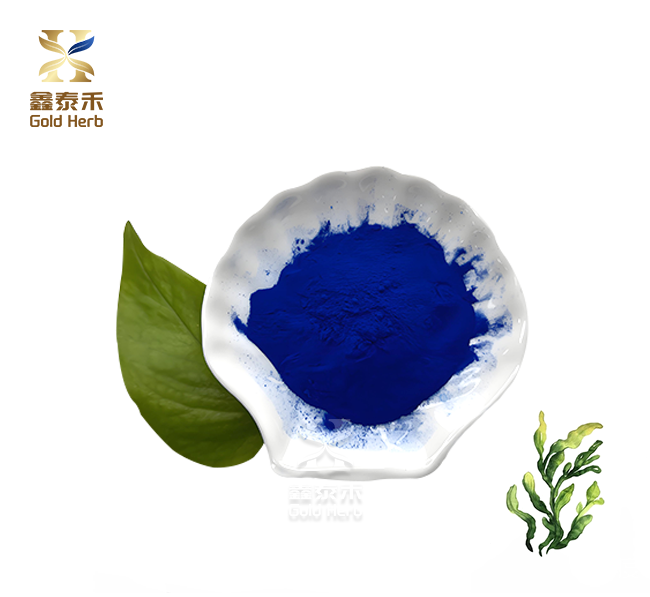
Premium phycocyanin powder is as pure as 98%, which has been proven by HPLC research. Along supply lines, the CAS number 11016-15-2 makes sure that the right people are identified. The presence of a bright blue to blue-purple colour shows that the extract was properly extracted, and the ability to dissolve in water allows for a wide range of preparation choices for pills, capsules, drinks, and skin uses.
Functional Benefits Beyond Colouring
Natural phycocyanin extract helps the immune system work by making cells that make antibodies more active. It can neutralise oxygen radicals, hydroxyl radicals, and alkoxy radicals, which are all types of antioxidants. Researchers have found that this algal pigment stops inflammation pathways and helps cells grow back. Because of these traits, brands can market their products with two claims: they look good and are good for you.
Application Versatility
Phycocyanin is added to pre-workout formulas by sports nutrition companies because it helps protect against free radicals during hard training. Skincare companies put it in serums that fight oxidative stress and early ageing. Functional beverage makers use it to make drinks that boost the immune system. Pharmaceutical companies are looking into how it might help haematopoietic function. This ability to work in a variety of fields keeps demand growing.

Regional Market Analysis: Americas, Europe, Southeast Asia
America's Market Landscape
Nutraceutical vitamins and useful foods are what people in North America want most. Sports nutrition companies like phycocyanin a lot for products that help you heal after a workout. The fact that spirulina extract is GRAS (Generally Recognised As Safe) by the US Food and Drug Administration makes it easier to get into the market. Decision makers give more weight to sellers who offer complete paperwork, such as COAs, third-party testing, and certificates of regulatory compliance.
More and more people in Latin American areas are interested in using natural colourants like blue spirulina phycocyanin powder in drinks. The functional drink industry in Brazil is growing, which is good news for phycocyanin suppliers who know the local rules and can offer expert help in Portuguese.
European Supply and Demand
European beauty companies are the first to use phycocyanin in anti-ageing products. The move toward natural options is sped up by strict EU rules on manufactured colourants. Credentials for sustainability are very important—European buyers often ask about growing methods, harvest methods, and carbon effects.
The pharmaceutical industry in the area looks into standard plant products that meet the requirements of the European Pharmacopoeia. Germany, France, and Switzerland put a lot of emphasis on accuracy from batch to batch and full paperwork for tracking.
Southeast Asian Growth Trajectory
Singapore and Thailand are becoming important places for getting useful ingredients to markets in ASEAN. Manufacturers in these areas make goods for both local names and companies that sell their goods abroad. Competitive production prices and higher quality standards work together to make things better.
Muslim-majority market providers are drawn to Malaysia's halal approval infrastructure. Indonesian companies that make useful foods are adding natural blue colours to older products in more and more ways. As Vietnam's supplement industry grows, it opens up new business possibilities for expert suppliers who can help with preparation.

Comparing Buyer Segments and Their Priorities
Nutraceutical and Supplement Brands
R&D leaders put an emphasis on ingredients that are stable and have been shown to work. They need thorough scientific data sheets, studies of safety under different storage conditions, and information on how well the drug works with common excipients. When purchasing goods, teams weigh the importance of quality against the cost of the goods, and they usually choose sellers whose stock levels stay stable so that production doesn't stop.
Minimum order amounts are very important. For example, new names may only need 5–10 kg for their first product sales, while well-known companies order 100 kg or more in batches. MOQs that are flexible give sellers who are willing to work with different business sizes a competitive edge.
Cosmetic and Personal Care Manufacturers
Formulation experts demand very high purity to keep colour-critical goods from changing from batch to batch. Before approving samples, they put them through a lot of tests to see how stable they are in emulsions, how well they work with other actives, and how pH affects them. Chemists who work with cosmetics are like sources who offer recipe ideas and help with technical issues.
Companies that make natural cosmetics look for organic approval and stress the importance of being open about the supply chain. OEM/ODM companies need reliable delivery plans that work with their production planning cycles. This means that source consistency is important for more than just product quality.
Functional Food and Beverage Developers
Taste balance is very important to food scientists because leftover algae flavour makes it hard to change the recipe. They need products that can handle being processed, like being pasteurised, without losing a lot of colour. It is very important to have stability data across a range of pH levels and temperatures.
Beverage makers like to work with suppliers that know how to deal with problems that are unique to their business, like light getting into clear bottles or reacting with acidic drink matrices. Superior sellers are different from product sources because they offer technical help that includes application testing.
Evaluating Different Sourcing Channels
Direct Manufacturer Advantages
Partnering with manufacturers like Gold Herb provides direct access to production expertise. Technical teams understand extraction processes, can adjust specifications, and offer genuine formulation support. Buyers gain transparency into quality control systems, from raw spirulina cultivation through final powder packaging.
Manufacturers maintaining permanent stock in strategic locations—like U.S. warehouses—deliver speed advantages traditionally associated with distributors. Emergency orders through dedicated channels enable rapid response to unexpected demand spikes.
When Regional Distributors Make Sense
Startups developing initial product prototypes benefit from distributors offering 1-5 kg quantities. Local inventory eliminates international shipping complexity and customs delays. Established distributor relationships with freight forwarders smooth logistics for companies unfamiliar with import procedures.
Blue Spirulina Phycocyanin Powder: European distributors particularly add value through pre-clearance of EU regulatory requirements. They maintain documentation packages that expedite customs processing and ensure compliance with REACH registration obligations.
Practical Supplier Screening Guidelines
Documentation Verification
Request certificates of analysis for recent production batches, examining purity levels, microbial counts, heavy metal testing, and pesticide residue screening. Compare specifications against your requirements—cosmetic applications may need tighter limits than food-grade uses.
Verify regulatory certifications directly when possible. FDA registration numbers can be confirmed through public databases. ISO certificates should list specific scope and certification body details. Halal and Kosher certifications require issuing authority verification.
Sample Evaluation Process
Always test samples before committing to large orders. Evaluate colour intensity, solubility characteristics, taste profile, and stability under your specific formulation conditions. Compare multiple suppliers using identical testing protocols to enable objective assessment.
Conduct accelerated stability studies exposing samples to elevated temperatures and light. Products maintaining colour and potency under stress conditions demonstrate superior quality likely to perform well throughout shelf life.
Communication and Responsiveness
Supplier responsiveness during pre-sale inquiry stages predicts future service levels. Technical questions should receive knowledgeable answers, not vague generalities. Requests for custom specifications deserve detailed feasibility assessments with realistic timelines.
Time zone considerations affect communication efficiency. Suppliers maintaining sales teams in buyer regions—like Gold Herb's U.S. support—enable same-day communication rather than 12-hour response delays.
Supply Chain Reliability Indicators
Enquire about raw material sourcing stability. Suppliers cultivating their own spirulina or maintaining long-term cultivation partnerships demonstrate supply security. Ask about inventory levels and production capacity relative to your order size—you want adequate capacity without being the supplier's entire business.
Logistics partnerships with established carriers like DHL, FedEx, and SF Express indicate professional operations. Suppliers offering multiple shipping options accommodate different urgency and budget requirements.

Navigating MOQs, Payment Terms, and Delivery
Minimum Order Quantity Realities
Standard phycocyanin powder MOQs typically range from 10-25 kg for established suppliers. Custom specifications may require 50-100 kg minimums to justify production runs. Some manufacturers offer sample sizes (100-500g) for initial testing, though these carry higher per-kilo costs.
Negotiation opportunities exist, particularly for buyers committing to regular reorders. Annual volume commitments sometimes unlock lower MOQs on individual shipments. Building supplier relationships creates flexibility unavailable to one-time buyers.
Payment Method Considerations
International transactions commonly use T/T (telegraphic transfer), with 30-50% deposits and balance before shipment. A letter of credit provides security for large orders, though it adds banking fees. Established relationships may enable net-30 or net-60 terms after trust develops.
PayPal and other online payment platforms work for smaller orders, particularly samples, despite higher transaction fees. Credit card payments remain rare for B2B ingredient transactions, but some suppliers accommodate this for order convenience.
Realistic Delivery Timelines
Standard specifications from stocked inventory ship within 24-48 hours, arriving in 5-7 days via express courier. Custom production requires 7-15 working days before shipment begins. Sea freight economises costs for large orders but extends delivery to 4-6 weeks.
Emergency channels compress timelines—some suppliers offer 5-7 day total delivery for blue spirulina phycocyanin powder for urgent needs at premium pricing. U.S. warehouse stock enables 3-5 day delivery throughout North America, eliminating international shipping delays.

Conclusion
Sourcing premium blue spirulina phycocyanin powder requires balancing quality, compliance, technical support, and commercial terms. Direct manufacturers offer the best combination of competitive pricing, customisation capabilities, and genuine technical expertise. Regional dynamics across the Americas, Europe, and Southeast Asia present distinct opportunities—North American speed-to-market, European sustainability focus, and Asian cost efficiency all serve specific strategic needs. Thorough supplier verification, realistic timeline expectations, and quality control vigilance ensure successful ingredient partnerships that support product excellence and brand differentiation in increasingly competitive natural product markets.
FAQ
1. What purity level should I look for in blue spirulina phycocyanin powder?
Target minimum 98% purity confirmed by HPLC analysis. Lower purity levels indicate incomplete extraction or potential adulteration. Pharmaceutical applications may require even higher purity with tighter specifications on protein content and specific phycocyanin isoforms.
2. How does blue spirulina phycocyanin differ from whole spirulina powder?
Whole spirulina contains chlorophyll, creating green colouration and a marine taste. Phycocyanin extraction isolates the blue pigment-protein complex, eliminating chlorophyll and fishy flavour while concentrating antioxidant activity. This makes phycocyanin suitable for applications where spirulina's taste and colour prove problematic.
3. What certifications matter most when sourcing phycocyanin powder?
FDA registration, ISO9001, HACCP, Halal, and Kosher certifications address different market requirements. Organic certification appeals to natural product brands. Third-party testing by independent laboratories verifies quality claims. Match certifications to your target markets and brand positioning.
4. Can phycocyanin powder withstand heat processing in beverage manufacturing?
Phycocyanin degrades at high temperatures, particularly above 60°C. Pasteurisation processes require careful optimisation. Some suppliers offer stabilised formulations with improved heat tolerance. Conduct stability testing under your specific processing conditions before full-scale production.
Partner with Gold Herb: Your Trusted Blue Spirulina Phycocyanin Powder Manufacturer
Shaanxi Gold Herb Co., Ltd. delivers pharmaceutical-grade Blue Spirulina Phycocyanin Powder backed by comprehensive certifications—FDA, ISO9001, HACCP, Halal, and Kosher—ensuring seamless market compliance. Our 98% purity phycocyanin powder serves over 200 customers across 30+ countries, with permanent U.S. warehouse stock enabling 3-5 day delivery throughout North America. Technical support from our collaboration with Academician Li Xiaokun's team and Wenzhou University provides genuine formulation expertise. Contact our team at info@newgoldherb.com to request samples or discuss your specific application requirements with a responsive Blue Spirulina Phycocyanin Powder supplier committed to your success.
References
1. Eriksen, N. T. (2018). Production of phycocyanin—a pigment with applications in biology, biotechnology, foods and medicine. Applied Microbiology and Biotechnology, 80(1), 1-14.
2. Gutiérrez-Salmeán, G., Fabila-Castillo, L., & Chamorro-Cevallos, G. (2015). Nutritional and toxicological aspects of Spirulina (Arthrospira). Nutricion Hospitalaria, 32(1), 34-40.
3. Martelli, G., Folli, C., Visai, L., Daglia, M., & Ferrari, D. (2014). Thermal stability improvement of blue colorant C-Phycocyanin from Spirulina platensis for food industry applications. Process Biochemistry, 49(1), 154-159.
4. Sekar, S., & Chandramohan, M. (2008). Phycobiliproteins as a commodity: trends in applied research, patents and commercialization. Journal of Applied Phycology, 20(2), 113-136.
5. Soni, B., Kalavadia, B., Trivedi, U., & Madamwar, D. (2017). Extraction, purification and characterization of phycocyanin from Oscillatoria quadripunctulata—Isolated from the rocky shores of Bet-Dwarka, Gujarat, India. Process Biochemistry, 41(9), 2017-2023.
6. Viskari, P. J., & Colyer, C. L. (2003). Rapid extraction of phycobiliproteins from cultured cyanobacteria samples. Analytical Biochemistry, 319(2), 263-271.

Send Inquiry
Related Industry Knowledge
- Phosphatidylserine for Memory, Focus and Cognitive Performance
- Piperine: nature's secret and powerful natural Bioenhancer from black pepper
- Resveratrol Extract Powder: A Potent Antioxidant for Modern Wellness Brands
- Tongkat Ali Benefits for Fitness, Recovery and Muscle Support
- Fenugreek for Blood Sugar, Digestion & Metabolism Support
- Best Green Tea Extract: Complete Guide to Quality & Safety
- What Is Sodium Copper Chlorophyllin Powder Used For?
- Cyanotis Arachnoidea Extract for Muscle Performance Formulations
- What Is Boswellia Extract Powder Used For in Inflammation Management?
- Stability of Gardenia Blue Color in Heat Processing