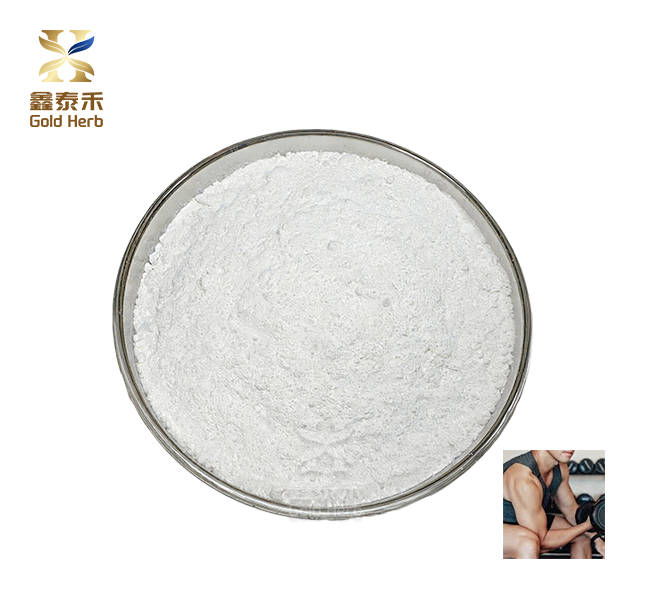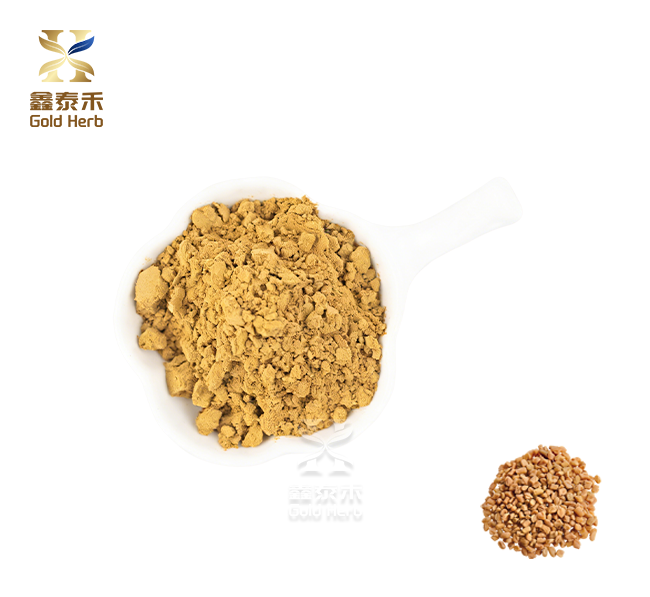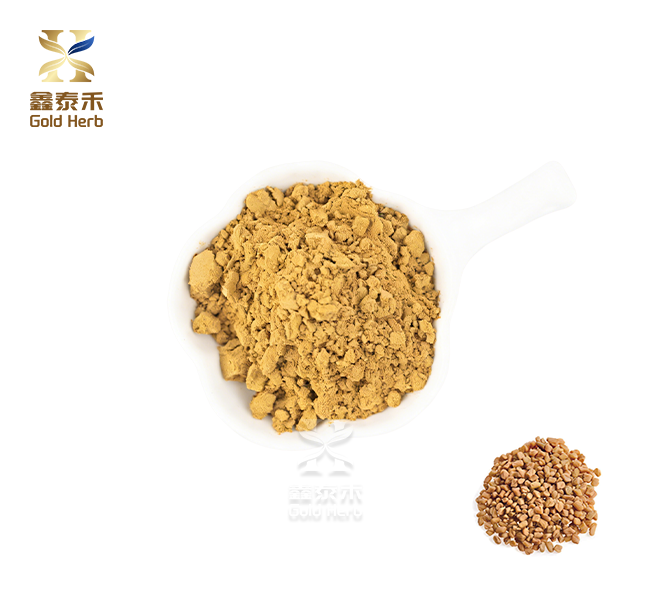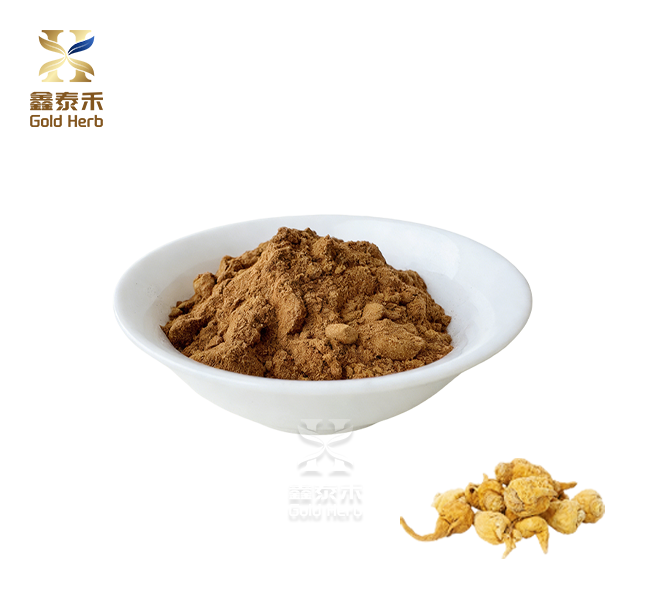
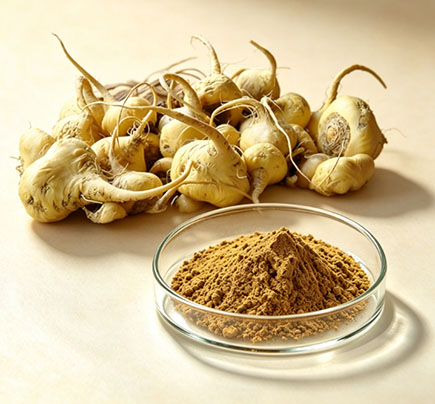
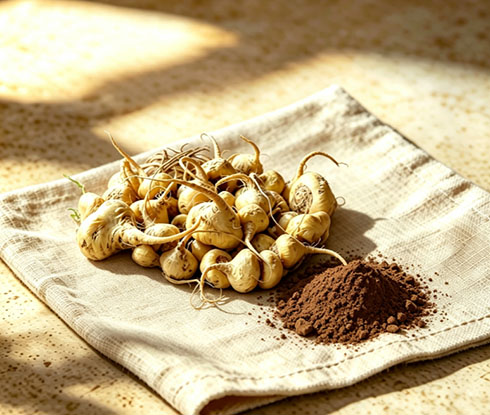
Maca Root Extract Powder
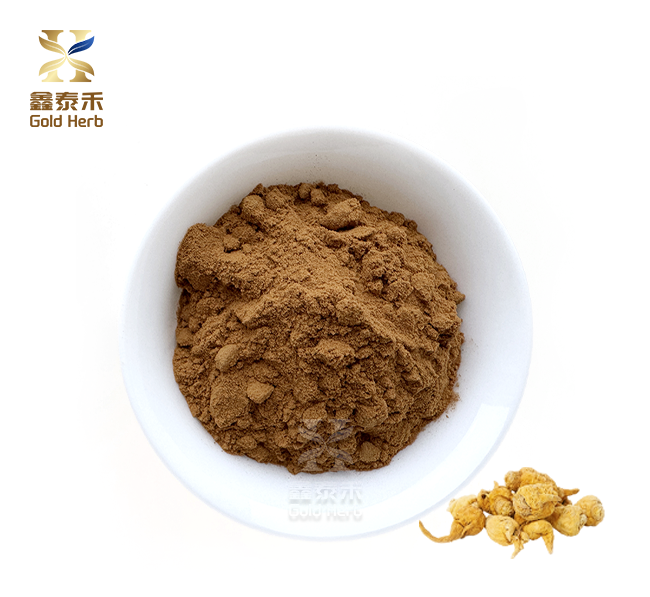
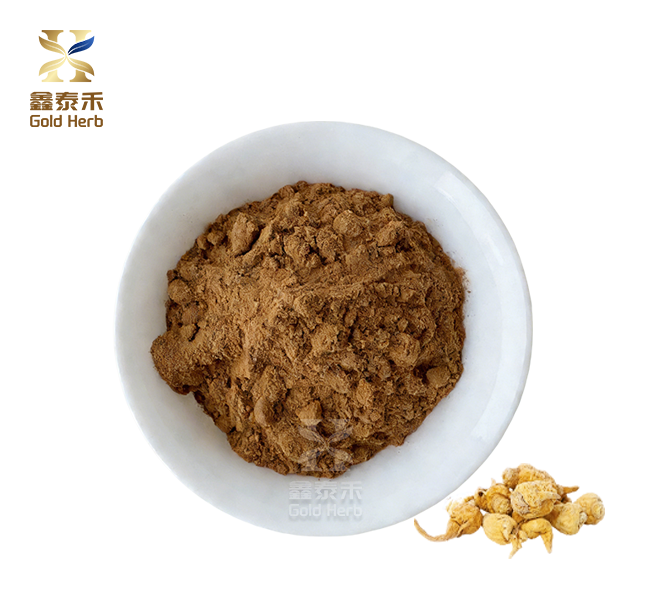
Appearance:Light yellow to brownish yellow fine powder
Mian ingredients: Macamide
CAS Number: 65-19-0
Test Method:HPLC
Sample: Provided
Customized service:Available
Storage: Store in tightly closed original container, protected from light
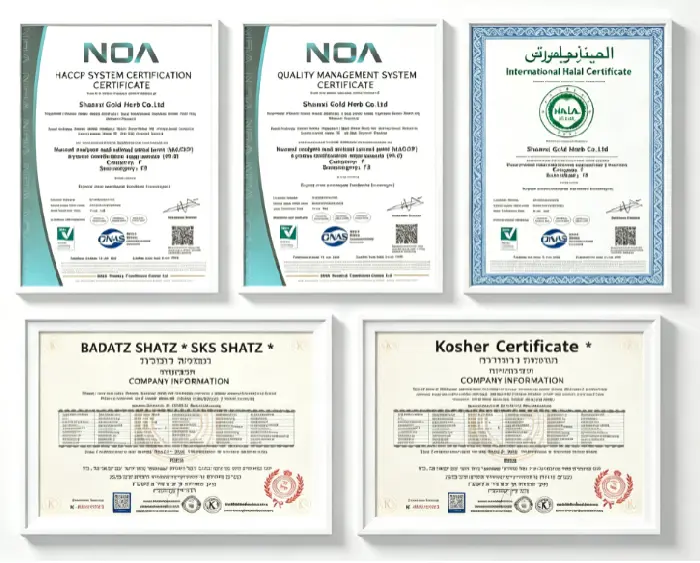
Certificate: FDA, ISO9001, HACCP, HALAL

- Free Samples
- Quality Assurance
- 24/7 Customer Service
Product Introduction
Lepidium meyenii Root Extract for Botanical Ingredient Applications
Gold Herb supplies Maca Root Extract Powder made from Lepidium meyenii Walp. for dietary supplements, nutraceuticals, functional foods and botanical formulations.
Maca is an Andean root from the Brassicaceae family. Its characteristic constituents include macamides, glucosinolates and macaenes.
Commercial maca extracts may differ in raw material, extraction conditions and marker content. A clear product specification is therefore important when selecting a material for repeat manufacturing.
Product Specifications
| Parameter | Specification |
|---|---|
| Product Name | Maca Root Extract Powder |
| Appearance | Light yellow to brownish yellow fine powder |
| Active Ingredient | Macamide ≥1% |
| CAS Number | 65-19-0 |
| Test Method | HPLC |
| Mesh Size | 100% pass 80 mesh |
| Loss on Drying | ≤5.0% |
| Total Ash | ≤5.0% |
| Lead (Pb) | ≤1.0ppm |
| Arsenic (As) | ≤1.0ppm |
| Shelf Life | 24 months |
| Storage | Cool, dry place, protected from light |
Final specifications and batch results should be confirmed against the current product specification and COA.
What Is Maca Root Extract?
Maca, botanically identified as Lepidium meyenii Walp., has been traditionally cultivated in the Peruvian Andes.
Maca Root Extract Powder is produced by extracting the botanical material and subsequently drying the concentrated extract. Depending on the product, the finished ingredient may be defined by an extract ratio, selected marker compounds or other technical parameters.
This differs from ordinary maca root powder, which is generally produced by drying and milling the raw botanical material without an extraction step.
Maca Extract Marker Compounds
Macamides
Macamides are characteristic compounds associated with maca and are frequently considered when establishing a maca extract profile.
Their levels may vary between raw materials and batches. Where macamides are part of the purchasing specification, the target level and analytical method should be defined in advance.
Glucosinolates
Glucosinolates are sulfur-containing compounds naturally found in Brassicaceae plants.
They can be included as a specification parameter when required by the formulation or purchasing program.
Macaenes
Macaenes are another group of naturally occurring constituents found in maca. Their concentration can vary depending on the raw material and processing conditions.
For commercial applications, these compounds should be considered within the context of the complete product specification rather than used alone to judge extract quality.
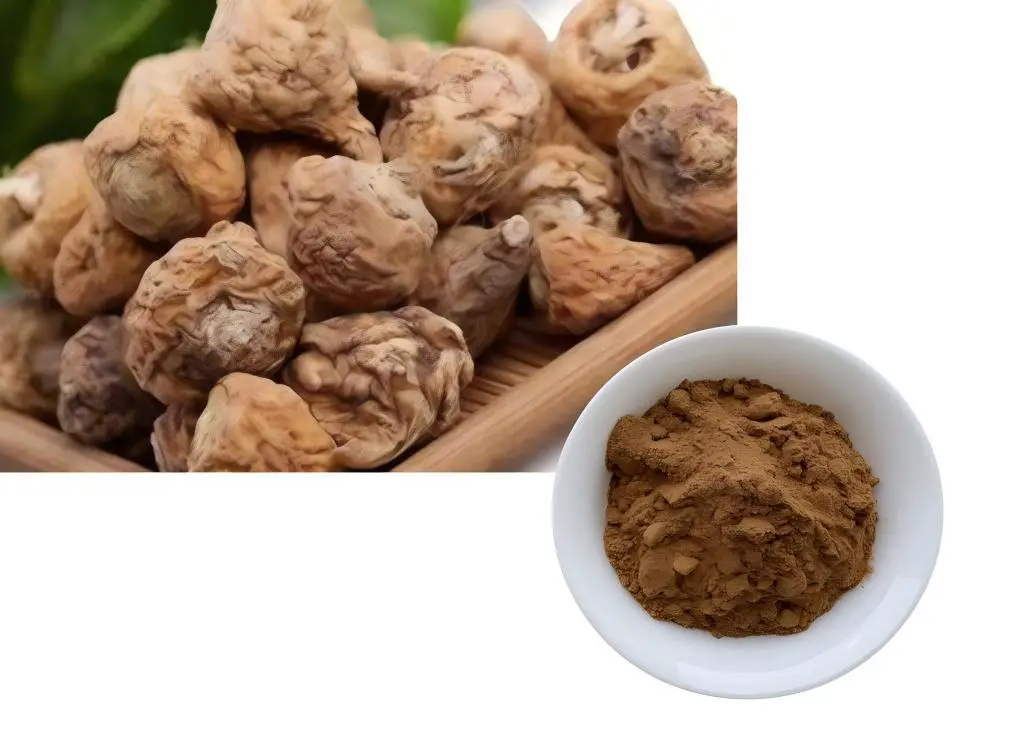
Yellow Maca vs. Black Maca vs. Red Maca Extract
Maca is commonly classified into yellow, black and red types. These descriptions refer primarily to the color of the raw botanical material and should not be used as a substitute for a finished-product specification.
|
Maca Type |
General Description |
Purchasing Focus |
|
Yellow Maca |
Common maca color type |
Confirm botanical material and specification |
|
Black Maca |
Distinct maca color type |
Review raw material and analytical profile |
|
Red Maca |
Distinct maca color type |
Confirm source and processing details |
When comparing color types, buyers should verify the botanical material, processing method and analytical requirements rather than assuming that color indicates a particular marker concentration.
Maca Root Extract vs. Maca Root Powder
|
Maca Root Extract Powder |
Maca Root Powder |
|
Extraction followed by drying |
Drying and milling |
|
More concentrated than the original botanical material |
Closely represents the whole root |
|
May be defined by selected markers |
Usually defined mainly by botanical identity and physical quality |
|
Used when an extract format is required |
Used when whole botanical powder is preferred |
|
Processing conditions influence the finished composition |
Less processing after drying |
The two ingredients should therefore be compared according to processing, specification and intended application, rather than simply by kilogram price.
Manufacturing & Quality Control
A typical production sequence is:
Raw Material Inspection → Cleaning → Preparation → Extraction → Filtration → Concentration → Drying → Milling → Sieving → Final Testing → Packaging
The exact process depends on the required product specification.
Quality checks may include:
· Botanical identification
· Raw material inspection
· Marker compound testing
· Moisture
· Microbiological parameters
· Heavy metals and relevant contaminants
· Appearance and physical characteristics
· Finished-batch testing
For marker-based products, the analytical method should be clearly defined together with the acceptance criteria.
How to Evaluate Maca Extract for Bulk Purchasing
1. Verify the Raw Material
Check the botanical name, plant part and raw material description before comparing suppliers.
For maca, the documentation should identify the material as Lepidium meyenii Walp. and specify whether root or hypocotyl material is used.
2. Identify the Product Specification
“Maca extract” is a broad commercial description. Ask whether the material is defined by:
· Extract ratio
· Macamide content
· Glucosinolate content
· Other selected markers
· Non-standardized extract parameters
If an extract ratio is provided, consider it together with the raw material and processing method.
3. Compare the COA with the Specification
A specification defines the required quality range, while a COA records the results for an individual batch.
For ongoing supply, both documents should be reviewed to determine whether the material consistently meets the agreed requirements.
4. Confirm Commercial Requirements
Once the technical requirements are established, confirm:
· Sample availability
· MOQ
· Packaging
· Documentation
· Shipping conditions
· Batch requirements
This creates a clearer basis for supplier comparison and repeat purchasing.

Applications of Maca Root Extract Powder
Maca extract is used in a range of botanical and nutritional formulations, including:
· Dietary supplement blends
· Capsules
· Tablets
· Powdered nutritional products
· Functional foods
· Beverage powders
· Men's wellness formulas
· Women's wellness formulas
· Multi-botanical formulations
The suitable grade depends on the formulation format and required product specification.

Frequently Asked Questions
1. What is the botanical source of Maca Root Extract Powder?
The product is derived from Lepidium meyenii Walp., using the specified root or hypocotyl material.
2. Which compounds are characteristic of maca?
Maca contains several naturally occurring constituents, including macamides, glucosinolates and macaenes.
3. Is Maca Extract the same as Maca Root Powder?
No. Extract powder is produced through extraction and drying, while ordinary maca powder is generally produced by drying and milling the botanical material.
4. Can Maca Extract be standardized?
Yes. A product may be defined according to selected markers, extract ratio or other agreed technical parameters.
5. Can macamides be included in the specification?
Yes. Macamide content can be specified when it is part of the agreed product requirements and an appropriate analytical method is used.
6. Can glucosinolate content be tested?
Yes. Glucosinolates can be included in the quality specification when required.
7. Are yellow, black and red maca interchangeable?
Not necessarily. They represent different maca color types, so raw material identity and finished-product specifications should be confirmed before substitution.
8. Can Gold Herb provide a COA and sample?
Product samples and applicable batch documentation can be provided according to the current commercial specification.

Maca Root Extract Powder Supplier
Gold Herb supplies Maca Root Extract Powder for nutraceutical manufacturers, supplement companies, and botanical ingredient distributors.
For commercial sourcing, specifications can be discussed according to botanical identity, extract ratio, marker compounds, processing method, analytical testing, and batch documentation.
For the current Maca Root Extract Powder specification, COA, or sample availability, contact:
Email: info@newgoldherb.com
Send Inquiry