
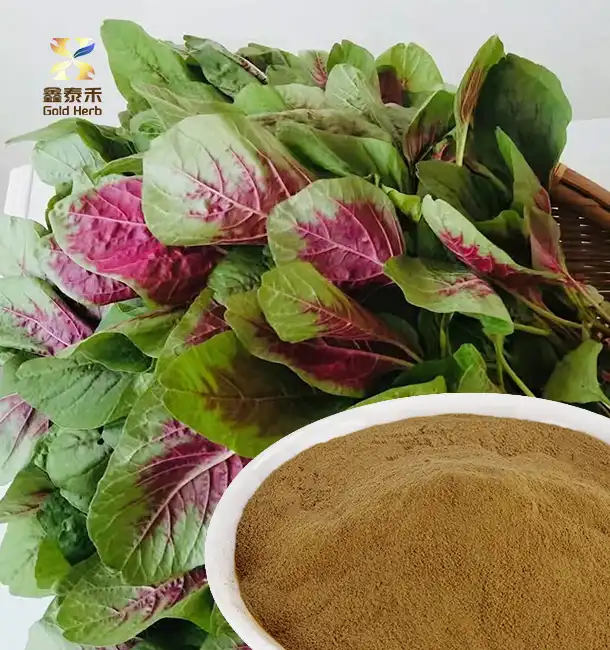
Red amaranth extract
Plant Family:Amaranthaceae
Plant Part:Leaves
Appearance:Fine Powder
Color:Red to Reddish Purple

- Free Samples
- Quality Assurance
- 24/7 Customer Service
Product Introduction
Red Amaranth Extract Powder is a plant-derived ingredient obtained from the leaves of Amaranthus tricolor L. Naturally rich in betalain pigments, particularly betacyanins, it is used in natural color development, botanical formulations, dietary supplements, and functional food applications.
Gold Herb provides Red Amaranth Extract Powder for wholesale and bulk ingredient sourcing, with product specifications, samples, and batch-specific documentation available upon request.
Request Specifications | Request Sample | Get Bulk Quote
Product Specifications
| Product Name | Red Amaranth Extract |
| Botanical Name | Amaranthus tricolor L. |
| Plant Family | Amaranthaceae |
| Plant Part | Leaves |
| Appearance | Fine Powder |
| Color | Red to Reddish Purple |
| Characteristic Pigments | Betalains, mainly betacyanins |
| Solubility | Subject to selected grade |
| Storage | Store in a sealed package in a cool, dry place |
| Packaging | 1 kg foil bag / 25 kg fiber drum |
Please confirm the final specifications against the selected grade and batch COA.
What Makes Red Amaranth Extract Unique?
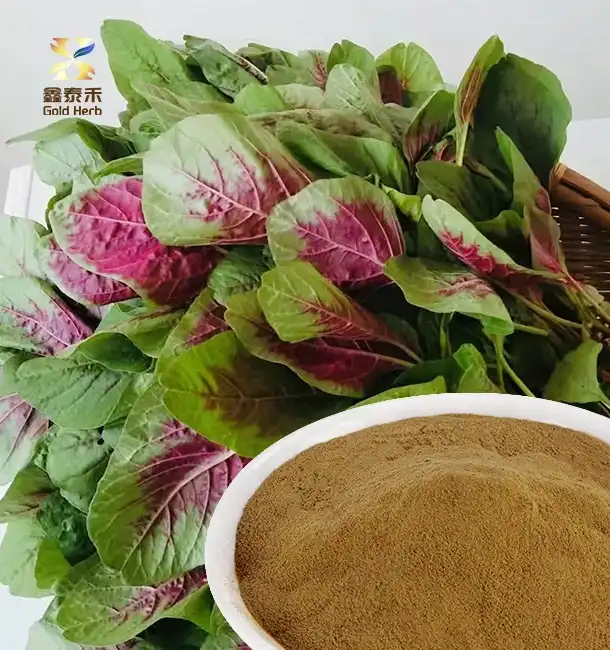
Red amaranth (Amaranthus tricolor L.) is a leafy plant known for its distinctive red, purple, and green foliage. Its natural coloration comes primarily from betalain pigments, making it an interesting botanical source for plant-based color development.
Unlike anthocyanin-rich ingredients such as purple sweet potato and blueberry extracts, red amaranth contains betalains as its characteristic pigment group. This difference is important when comparing botanical sources for natural color formulations.
For ingredient buyers and product developers, the plant's pigment profile, extraction method, color consistency, and processing stability are key considerations when selecting a suitable grade.
Key Pigment Components
Red amaranth contains several types of betalain pigments. Their composition and relative concentrations may vary depending on the plant material and extraction process.
Betacyanins
Betacyanins are the primary pigments associated with the red to purple coloration of red amaranth. They are an important component when evaluating the color characteristics of the extract.
Betaxanthins
Betaxanthins contribute yellow to orange tones and form another major subgroup of betalain pigments. Together with betacyanins, they contribute to the characteristic color profile of red amaranth.
Amaranthin and Isoamaranthin
Amaranthin and isoamaranthin are representative betacyanin pigments found in Amaranthus species. Their presence and relative proportions depend on the botanical source and processing conditions.
Other Botanical Compounds
Red amaranth leaves also contain phenolic acids and flavonoids. These compounds contribute to the plant's broader phytochemical profile, although their levels should be confirmed through appropriate analytical testing.

Applications of Red Amaranth Extract Powder
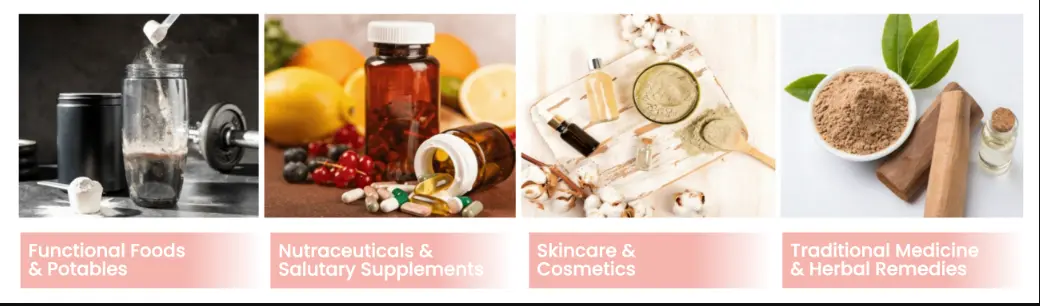
Red Amaranth Extract Powder is considered for several ingredient development sectors. Its application depends on the extract grade, pigment characteristics, formulation requirements, and applicable regulations.
Natural Color Development
The natural red-purple color of red amaranth makes it a botanical material of interest for natural color development. Formulators may evaluate it when exploring plant-derived alternatives to synthetic colorants.
Food and Beverage Formulations
Red amaranth extract can be evaluated for use in selected food and beverage products, including plant-based formulations and specialty ingredient blends. Color performance, processing conditions, and regulatory approval should be assessed before commercial use.
Dietary Supplement Formulations
The extract can be considered as a botanical ingredient in dietary supplement development. Buyers should review the extract specifications, plant part, processing information, and relevant quality documentation before selecting a grade.
Cosmetic Ingredient Development
Plant-derived pigments from red amaranth are also of interest in cosmetic formulation research. Potential applications depend on color stability, formulation compatibility, ingredient safety assessments, and the regulatory requirements of the target market.
Gold Herb — Supplier of Plant-Based Ingredients
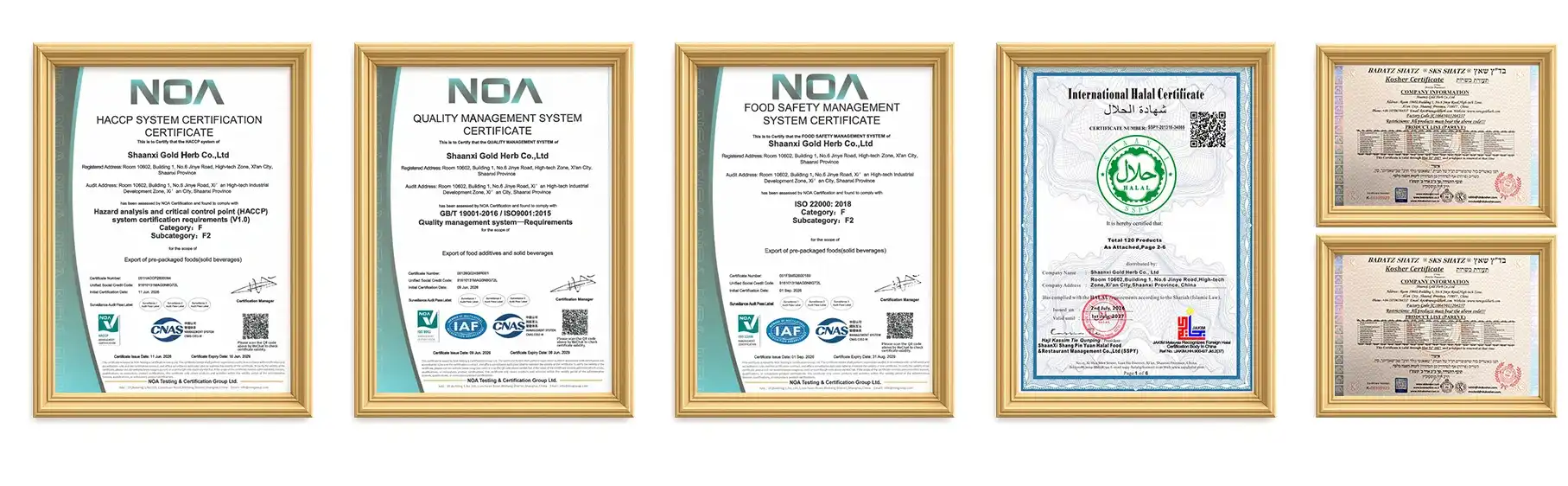
Gold Herb works with international buyers seeking botanical extracts, natural pigments, and functional ingredients for commercial product development. From specification confirmation and sample evaluation to bulk procurement, we focus on clear product information and batch-specific documentation.
We work closely with our clients throughout the entire process—from ingredient selection and specification confirmation to sample requests and bulk procurement. Providing clear product information and batch-specific documentation is a core component of our sourcing process.
Frequently Asked Questions
1. What is Red Amaranth Extract Powder?
It is a leaf extract from Amaranthus tricolor L., a plant recognized for its naturally red-purple foliage.
2. What gives red amaranth its red color?
Its color mainly comes from betalain pigments, particularly betacyanins such as amaranthin.
3. Is Red Amaranth Extract the same as anthocyanin extract?
No. Red amaranth is known for betalains, not anthocyanins. They are two different groups of natural pigments.
4. What color is the finished powder?
The powder generally ranges from red to reddish purple. The shade varies with the extract composition.
5. Does Red Amaranth Extract dissolve in water?
This varies by grade. Check the product's solubility data before using it in a formulation.
6. Which part of the plant is extracted?
The leaves are the primary plant material used for this extract.
7. What products can contain Red Amaranth Extract?
It can be evaluated for botanical formulations, food ingredient development, supplements, and cosmetic applications, subject to applicable regulations.
8. How can I check the pigment content?
UV-Vis spectrophotometry is commonly used for pigment analysis. HPLC can provide a more detailed profile of individual compounds.
9. What is the recommended storage condition?
Keep the powder in its original sealed packaging in a cool, dry place, away from light and moisture.
10. Are samples available before ordering?
Sample availability can be confirmed with Gold Herb. Please include your intended application and required specification.
11. Can I obtain a COA and technical documents?
Yes, available documents may include a batch COA, TDS, and MSDS/SDS, according to the selected grade.
12. What details are needed for a bulk order?
Please provide the required specification, quantity, packaging, and destination country so Gold Herb can review your quotation request.
Red Amaranth Extract Powder – Request a Quote
Gold Herb supplies Red Amaranth Extract Powder for bulk ingredient sourcing and product development. Contact us with your required specifications and order quantity to request a sample, batch documentation, or a quotation.
Request Specifications | Request Sample | Get Bulk Quote
Email: info@newgoldherb.com
Send Inquiry
You may like