
Astaxanthin vs Beta-Carotene: Which Antioxidant Is Better?
Mar 16, 2026
Within the family of natural antioxidants, carotenoids represent a highly prominent category; among them, astaxanthin and beta-carotene have both become widely recognized ingredients, distinguished by their natural origins and potent antioxidant properties. Beta-carotene, a classic natural antioxidant, is abundant in vegetables and fruits such as carrots and spinach, serving as a crucial precursor for the human body's synthesis of Vitamin A. Astaxanthin, conversely, has emerged in recent years as a highly sought-after "rising star" in the antioxidant realm; primarily derived from marine organisms—such as the microalga *Haematococcus pluvialis*—it is widely acclaimed as "one of the most potent natural antioxidants available." Although both belong to the carotenoid family and possess antioxidant capabilities, they exhibit significant differences in terms of activity strength, mechanisms of action, scope of protection, and application scenarios. So, which of the two—astaxanthin or beta-carotene—ultimately holds the advantage? The answer lies in a comprehensive comparison of their overall capabilities: spanning everything from antioxidant efficacy to practical application value, astaxanthin demonstrates superior overall competitiveness thanks to its multifaceted advantages, while beta-carotene retains irreplaceable value within specific contexts.
To objectively assess the relative merits of these two antioxidants, one must first establish a clear set of core evaluation criteria: the intensity of antioxidant activity, the comprehensiveness of the mechanism of action, the breadth of protective coverage, safety profiles, and suitability for various applications. Drawing upon authoritative scientific data and industry best practices, we conduct a comprehensive comparative analysis of astaxanthin and beta-carotene across these five core dimensions, clearly dissecting their respective strengths and limitations to help identify the optimal choice for a diverse range of specific needs.
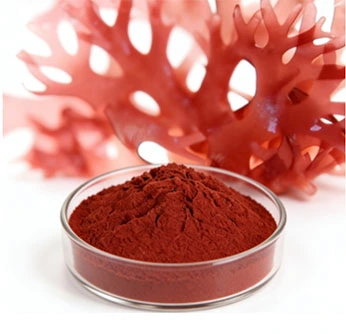
Antioxidant Activity: Astaxanthin Holds a Crushing Lead
Antioxidant activity is the key metric for assessing the core value of any antioxidant; it is also the dimension in which the disparity between astaxanthin and beta-carotene is most pronounced. Although both belong to the carotenoid family, differences in their molecular structures directly result in a vast—indeed, a world apart—difference in their antioxidant potency.
The beta-carotene molecule contains nine conjugated double bonds, endowing it with a certain capacity for electron transfer. This allows it to scavenge reactive oxygen species within the body. Furthermore, it can be converted into Vitamin A within the human body, thereby indirectly contributing to antioxidant defense and vision protection. Its capacity to scavenge singlet oxygen is approximately 55 times that of Vitamin E and 500 times that of Vitamin C; among natural antioxidants, this places it at a moderate level. Moderate daily intake—such as consuming plenty of fruits and vegetables rich in beta-carotene—is sufficient to meet the human body's basic antioxidant requirements.
Astaxanthin, however, possesses a more distinctive molecular structure. It features 13 conjugated double bonds, with two hydroxyl groups and two keto groups situated at its termini. This specific structure grants it an electron-transfer capability far exceeding that of beta-carotene, resulting in a reactive oxygen scavenging efficiency that is nothing short of overwhelming. Authoritative studies have confirmed that astaxanthin's capacity to scavenge singlet oxygen is 10 times that of beta-carotene, 550 times that of Vitamin E, and 6,000 times that of Vitamin C. Moreover, when it comes to scavenging hydroxyl radicals—the type of reactive oxygen species most damaging to the human body—astaxanthin's IC50 value (the half-maximal inhibitory concentration) is merely 0.1 μmol/L, a figure significantly lower than that of beta-carotene (1.2 μmol/L).
Crucially, beta-carotene's antioxidant activity is subject to limitations: it can only scavenge specific types of reactive oxygen species, and once oxidized, it cannot be regenerated within the body, resulting in a relatively short duration of action. Astaxanthin, conversely, can be regenerated after oxidation through the body's endogenous reducing systems—such as glutathione—thereby establishing a long-lasting "scavenge-regenerate-rescavenge" cycle. This continuous cycle allows it to exert a sustained antioxidant effect, which serves as the fundamental reason why its superior potency is continuously amplified over time. When evaluated solely on the basis of antioxidant activity, astaxanthin performs far more effectively than beta-carotene.
Mechanism of Action: Astaxanthin—More Comprehensive and Precise
The value of an antioxidant lies not merely in its ability to "scavenge reactive oxygen species," but more importantly, in the comprehensiveness and precision of its mechanism of action. The capacity to penetrate cellular barriers—and thereby provide multi-dimensional protection—directly determines the extent of its actual efficacy.
The mechanism of action of beta-carotene is relatively singular, centering primarily on two core functions: first, directly scavenging reactive oxygen species within the body to mitigate oxidative stress damage; and second, serving as a precursor to Vitamin A—converting into Vitamin A within the body to protect the retina and maintain the health of the skin and mucous membranes. However, beta-carotene is exclusively lipid-soluble; it is unable to penetrate critical cellular structures—such as cell membranes and mitochondrial membranes—and is thus confined to acting upon the cell surface or within the extracellular fluid environment. Consequently, it cannot provide protection to the cell's core components (such as mitochondria and DNA), nor can it modulate the activity of the body's own endogenous antioxidant system; its scope of action is therefore relatively limited.
Astaxanthin, by virtue of its unique molecular structure, possesses a mechanism of action that is both more comprehensive and more precise. On one hand, it exhibits a dual solubility—being both lipid-soluble and water-soluble (a dual solubility often enhanced through optimized formulation)—enabling it to effortlessly penetrate cell membranes, mitochondrial membranes, the blood-brain barrier, the retinal barrier, and even the skin barrier. This allows it to target and act directly upon the cell's core structures, thereby blocking oxidative stress-induced cellular damage at its very source. On the other hand, beyond merely scavenging reactive oxygen species directly, astaxanthin also activates the body's NRF2 antioxidant signaling pathway. This activation upregulates the activity of endogenous antioxidant enzymes—such as SOD, CAT, and GPx—thereby fundamentally enhancing the body's own intrinsic antioxidant capacity and establishing a dual-protection mechanism characterized by "external scavenging plus internal activation."
Furthermore, astaxanthin possesses a synergistic "antioxidant-plus-anti-inflammatory" effect—a capability notably absent in beta-carotene. By inhibiting the NF-κB inflammatory pathway, astaxanthin reduces the secretion of pro-inflammatory cytokines—such as TNF-α and IL-6—thereby disrupting the vicious cycle linking oxidative stress with chronic inflammation; beta-carotene, conversely, demonstrates no significant anti-inflammatory efficacy. When assessed through the lens of the comprehensiveness of its mechanism of action, astaxanthin's advantages remain exceptionally prominent.

Scope of Protection: Astaxanthin Covers Multiple Organs and Systems
The protective scope of an antioxidant depends on its penetration capabilities and mechanism of action; these factors also determine the differences in their respective application scenarios. The protective scope of beta-carotene is relatively narrow, focusing primarily on two areas: first, eye health—where it protects retinal photoreceptor cells and prevents night blindness and dry eyes by converting into Vitamin A; and second, skin health—where it reduces oxidative damage on the skin's surface and helps alleviate dryness and roughness. However, because it cannot penetrate the blood-brain barrier or mitochondrial membranes, it is unable to provide effective protection for vital organs such as the brain, cardiovascular system, and liver; consequently, its application scenarios remain relatively limited.
Astaxanthin, conversely, boasts a much broader protective scope. Thanks to its targeted penetration capabilities, it can reach and protect multiple organs and systems throughout the human body: regarding the eyes, it does not require conversion into Vitamin A; instead, it directly penetrates the retinal barrier to scavenge reactive oxygen species within the retina, thereby alleviating eye fatigue and preventing ocular aging—delivering results superior to those of beta-carotene. In the brain, it can cross the blood-brain barrier to protect neurons, aiding in memory improvement and helping to delay the onset of neurodegenerative diseases. Within the cardiovascular system, it protects endothelial cells, inhibits the oxidation of low-density lipoproteins (LDL), and reduces the formation of atherosclerotic plaques. In the liver, it scavenges reactive oxygen species to mitigate oxidative damage. Finally, regarding the skin, it penetrates the skin barrier to neutralize free radicals generated by UV radiation, thereby delaying photoaging and reducing the appearance of fine lines and dullness.
It is worth noting that beta-carotene carries a "risk of over-supplementation"—specifically, long-term intake of high doses (exceeding 10 mg per day) may lead to yellowing of the skin (carotenemia) and may even increase the risk of lung cancer (particularly among smokers). Astaxanthin, on the other hand, demonstrates an exceptionally high safety profile; daily supplementation of 2–10 mg presents no significant side effects and carries no risk of over-supplementation, allowing for safe, long-term use. This superior safety profile further enhances its advantages in delivering effective protective benefits.
Application Scenarios: Distinct Focuses, Yet Astaxanthin Holds the Edge
Given the functional differences between the two, their respective application scenarios also feature distinct focuses; there is no such thing as "absolute substitution." However, astaxanthin boasts a broader scope of application, catering specifically to mid-to-high-end market demands, whereas beta-carotene is better suited for general, mass-market supplementation.
The application scenarios for beta-carotene are primarily concentrated within the realm of "general basic nutrition." First, it serves as a food fortification agent—added to products such as dairy items, cereals, and beverages—to provide Vitamin A precursors and satisfy the body's fundamental nutritional requirements. Second, it functions as a mass-market antioxidant supplement; being low in cost and widely available, it is suitable for the general public seeking daily, basic antioxidant support and eye health supplementation. Third, it acts as a natural coloring agent, utilized in food and cosmetic products to enhance their visual appeal. However, due to its limited antioxidant potency, it falls short of meeting the demands of the mid-to-high-end demographic for "precise care and potent antioxidant protection."
In contrast, the application scenarios for astaxanthin lean more toward "mid-to-high-end precision care." In the field of nutritional supplements, it serves as a core ingredient in premium products targeting anti-aging, eye health, cardiovascular health, and liver support; its key selling points are "potent antioxidant activity and targeted care," making it ideal for the middle-aged and elderly, individuals in high-stress professional environments, and those who engage in prolonged visual tasks. In the realm of beauty and skincare, it stands as a "star ingredient" in high-end anti-aging products; even at low concentrations (typically 0.05%–0.5%), it delivers powerful antioxidant effects and helps delay photoaging, making it suitable for all skin types. In the food industry, it functions as a premium natural coloring agent and antioxidant, incorporated into high-end beverages and health products to simultaneously enhance product quality and extend shelf life. Finally, in the pharmaceutical sector, its synergistic "antioxidant + anti-inflammatory" effects hold promise for use as an adjunctive therapy for neurodegenerative and cardiovascular diseases, presenting immense potential for future applications.
No Absolute "Optimum," But Astaxanthin Holds the Comprehensive Edge
Taken as a whole, the relationship between astaxanthin and beta-carotene is not an "either/or" dichotomy, but rather a complementary dynamic—one representing "premium, targeted care" and the other "mass-market foundational supplementation." However, when assessing their overall capabilities, astaxanthin undoubtedly holds the superior position.
If your needs center on "daily foundational antioxidant support, Vitamin A supplementation, and eye health," and you are working within a limited budget, beta-carotene represents an exceptionally cost-effective choice; it is widely available, affordable, and can be obtained through a standard daily diet or common dietary supplements. Conversely, if your requirements involve "potent antioxidant action, targeted multi-organ support (such as for the brain, cardiovascular system, and liver), anti-aging benefits, and skin health improvement"—and you prioritize superior efficacy and safety—then astaxanthin is the preferred option. It surpasses beta-carotene in terms of antioxidant potency, mechanisms of action, scope of protection, and application versatility, establishing itself as the premier choice among mid-to-high-end natural antioxidants.
The fundamental distinction between the two lies, in essence, in the difference between "foundational supplementation" and "high-efficiency targeted care." Beta-carotene serves as the "basic model" among natural antioxidants, catering to the daily nutritional needs of the general public; astaxanthin, on the other hand, acts as the "upgraded model," leveraging its multifaceted advantages to become a core ingredient in the realms of premium health and skincare. As consumer demand for high-quality health solutions continues to rise, the application scope of astaxanthin is poised to expand further, solidifying its status as a "potent natural antioxidant," while beta-carotene will continue to play an indispensable role within the sphere of mass-market foundational nutrition.
Partner with Gold Herb for Premium Astaxanthin Supply
You can trust Gold Herb to give you good astaxanthin because they use advanced extraction methods and strict quality control checks. Our new companies make products that are all the same and meet the standards for 65%, 70%, and 85% boswellic acid. There are documents from the FDA, ISO9001, HACCP, Halal, and Kosher that back up these extracts. We've been in business for over three years and have helped over 200 people in 30 different countries. We always have more than a ton of things on hand so that we can ship your order right away, within 24 hours of getting it. We will always be able to come up with new ideas and make better goods because we work together with Academician Li Xiaokun's study team. Email info@newgoldherb.com to tell us about your specific needs, get samples, or find out more about our full customization services, which will save you a lot of money on your recipe needs.

Send Inquiry
Related Industry Knowledge
- What Is Fenugreek? Here Are Its 7 Potential Health Benefits
- Fenugreek Benefits: Testosterone, Blood Sugar & Health Support
- What is Centella asiatica extract good for?
- When to take saw palmetto powder morning or night?
- How much weight can you lose with garcinia cambogia extract powder?
- Sodium Copper Chlorophyllin for Detox & Skin Health | Ingredient Insights
- Fisetin for Anti-Aging and Brain Health: A Rising Nutraceutical Ingredient
- Cyanotis Arachnoidea Extract vs Spinach Ecdysterone Source Comparison
- Best Boswellia Extract Powder for EU Joint Health Supplements
- What Is Fisetin? A Complete Guide for Supplement Manufacturers