
Berberine Hydrochloride for weight loss: Benefits, and what you need to know
Mar 24, 2026
Interest in natural ingredients for weight management has made berberine a popular subject in the nutraceutical market. Berberine hydrochloride is a salt form of berberine, an isoquinoline alkaloid found in several plants traditionally used in herbal medicine. Researchers have researched berberine and its effects on systems that affect glucose metabolism, lipid metabolism, insulin sensitivity, inflammation, and other metabolic processes. But its role in weight management needs to be treated with caution. Clinical data suggest berberine may be associated with small improvements in numerous indices of obesity; however, study design, dosage, formulation, and patient characteristics vary substantially. That is important for supplement producers and ingredient buyers. Berberine hydrochloride should not be marketed as a miraculous weight loss agent or as an alternative to proven weight control methods. It is the well-described biological activity, features, analytical methodologies of it, and its prospective utilization in formulations for metabolic health that is significant, not the product itself.
What Is Berberine Hydrochloride?
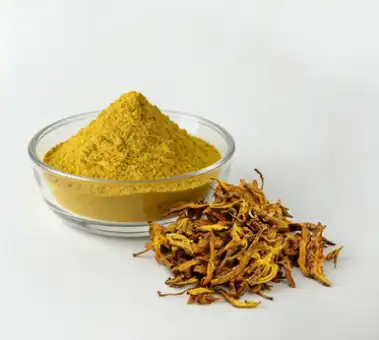
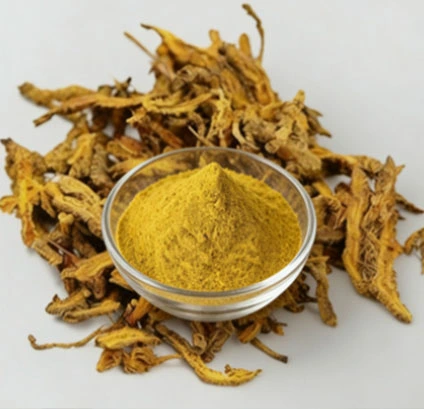
Berberine is a natural alkaloid found in plants like Berberis species, goldenseal, goldthread, and other botanical sources of berberine. Berberine hydrochloride is the hydrochloride version of the molecule and is often used as a standardized component of supplements for research reasons.
To manufacturers, this is a crucial difference between crude botanical material and a standardized constituent of berberine hydrochloride. Powder from the bark, root, or entire plant may include a variety of naturally occurring chemicals and have a broad range of berberine concentrations. Conversely, a standardized component is made to a certain standard and may be checked for identity, assay, contaminants, and other quality criteria.
Therefore, the analytical monitoring is particularly crucial in the acquisition of berberine hydrochloride for capsules, pills, powders, or mixed nutraceutical formulations. Buyers should not simply look at a headline purity figure but rather look at the complete specification, including the analytical technique used to determine assay and the testing carried out for contaminants and microbiological quality.
Why Is Berberine Studied for Metabolic Health?
Berberine has garnered scientific attention for its association with several metabolic pathways. One of the mechanisms that is often explored in berberine studies is AMPK. Other research has looked at glucose metabolism, insulin signaling, lipid metabolism, and interactions with the gut flora.
These pathways help explain why berberine is being examined for metabolic health but do not provide proof of a particular clinical consequence. Laboratory and mechanistic data may give a scientific basis for future investigation, but human studies are necessary to see if those biological effects translate into significant changes in body weight or other health consequences.
That’s a huge difference, especially for commercial goods. Calling AMPK a “master switch” or suggesting that berberine “burns fat” directly makes the results seem more convincing than they really are. A more fair statement would be that berberine has been studied for various metabolic pathways potentially implicated in weight management.
Does Berberine Hydrochloride Help With Weight Loss?
To recap, the study on berberine hydrochloride remains promising but not yet powerful enough to define it as a proven weight-loss medicine.
Berberine has been evaluated in various systematic reviews and meta-analyses using parameters such as body weight, BMI, and waist circumference. Some reported large decreases while others reported inconsistent or not statistically significant improvements in body weight. A review of 23 research studies in 2026 indicated decreases in body weight, BMI, and waist circumference but also discovered flaws in the underlying data, including issues with study design and reporting.
The NCCIH is cautious too. Its analysis of the present data shows the weight-related advantages were shown mostly in trials of more than 1 g per day and more than eight weeks' length, albeit the studies varied greatly in formulation and dose, and some were at high risk of bias. So, we need additional high-quality studies before we can make any firm conclusions regarding the effects of berberine on weight and BMI.
For manufacturers, this means that a decent product description should focus on the scientific background of the substance rather than making claims about a particular amount of weight loss. That difference may have a tremendous influence on the credibility of a finished product page.
What May Explain the Observed Effects?
Researchers have suggested many explanations for the metabolic alterations found with berberine hydrochloride. It has attracted considerable research about its effects on glucose and insulin-associated pathways, particularly since alterations in metabolic parameters can be of importance to patients with insulin resistance or other metabolic illnesses.
Berberine has also been investigated regarding lipid metabolism and inflammatory mechanisms. Several clinical studies have shown benefits in several metabolic indicators, but the overall quality and consistency of data vary by condition and group. NCCIH adds that evidence shows prospective advantages for blood glucose, insulin resistance, and lipid metabolism but also warns that many studies had flaws.
Another prominent issue for inquiry is the gut microbiota. Berberine could interact with gut bacteria and undergo extensive metabolism in the gut. But it doesn't mean that changes in gut flora will inevitably lead to appetite control or major fat loss in humans. The scientific findings of microbiomes are intriguing but should be described as a field of research rather than a proven strategy for weight loss.
What Should You Know About Berberine Dosage?
There isn't one specific dose of berberine hydrochloride that is the best quantity for weight reduction for everyone. Human studies have differed in the dosage, duration of therapy, formulation, and groupings of participants, making direct comparison impossible.
Some clinical studies have employed gram-per-day dosages; however, a research dosage should not be automatically offered as a suggestion for every consumer. The proper dose depends on the product, the formulation, the intended usage, and the health state and prescriptions of the person.
For supplement producers, the more important question is typically not only “How many milligrams should be used?” but “What specification and dosage format can be supported by the available evidence and the intended product positioning?” This practice helps prevent a study range from becoming an unsubstantiated consumer dosing claim.
Why Formulation Quality Matters?
Berberine has a pharmacokinetic problem in that it has a relatively poor oral bioavailability. This has been attributed in research to low solubility and permeability, P-glycoprotein-mediated efflux, intestinal metabolism, and hepatic first-pass metabolism.
This is part of the reason why formulation research has become an essential aspect of berberine development. Researchers studied several delivery strategies, such as absorption enhancers, phospholipid-based systems, nanoparticles, cocrystals, etc. These strategies are designed to enhance the delivery properties of berberine; however, an improvement in formulation should not be immediately equated with greater clinical weight-loss outcomes.
The practical implications for purchasers are clear. If a supplier suggests a specific berberine hydrochloride formulation, the buyer should seek facts to substantiate the stated formulation benefit, as opposed to just marketing speak.
Safety and Drug Interactions Should Not Be Overlooked
Berberine is a bioactive molecule; therefore, “natural” is not always risk-free. Gastrointestinal side effects are the most prevalent and include nausea, stomach discomfort, bloating, constipation and diarrhoea.
Berberine hydrochloride may interact with drugs. This is particularly true for those taking medications that affect blood glucose or other metabolic pathways, and research has shown clinically relevant interactions with various prescriptions. If you are on prescription or other regular medication, don’t assume that a botanical ingredient is necessarily compatible with your therapy. Talk to a health care professional to see whether berberine is right for you.
Pregnancy and breastfeeding need particular attention. NCCIH advises that pregnant and breastfeeding women not use berberine and that newborns exposed to it may have dangerous accumulation of bilirubin.
Manufacturers should also take these safety issues into account. The preparation of product labels, dosage instructions, warnings and declarations of intended use should be done taking into account the regulatory requirements of the target market. Technical strength in a raw material does not obviate the necessity for proper finished-product conformity.
How Should Buyers Evaluate Berberine Hydrochloride Powder?
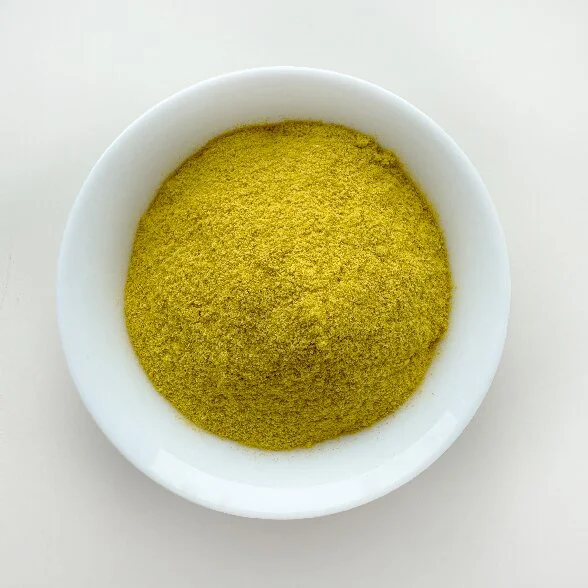
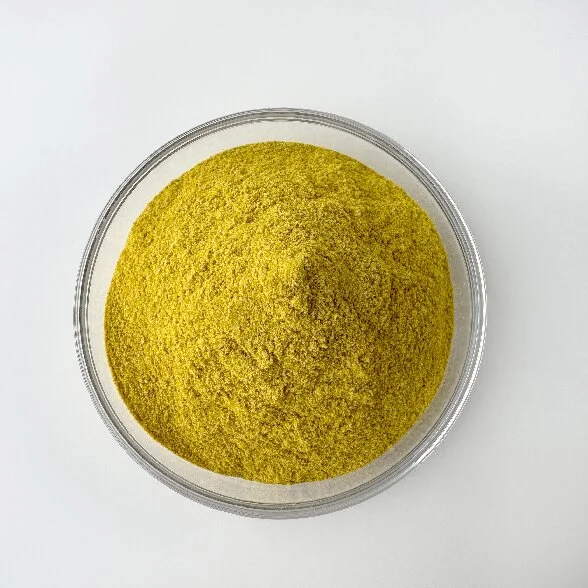
Ingredient quality for B2B purchasers should be judged on paperwork and testing, not looks or a single purity number. Any provider should be able to supply a detailed specification of the product and explain how the specified assay is determined.
HPLC is also the usual technique for quantitative analysis of berberine; therefore, purchasers should check the analytical method, acceptance criteria and batch-specific data when available. The Certificate of Analysis may give valuable information on assay, identification, microbiological parameters, heavy metals and other significant quality features. Depending on the intended market and production method, further testing may also be needed, such as residual solvents or pesticide screening.
The objective is not to get as many credentials as possible. To check if the supplier’s quality system is capable of consistently meeting the necessary specification of the completed product.
Purity Is Only One Part of Ingredient Quality
A high assay value might be essential, but it should not be the whole definition of quality. Two providers may offer identical purity but have widely different analytical controls, batch-to-batch consistency, traceability, packaging and supporting paperwork.
Particle characteristics may also be significant for companies engaged in high-speed mixing, encapsulation or tablet manufacturing. Flow behaviour, particle size distribution, bulk density and compatibility with excipients might affect the performance of the processing. Buyers should ask for representative data and, if possible, if the supplier offers custom mesh sizes or physical characteristics, test the material in a manufacturing trial.
As useful as stability information. Buyers should ask regarding material storage, proper packaging and if the provider has stability data to support the shelf life stated. These facts are of particular importance if the substance is to be stored for a long period or moved across several climates.
Conclusion
Berberine hydrochloride has been of great interest in the weight-management industry, as research has revealed various biological pathways that may be significant to glucose metabolism, lipid metabolism, insulin sensitivity and general metabolic health. Various trials in humans and recent meta-analyses have shown that berberine may provide moderate benefits in various metrics linked to obesity, but the data is not strong enough to label it a guaranteed or clinically proven weight reduction medication.
The benefit of berberine hydrochloride is consequently more than a weight reduction promise for manufacturers and procurement teams. A carefully regulated ingredient with a clearly defined assay, accurate analytical testing, suitable documentation and consistent batch quality is easy to assess and include in a completed formulation. Buyers should also be mindful of formulation qualities, as berberine has very poor oral bioavailability and is still the focus of delivery-system research.
The best method is to dose berberine hydrochloride based on the strength of the available data, without making unsubstantiated therapeutic claims, and to pick sources that can prove quality via testing and traceability. This combination of scientific caution and practical ingredient control offers a more solid platform for long-term product development and consumer confidence for enterprises creating weight-management or metabolic-health goods.
FAQ
1. What makes berberine hydrochloride effective for weight loss?
AMPK is a cellular energy regulator that controls metabolism, glucose uptake, and fat burning. Berberine hydrochloride turns it on. This action makes the body more sensitive to insulin and burns more calories. This makes it easier to control weight. The compound also changes the makeup of the gut microbiome, which supports good metabolic activity in a number of ways.
2. How does berberine hydrochloride compare to synthetic weight loss ingredients?
Berberine, which comes from plants, is better than manufactured ones because it has broader metabolic effects and health benefits beyond weight loss. The substance supports heart health, digestive health, and blood sugar control all at the same time, giving you overall health benefits that man-made ingredients usually can't match.
3. What quality certifications should I look for when sourcing berberine hydrochloride?
Some important certifications are FDA registration, ISO9001 quality management, HACCP food safety routines, and, if needed, organic certificates. More approvals, like HALAL and Kosher, make the market bigger. Also, suppliers should give full analysis reports that use approved testing methods such as HPLC and UV spectroscopy.
4. What is the typical lead time for bulk berberine hydrochloride orders?
Standard specifications with established suppliers typically ship within 24-48 hours from stock inventory. Custom formulations or specific purity requirements may require 7-15 business days for production. Emergency orders can often be accommodated through expedited processing channels with shorter delivery timeframes.
Partner with Gold Herb for Premium Berberine Hydrochloride Solutions
Gold Herb stands as your trusted Berberine Hydrochloride manufacturer and supplier, offering pharmaceutical-grade ingredients backed by comprehensive certifications, including FDA, ISO9001, HACCP, HALAL, and Kosher approvals. Our 98% purity berberine hydrochloride undergoes rigorous HPLC testing to ensure consistent quality and therapeutic efficacy. With over three years of specialised plant extract experience serving 200+ customers across 30+ countries, we maintain substantial inventory, enabling rapid order fulfilment within 24 hours. Our technical team provides comprehensive formulation support, while our global logistics network ensures reliable delivery. Contact doris@newgoldherb.com to discuss your specific requirements and request samples.
References
1. Zhang, Y., Li, X., Zou, D., Liu, W., Yang, J., Zhu, N., ... & Ning, G. (2008). Treatment of type 2 diabetes and dyslipidaemia with the natural plant alkaloid berberine. Journal of Clinical Endocrinology & Metabolism, 93(7), 2559-2565.
2. Hu, Y., Ehli, E. A., Kittelsrud, J., Ronan, P. J., Munger, K., Dolliver, T., ... & Davies, G. E. (2012). Lipid-lowering effect of berberine hydrochloride in human subjects and rats. Phytomedicine, 19(10), 861-867.
3. Lee, Y. S., Kim, W. S., Kim, K. H., Yoon, M. J., Cho, H. J., Shen, Y., ... & Kim, J. B. (2006). Berberine, a natural plant product, activates AMP-activated protein kinase with beneficial metabolic effects in diabetic and insulin-resistant states. Diabetes, 55(8), 2256-2264.
4. Yin, J., Xing, H., & Ye, J. (2008). Efficacy of berberine hydrochloride in patients with type 2 diabetes mellitus. Metabolism, 57(5).
5. Chang, X., Yan, H., Fei, J., Jiang, M., Zhu, H., Lu, D., & Gao, X. (2010). Berberine hydrochloride reduces methylation of the MTTP promoter and alleviates fatty liver induced by a high-fat diet in rats. Journal of Lipid Research, 51(9), 2504-2515.
6. Zhang, H., Wei, J., Xue, R., Wu, J. D., Zhao, W., Wang, Z. Z., ... & Zhang, H. (2010). Berberine hydrochloride lowers blood glucose in type 2 diabetes mellitus patients through increasing insulin receptor expression. Metabolism, 59(2), 285-292.

Send Inquiry
Related Industry Knowledge
- Top Urolithin A Benefits for Muscle, Energy, and Anti-Aging
- Top Science-Backed Benefits of Broccoli Extract
- Ergothioneine Benefits for Skin, Brain, and Cellular Health
- GMP Resveratrol Powder for Pharmaceutical Applications
- Chlorophyll vs Sodium Copper Chlorophyllin: What’s the Difference?
- 5-Hydroxytryptophan Benefits for Sleep, Mood, and Stress Relief
- Urolithin A vs. NMN: Which Holds More Potential?
- Urolithin A: Benefits, Applications, and Market Opportunities for Nutraceutical Brands
- Best Boswellia Extract Powder for EU Joint Health Supplements
- 5-Hydroxytryptophan(5-HTP)vs L-Tryptophan: Which Ingredient Is Better for Supplement Formulas?