
Curcumin Powder vs Turmeric Powder: Key Differences Explained
Sep 04, 2026
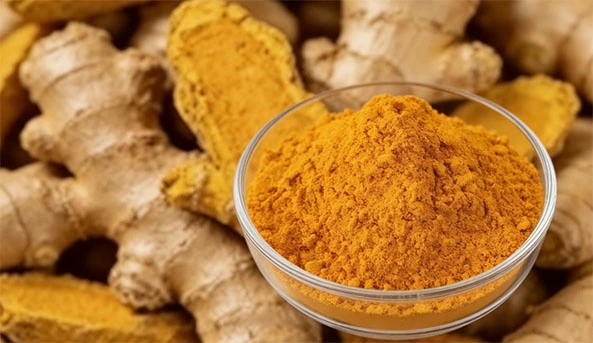
When sourcing botanical ingredients for nutraceuticals, cosmetics, or functional foods, understanding the distinction between curcumin and turmeric powders becomes essential. Curcumin Powder is a high-purity extract standardized to contain 95% curcuminoids, extracted using HPLC methods from Curcuma longa rhizomes. Turmeric powder, meanwhile, is simply the ground dried root containing just 2-5% curcuminoids alongside fiber, essential oils, and other plant compounds. This concentration gap directly impacts formulation efficacy, dosing requirements, and product claims—making informed selection critical for procurement teams aiming to balance potency, compliance, and cost-efficiency in their ingredient portfolios.
Product Specifications
| Parameter | Specification |
|---|---|
| Product Name | Curcumin Powder |
| Botanical Source | Curcuma longa L. |
| Active Ingredient | Curcuminoids |
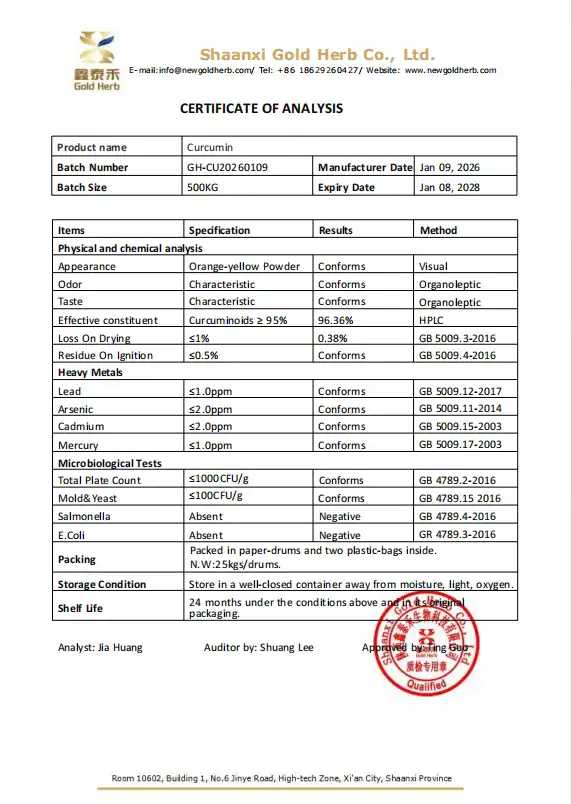
| Purity | 95% Curcuminoids |
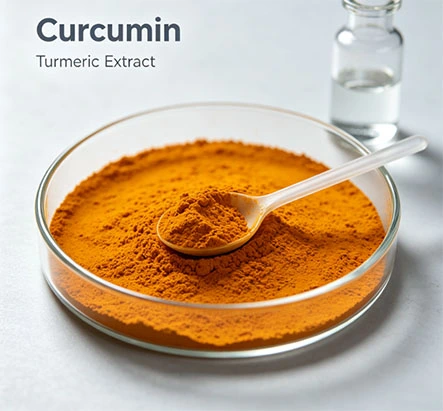
| Appearance | Yellow Orange Fine Powder |
| Test Method | HPLC |
| CAS No. | 458-37-7 |
| Solubility | Insoluble in Water |
| Shelf Life | 24 Months |
| Packaging | 1 kg Aluminum Foil Bag / 25 kg Fiber Drum |
Certificate of Analysis (COA) for Curcumin Powder [Request COA]
Understanding Curcumin Powder and Turmeric Powder
Botanical Origins and Extraction Processes
Curcuma longa is a perennial vegetable that is grown in large amounts in India, China, and Southeast Asia. It is the source of both nutrients. Gathering fully grown rhizomes, cooking them to stop enzymes from working, drying them in a controlled environment, and grinding them into a fine powder is how turmeric powder is made. The whole plant matrix is kept by this simple mechanical process, but the curcuminoid density is low.
To get a pure orange-yellow powder, curcumin is extracted using solvents like food-grade ethanol or acetone. The powder is then crystallized, filtered, and dried with a spray dryer. This more refined group is represented by our Curcumin 95 powder, which has been tested using HPLC and found to contain 95% total curcuminoids (CAS Number: 458-37-7). Bioactive polyphenols like curcumin, demethoxycurcumin, and bisdemethoxycurcumin are concentrated after inactive fiber and volatile oils are removed.
Bioavailability Challenges in Both Forms
Even though they are very popular, both powders have big problems with absorption. Curcuminoids are chemicals that prefer to be in fats and don't dissolve well in water. They are broken down quickly in the liver and can't pass through the intestines easily. Studies show that oral curcumin has less than 1% systemic bioavailability when it is not improved in any way. These are also problems with turmeric powder, but it has fewer active ingredients, so you have to use very large amounts to get results.
Advanced delivery methods, such as nano-emulsions, phytosomes, or co-administration with piperine, have been shown to improve absorption by 2000%, according to research published in nutritional journals. These results show why procurement teams are choosing high-purity curcuminoid extracts along with bioenhancement technologies more and more for formulation efficiency.
Core Differences Between Curcumin Powder and Turmeric Powder
Curcuminoid Concentration and Chemical Profile
The most noticeable change is the amount of active element present. Curcuminoids make up about 2 to 5 percent of turmeric powder. They are found in a complex mixture of starches, proteins, and aromatic compounds such as turmerone and atlantone. This wider range of phytochemicals may provide combined benefits through entourage effects, but the proof is still very weak.
Functional Food Ingredients Supplier has a normal strength of 95% curcuminoids, which lets you give the right amount and know exactly what the mixture will do. This consistency is very helpful for R&D teams that are making products that need to have label claims checked and be able to be made again from a different batch. The concentrated version cuts down on the need for excipients, smaller capsules, and helps companies make more money in areas that are very competitive.
Anti-inflammatory and Antioxidant Activities
Both ingredients have been shown to have biological effects, but the strength of those effects varies greatly. Due to its low curcuminoid content, turmeric needs to be dosed at the gram level to reach therapeutic levels described in clinical literature.
High-purity curcumin has strong anti-inflammatory effects by blocking NF-κB signaling pathways and lowering levels of pro-inflammatory cytokines such as TNF-α and IL-6. These processes help keep joints comfortable, which is important for managing rheumatoid arthritis. Its powerful antioxidant properties get rid of free radicals and boost enzymes like superoxide dismutase and glutathione peroxidase that are already inside the body.
Besides these proven benefits, it also helps the heart by protecting the endothelium of blood vessels, cleaning the liver better, and keeping brain cells working well. The consistent make-up of our Curcumin 95 powder makes sure that these useful properties are reliably transferred into finished products, like functional drinks, topical cosmetics, or dietary supplements.
Dosage Considerations and Industrial Applications
To get 50–150 mg of curcuminoids from turmeric powder, people usually have to take 1,500–3,000 mg of it every day. This makes it hard to crush tablets and capsules and get people to take them as directed. The bulk material adds color, taste, and stability factors that make it harder to formulate drinks and clean-label goods.
Curcumin extracts allow for tailored dosing at 500 to 1,500 mg per day, providing 475 to 1,425 mg of active curcuminoids in small packages. This efficiency is very important for companies that make sports nutrition products that want to make high-potency recovery recipes, cosmetics that want to make concentrated serums, and drugs that want to use standardized plant ingredients in clinical studies.
Choosing the Right Product for Procurement Needs
Quality Parameters and Certification Standards
The decisions about what to buy must put purity verification, contaminant screening, and following the rules at the top of the list. Premium curcumin extracts should meet the requirements of the USP or EP standard. They should also have heavy metals (lead, arsenic, cadmium, and mercury) that are within the limits set by ICH Q3D.
Organic certification is helpful for marketing, but it doesn't mean that the curcuminoids will work. Our Curcumin 95 powder is registered with the FDA and also has ISO9001, HACCP, HALAL, and Kosher standards, which allow it to meet a wide range of market entry needs. For brands that care about quality, having a third-party test for chemical residues, microbial contamination, and particle size distribution gives them extra peace of mind.
Supplier Evaluation Criteria
To find reliable partners, you need to look at more than just price quotes to see how well they can do technical tasks. Reliable sellers use tested HPLC methods, clear paperwork for tracking, and steady supply lines that can handle changes in the agricultural market.
Through its relationship with Academician Li Xiaokun's research team and Wenzhou University, Gold Herb makes sure that its products are thoroughly tested for effectiveness and that it is always coming up with new ways to improve extraction. Our global buying network gets us high-quality Curcuma longa from approved farms. In-country inventory management lets us meet standard requirements within 24 hours, and we can meet custom requirements within 7–15 days.
Cost-Quality Balance in Bulk Purchasing
The price of curcumin is directly related to the purity grade and the level of certification. Industrial-grade 70% extracts can cost $25 to $40/kg, and pharmaceutical-grade 95% materials can cost $60 to $95/kg, based on how much is ordered and how it is delivered.
The benefits of buying in bulk become clear when you go over 500 kg, and tiered pricing systems reward partnerships that last a long time. Our U.S. warehouse network cuts wait times down to three to five business days, which means North American customers don't have to worry about running out of stock or needing more operating capital. When production schedules need to be flexible, emergency small-batch orders can use green-channel service to get their goods faster, within 5 to 7 days.
Enhancing Curcumin Powder Performance in End Products
Bioavailability Enhancement Strategies
To get around curcumin's problems with absorption, you need to use smart preparation methods. When 5 to 20 mg of piperine is given with glucuronidation, it stops the liver from doing its job and raises the concentrations in the blood by up to 20 times. This combination lets less curcuminoid be used while still being effective, resulting in the best cost-performance rates.
Lipid-based drug delivery systems, such as liposomal encapsulation and self-emulsifying drug delivery systems, work better in watery environments because they spread the drug more evenly. These technologies work well for useful drinks that need to be clear, stable, and absorbed quickly so that customers can choose them. Pharmaceutical-grade excipients make sure that both FDA-regulated food products and EU Novel Food approvals follow the rules.
Industrial Application Case Studies
A well-known company that makes sports nutrition changed its recovery mix so that it now contains 500 mg of Functional Food Ingredients Supplier that has been enhanced with piperine instead of 3,000 mg of turmeric. The change cut the number of capsules per serving from six to two, made the label look better, and cut the cost of raw materials by 22% while keeping the same level of bioactive delivery.
In cosmetics, a natural skin care brand used our ultra-fine curcumin in anti-aging serums for city workers. The ingredient's ability to block NF-κB decreased inflammatory markers, which supported claims of brightness without the strong yellow coloring that comes from using raw turmeric extracts. Specialized lipid carriers made sure that the product went through the skin and showed effects in 28 days of customer testing.
For drinks that boost immunity, functional beverage makers use curcumin formulas that can be dispersed in cold water. The advanced micronization and beadlet technology stops settling, so the product looks good for 18 months. People who care about their health and want natural options instead of synthetic additives respond well to the clean-label messaging.
Procurement Best Practices and Risk Mitigation
Verification Protocols and Testing Requirements
Verifying the name of an ingredient stops expensive formulation failures and regulatory violations. The paperwork for the Certificate of Analysis should include HPLC chromatograms that show the makeup of curcuminoids, FTIR spectra that show the chemical structure, and microbial test results that show the product meets USP limits.
Asking for samples to be kept from each production batch lets you check them later if there are quality issues. Our quality control procedures keep sample archives for 36 months, which helps with traceability audits and regulatory inquiries. Suppliers who are committed to food safety management systems are open about extraction chemicals, processing tools, and possible allergen cross-contact.
Storage and Handling Best Practices
Curcumin needs to be kept away from light, water, and oxidizing substances in order to stay stable. Our Curcumin 95 powder needs to be kept in tightly sealed cases out of direct sunlight so that it stays effective for 24 months. It should be kept below 25°C, and the relative humidity should be below 60%.
Handling something incorrectly speeds up degradation, which lowers the curcuminoid level and lowers its bioactivity. For shipments that are more than three months' worth, procurement agreements should include inert atmosphere packaging, such as nitrogen flushing or vacuum sealing. Temperature-controlled operations keep materials from getting damaged during foreign shipping, which is especially important for high-value pharmaceutical materials.
Long-term Supplier Partnership Development
To build reliable supply lines, people need to work together on more than just buying things. Manufacturers can set aside specific production capacity through preferred supplier programs that offer volume promises. This makes sure that products are always available, even during busy times or when raw materials are in short supply.
Our technical support team, which is backed by university research relationships, helps with formulation development by providing samples, checking for compatibility, and preparing regulatory paperwork. Within 20-day development processes, customization services can meet specific particle size needs, organic certification needs, or unique packaging designs. With this consultative method, providers become strategic partners who want the success of both parties.
Conclusion
Being able to tell the difference between Curcumin Powder and turmeric powder lets you choose ingredients that are right for your formulation goals, regulatory needs, and market positioning strategies. The whole-plant makeup of turmeric powder is good for cooking and broad-spectrum herbal mixes. On the other hand, the concentrated potency of curcumin 95 powder meets the needs of highly effective nutraceuticals, medicines, and cosmetics. To be successful at procurement, you need to make sure the products are pure by using approved tests, work with technically skilled sellers who have strong quality systems, and use storage methods that keep the bioactive integrity of the products throughout the distribution lines. By making strategic choices about where to get goods that balance cost, quality, and dependability, brands can stay competitive and meet customer demands for natural, effective products.
FAQ
1. What makes Curcumin Powder more potent than turmeric powder?
Curcumin Powder has a 95% curcuminoid concentration after solvent extraction and purification. Turmeric only has a 2-5% curcuminoid concentration naturally. Because of this 19-fold difference in potency, lower doses, smaller capsule sizes, and more consistent product performance in both clinical and commercial settings are possible.
2. Can these chemicals be used in place of each other in formulations?
To keep the same amount of curcuminoid delivery, dosing needs to be carefully recalculated when substitution happens. It only takes 63 mg of Curcumin 95 powder to replace 2,000 mg of turmeric, which has 60 mg of curcuminoids at a 3% content. Different solubility, color intensity, and flavor profiles, on the other hand, mean that testing new formulations is needed instead of just swapping the ingredients.
3. When choosing a seller of bulk curcumin, what should buyers look for?
Check that the HPLC standards paperwork, third-party tests for contaminants, and certifications meet the needs of the target market. Check to see if the seller can consistently deliver large amounts of goods, offer expert help, and make changes to the product. Clear communication about extraction methods, solvent residues, and differences between batches shows operational growth, which is important for long-term relationships.
Partner with Gold Herb for Premium Curcumin Solutions
Gold Herb specializes in making high-purity plant extracts that meet the strict needs of nutrition, cosmetic, and functional food companies around the world. Standardized 95% curcuminoids are in our Curcumin 95 powder, which comes with full certification paperwork from the FDA, ISO9001, HACCP, HALAL, and Kosher organizations. We offer same-time-zone support, delivery within 3–5 days, and technical consultation for formulation optimization. This is made possible by our research collaboration with Academician Li Xiaokun's research team and our permanent U.S. warehouse inventory. Whether you're making useful drinks, anti-aging skin care, or pills for joint health, our customizable solutions, which include changing particle size and getting organic certification, can help you reach your product innovation goals. As a reliable Curcumin Powder supplier with more than 200 customers in 30 countries, we invite procurement teams to ask for samples and talk about how our knowledge of ingredients can help your company stand out from the competition. To talk about possible partnerships, email us at info@newgoldherb.com.
References
1. Hewlings, S.J. & Kalman, D.S. (2017). Curcumin: A Review of Its Effects on Human Health. Foods, 6(10), 92.
2. Priyadarsini, K.I. (2014). The Chemistry of Curcumin: From Extraction to Therapeutic Agent. Molecules, 19(12), 20091-20112.
3. Gupta, S.C., Patchva, S. & Aggarwal, B.B. (2013). Therapeutic Roles of Curcumin: Lessons Learned from Clinical Trials. The AAPS Journal, 15(1), 195-218.
4. Prasad, S., Tyagi, A.K. & Aggarwal, B.B. (2014). Recent Developments in Delivery, Bioavailability, Absorption and Metabolism of Curcumin. Cancer Research and Treatment, 46(1), 2-18.
5. Nelson, K.M., Dahlin, J.L., Bisson, J. et al. (2017). The Essential Medicinal Chemistry of Curcumin. Journal of Medicinal Chemistry, 60(5), 1620-1637.
6. Kocaadam, B. & Şanlier, N. (2017). Curcumin, an Active Component of Turmeric: Effects on Health. Critical Reviews in Food Science and Nutrition, 57(13), 2889-2895.

Send Inquiry
Related Industry Knowledge
- Why is black pepper extract added to supplements?
- Everything You Need to Know About Zeaxanthin
- Tongkat Ali vs Maca Root: Which Is Better?
- Best Tongkat Ali Ingredients for Nutraceutical and Wellness Brands
- Cistanche Tubulosa Extract for Men: Natural Energy, Testosterone & Vitality Boost
- The Hidden Power of Urolithin A for Cellular Renewal
- Why Urolithin A Is the Future of Anti-Aging Science
- Ergothioneine Powder: A Premium Antioxidant for Cellular Protection and Anti-Aging Solutions
- Where to Buy Pharmaceutical-Grade Resveratrol Powder?
- Bulk Urolithin A Powder for Sale | High Purity Raw Material Supplier