
Why is black pepper extract added to supplements?
Jul 10, 2026
At Gold Herb, we manufacture high-quality Black Pepper Extract standardized to high piperine content for the global nutraceutical, dietary supplement, and functional food industries. Piperine is a naturally occurring alkaloid recognized for its ability to enhance the bioavailability of co-formulated ingredients by supporting more efficient nutrient absorption. This makes Black Pepper Extract an ideal ingredient for advanced formulations containing compounds such as Curcumin, CoQ10, Resveratrol, and other botanical actives. Produced under strict GMP and ISO quality management systems, every batch is tested for purity, potency, and safety, with complete COA and third-party testing documentation available. Gold Herb also offers bulk supply, customized specifications, and OEM/ODM support, helping B2B customers develop high-performance, clean-label supplement formulations with reliable global supply.

Understanding Black Pepper Extract and Its Role in Supplements
The Origin and Bioactive Profile of Black Pepper Extract
The dried, immature fruits of the perennial vine Piper nigrum, which is grown in tropical areas, are used to make Black Pepper Extract powder. High-Performance Liquid Chromatography (HPLC) tests show that the standardized extract usually has 95% to 98% piperine. This percentage is much higher than the 3–9% piperine that is found in raw black pepper powder. This makes the extract a powerful functional ingredient for precise formulation control. Solvent-based methods are used in the extraction process, and then crystallization is used to separate and concentrate the bioactive alkaloid. Piperine's chemical structure (C17H19NO3) lets it connect with metabolic pathways. This makes it essential for formulation scientists who want to make supplements that work the same way every time.
|
Parameter |
Specification |
|
Product Name |
Black pepper extract powder |
|
Appearance |
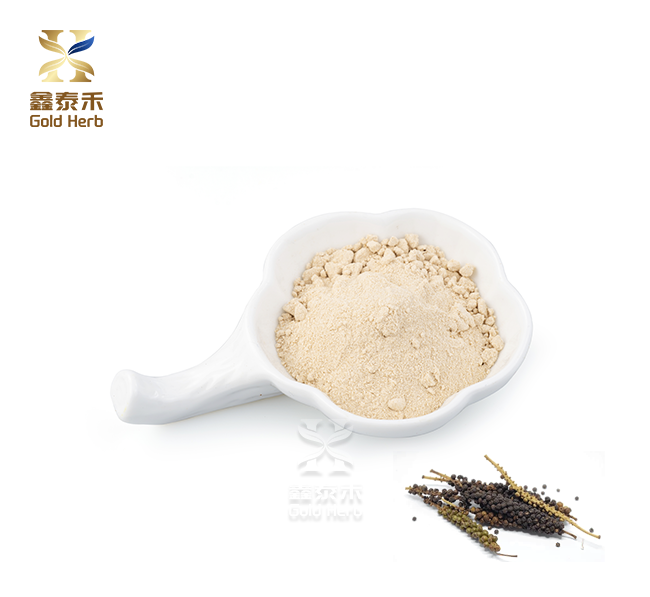
White powder |
|
Active Content |
95%, 98% Piperine |
|
CAS Number |
94-62-2 |
|
Molecular Formula |
C17H19NO3 |
|
Molecular Weight |
285.34 |
|
Part Used |
Fruit |
|
Test Method |
HPLC |
|
Mesh Size |
≥95% Pass 80 mesh |
|
Loss on Drying |
≤5.0% |
|
Shelf Life |
2 years |
|
Storage |
Tightly closed container, protected from light |
|
Certifications |
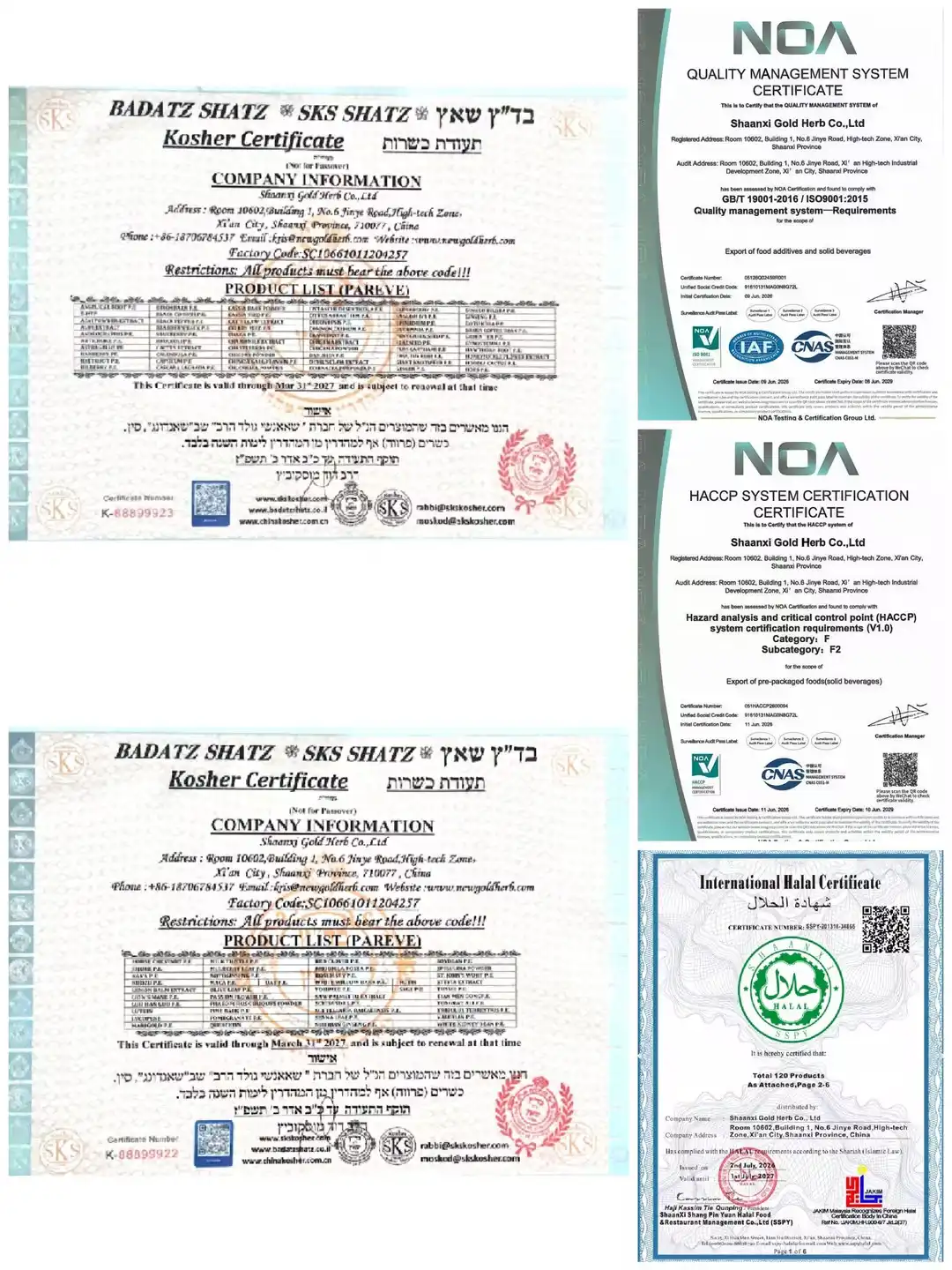
FDA, ISO9001, HACCP, HALAL, Kosher |
Quality Assurance
Certificate of Analysis (COA) for Black Pepper Extract [Request COA]
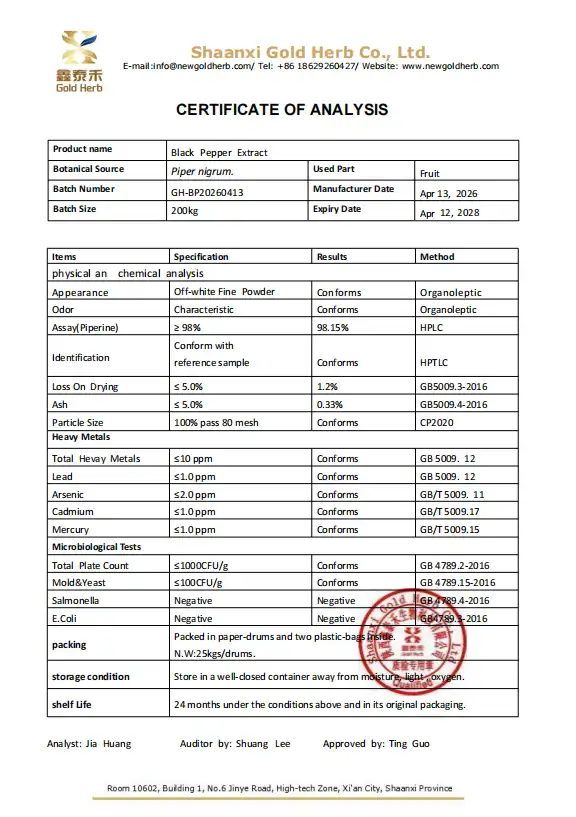
If your team needs help reviewing test results, verifying batch quality, or understanding supplier documentation before making a bulk purchasing decision, Gold Herbcan provide technical support and detailed quality information. Contact our team at info@newgoldherb.com to request a sample Certificate of Analysis and discuss your specific sourcing requirements.
How Piperine Enhances Nutrient Absorption
Piperine works by briefly stopping glucuronidation, a liver process that quickly breaks down and gets rid of nutrients that don't mix with water. Because of this metabolic bottleneck, many high-quality plant products and vitamins don't work as well as they could, even though the ingredients are expensive. According to research, piperine can make curcumin up to 2000% more bioavailable. This means that chemicals that aren't well taken become clinically useful actives. Piperine not only stops enzymes from working, but it also changes P-glycoprotein-mediated release, a process inside cells that gets rid of foreign substances. By stopping this outflow activity, piperine increases the amount of time that nutrients stay in the systemic circulation. This makes their effects stronger without needing more of them.
Nutritional and Functional Benefits Beyond Bioenhancement
Bioenhancement is still the main use, but piperine extract has other health-benefiting properties as well. It works as an antioxidant by getting rid of free radicals. This keeps cell structures safe from oxidative damage, which speeds up ageing and the development of chronic diseases. Piperine also increases the release of digestive enzymes like lipase, amylase, and protease. This helps break down macronutrients and eases symptoms like gas and indigestion. Because it can do two things, Black Pepper Extract powder is useful in formulas that aim to improve metabolic health, help with weight loss, and improve digestive health. Its thermogenic features help the body burn calories by making adipose tissue produce more heat. This is important for fat metabolism routes that are used in sports nutrition and weight loss products.

Why Black Pepper Extract Is Critical in Supplement Formulation
Maximizing ROI on Premium Ingredients
Nutraceutical companies put a lot of money into high-quality plants like ashwagandha, turmeric, and resveratrol. Without the right bioavailability tactics, these ingredients won't work as well as they could, which will hurt customers and hurt the brand's image. This problem is directly solved by piperine extract, which makes sure that expensive active ingredients get to the right tissues in the right amounts for healing. This skill gives you real competitive advantages, like better product differentiation, keeping customers longer, and better market positioning. Purchasing managers know that adding standardized piperine at a dose of 5 to 10 mg per serving greatly improves the value of the formulation without raising costs in the same way. This makes the cost-benefit ratio of final goods optimal.
Supporting Clean-Label and Natural Product Trends
More and more, consumers want supplements to be clear about what they contain and where the ingredients come from. Black Pepper Extract powder meets these needs as a bioenhancer made from plants that have been used for hundreds of years and have strong scientific support. Its inclusion backs up claims of clean labels and gives functional benefits that synthetic alternatives can't match. The extract works with organic approval programs, like USDA Organic and EU Organic standards, which makes it even more appealing to people who like high-end products. Piperine extract is an important ingredient for brands that want to follow wellness trends in whole-food nutrition and botanical synergy. It combines traditional herbalism with modern nutritional science.
Safe Usage and Dosage Guidelines for Compliance
When used within recommended dose ranges, piperine extract has a good safety rating. Most supplements have between 5 and 20 mg of piperine per serving, which is enough to improve bioavailability without harm. At these levels, piperine is well tolerated and doesn't cause much stomach pain. In both the US and the EU, piperine is generally thought to be safe and can be used in food and vitamins based on their regulatory systems. Formulation scientists have to think about how drugs and nutrients might combine, especially with prescription drugs that are broken down by cytochrome P450 enzymes. Labels that are clear and include the right warnings make sure that regulations are followed and protect buyer safety and brand identity.
Comparing Black Pepper Extract with Other Similar Ingredients
Piperine Extract vs. Whole Black Pepper Powder
There is only 3–9% piperine in whole black pepper powder. The rest is made up of volatile oils, resins, and fibres. It can be used in cooking, but it doesn't have the concentration and consistency that are needed for therapeutic supplementation. Standardized piperine extract gets rid of differences, allowing exact dose control that is needed for clinical effectiveness and regulatory compliance. During the extraction process, strong chemicals that can make pills and tablets taste bad are also taken out. This makes them more acceptable to consumers. Compared to raw plant powders, procurement teams prefer standardized extracts because they are more consistent from batch to batch, make inventory management easier, and make formulations less complicated.
Synergy with Turmeric and Curcumin Formulations
The most well-known use of piperine is when it is mixed with curcumin, which is the main pigment in turmeric extract. Curcumin is not very bioavailable when taken by mouth because it is broken down quickly and doesn't mix well with water. Adding piperine at a dose of 5 mg per serving can make curcumin more than 20 times more effective, turning it from an ingredient that wasn't very good at fighting inflammation into one that is very good at it. It is now common for joint health, cognitive support, and cardiovascular wellness formulas to work together in this way. Curcumin is marketed as a "hero" ingredient by some brands, but they know that without piperine, it's hard to back up claims of product effectiveness through clinical results or customer feedback.
Organic vs. Conventional Sourcing Considerations
Organic Black Pepper Extract is more expensive, but it has clear benefits in the market. People who care about their health will be interested in certified organic products, and these products will fit in with sustainability stories that are becoming more important in brand stories. Organic approval makes sure that crops are grown without using synthetic fertilizers or pesticides, which eases worries about residue contamination in plant-based ingredients. Conventional extracts are still widely used in situations where saving money is the most important thing and getting organic approval is not necessary for the market. Third-party tests for heavy metals, microbial pollution, and accurate piperine content is needed to make sure the quality of both groups. Suppliers who offer full certificates of analysis and regulatory paperwork make it easier to make decisions about purchases and lower the risk of not complying with rules.

How to Source and Procure Black Pepper Extract for Supplements
Identifying Qualified Suppliers with Robust Certifications
Checking sources against strict quality standards is the first step to successful buying. FDA registration, ISO9001 quality management systems, and HACCP food safety protocols are all important certifications. These qualifications show that the business is operating at a high level and following all regulations, which is needed to sell to regulated markets. Suppliers who offer Halal and Kosher certification can reach more specialized customer groups. Reliable partners are different from commodity traders because they are open about extraction methods, testing processes, and traceability systems. So that products are always the same from shipment to shipment, procurement workers should ask for exact specs like the amount of piperine, the amount of moisture, the melting point, and the maximum number of microbes that can grow on the product.
Pricing Dynamics and Bulk Purchase Strategies
Prices for 95% piperine extract on the market vary depending on how much is ordered, whether the seller is certified, and what they can do. When you buy in bulk of 100 kg or more, you usually get tiered price benefits that help your finished goods' profit margins. Strategic buyers work out framework deals that protect them from changes in the prices of raw materials by guaranteeing stable prices for 6 to 12 months. In foreign deals, financial risk is lower when suppliers offer flexible payment terms, like letters of credit or delayed payments. When you know the lead times for both standard inventory and custom specifications, you can avoid production delays and stock-outs that mess up customer commitments and manufacturing schedules.
Custom Formulation and Private Label Opportunities
Leading suppliers do more than just supply ingredients. They also offer value-added services like custom blending, encapsulation, and packaging. With these features, brands can create their own formulas without having to spend money on manufacturing equipment. Private label partnerships help new brands get their goods on the market quickly while keeping quality control high, thanks to production partners with a lot of experience. Collaboration in research and development, stable testing, and help with legal paperwork are all common parts of custom formulation services. These services shorten the time it takes to get an idea to market. When it comes to tough recipe problems, suppliers with in-house technical know-how and academic partnerships like those with research institutions are the best at fixing them.
Evaluating Logistics and Supply Chain Reliability
Global supply chain problems have made logistics skills more important when choosing a supplier for Black Pepper Extract. Partners who keep permanent inventory in destination markets, like U.S. warehouses, can fulfil orders quickly (within 3–5 business days), which keeps working capital from being wasted on inventory that is in transit. Working with respected logistics companies like DHL, FedEx, and SF Express guarantees on-time arrival and tracking of shipments in real time. When suppliers offer consolidated shipping for multiple product lines, they save money on freight costs and make administration easier. Understanding the necessary customs paperwork, how to get a certificate of origin, and regulatory filing requirements can help you avoid expensive delays at international borders. As part of risk management, you should plan for backup providers and safety stocks in case the main supply routes get interrupted for some reason.
Best Practices for Using Black Pepper Extract in Your Supplement Products
Optimizing Dosage for Efficacy and Safety
Piperine should have between 5 and 20 mg per serving, based on the nutrient and the amount of bioenhancement that is wanted. Curcumin synergy formulations usually use 5–10 mg, while wider bioavailability improvement formulations may use up to 20 mg. Going above or below these ranges doesn't add much more benefit and may make some people more sensitive in their guts. Formulation scientists need to think about how piperine affects the stability and dissolution rates of all the ingredients in a mixture, especially when the mixture has a lot of different ingredients. Pilot stability studies at suggested dosage levels make sure that the product works well throughout its shelf life, protecting the brand's reputation and making sure that it meets regulatory requirements.
Navigating Global Regulatory Frameworks
Different major markets have very different regulatory requirements. The Dietary Supplement Health and Education Act says that piperine extract is a dietary ingredient in the United States. This means that it must be made in accordance with Good Manufacturing Practices and have correct supplement facts labelling. Piperine is considered a new food ingredient in some situations by European Union rules. This means that relevant rules must be carefully read before entering the market. Health claims about increasing bioavailability must be backed up by the right scientific evidence and be written in a way that follows the rules for advertising. Getting regulatory consultants who know what the target market needs lowers the chance of fines and product recalls that hurt brand equity.
Learning from Market Applications That Worked
Leading supplement brands have shown that formulas with added Black Pepper Extract can be sold in a number of different areas. Joint health goods that combine curcumin with piperine have gained a lot of loyal customers because they work better. Piperine is added to pre-workout products by sports nutrition makers to help amino acids and performance boosts be absorbed more quickly. Piperine is used in cognitive support supplements to make nootropic compounds like bacopa and lion's mane extracts more bioavailable. These case studies show how strategically adding piperine to a product improves its positioning and leads to better sales in competitive market groups.
Conclusion
Black Pepper Extract is an important tool for people who make nutraceuticals, who want to get the most out of their ingredients and give customers better results. Its bioenhancement traits solve the basic problem of nutrient absorption, turning high-quality plants into active ingredients that have medicinal value. A procurement worker can make better choices that strengthen product portfolios by learning about piperine's workings, where to get it, and the rules that govern it. The extract is still useful in today's changing consumer markets because it works with clean-label trends, natural product positioning, and global certification standards. Strategic partnerships with qualified suppliers who can provide technical know-how, flexible customization, and reliable logistics give businesses an edge in the market that leads to success.
FAQ
1. What is the suggested amount of piperine in tablet forms?
Piperine should be between 5 and 20 mg per dose, with 5 to 10 mg being the best amount for improving the bioavailability of curcumin. This range strikes a good balance between safety and effectiveness, lowering the risk of stomach pain while improving absorption significantly. Dosage should be based on the formulation goals and nutrients that are being targeted.
2. Is it possible for piperine extract to make people sick?
Piperine is generally well-tolerated and has few side effects when taken in the recommended amounts. High amounts may cause slight stomach pain in people who are sensitive to them. Because piperine interacts with enzymes that break down drugs, it should not be used with prescription drugs, especially those that are broken down by cytochrome P450 pathways. Labels that are clear help people make better choices.
3. What does piperine do to make other supplement ingredients work better?
Piperine stops glucuronidation and P-glycoprotein release, which are two main processes that break down and get rid of nutrients quickly, before they enter the systemic circulation. By temporarily stopping these pathways, piperine increases the time that co-administered compounds stay in the body. This means that they are more concentrated in blood plasma and target tissues, which improves the effectiveness of therapy.
Partner with Gold Herb for Premium Black Pepper Extract Supply
Gold Herb stands as a trusted Black Pepper Extract manufacturer with over three years of specialized production experience serving 200+ clients across 30 countries. Our black pepper extract powder delivers 95-98% piperine verified through HPLC testing, supported by FDA, ISO9001, HACCP, Halal, and Kosher certifications that meet stringent global compliance standards. Backed by technical resources from Academician Li Xiaokun's research team and premium global supply chain networks, we provide customizable formulation solutions with production cycles under 20 days. Permanent U.S. warehouse inventory enables rapid 3-5 day fulfillment, while our technical support team ensures seamless integration into your product development process. Contact us at info@newgoldherb.com to discuss bulk procurement advantages, private label opportunities, and customized specifications that elevate your supplement portfolio.
References
1. Shoba, G., et al. "Influence of Piperine on the Pharmacokinetics of Curcumin in Animals and Human Volunteers." Planta Medica, vol. 64, no. 4, 1998, pp. 353-356.
2. Srinivasan, K. "Black Pepper and its Pungent Principle-Piperine: A Review of Diverse Physiological Effects." Critical Reviews in Food Science and Nutrition, vol. 47, no. 8, 2007, pp. 735-748.
3. Bhardwaj, R.K. et al. "Piperine, a Major Constituent of Black Pepper, Inhibits Human P-glycoprotein and CYP3A4." Journal of Pharmacology and Experimental Therapeutics, vol. 302, no. 2, 2002, pp. 645-650.
4. Dudhatra, G.B., et al. "A Comprehensive Review on Pharmacotherapeutics of Herbal Bioenhancers." Scientific World Journal, vol. 2012, Article ID 637953.
5. Meghwal, M., and Goswami, T.K. "Piper nigrum and Piperine: An Update." Phytotherapy Research, vol. 27, no. 8, 2013, pp. 1121-1130.
6. Anand, P., et al. "Bioavailability of Curcumin: Problems and Promises." Molecular Pharmaceutics, vol. 4, no. 6, 2007, pp. 807-818.

Send Inquiry
Related Industry Knowledge
- Kava Extract vs Ashwagandha: Which Is Better for Relaxation?
- Piperine: nature's secret and powerful natural Bioenhancer from black pepper
- Maca Extract : Properties in Herbal Medicine, Benefits and Uses of the Peruvian Root
- Does berberine hcl shrink belly fat?
- Sodium Copper Chlorophyllin Benefits for Detox, Skin, and Health
- Gymnema Sylvestre Extract Powder vs Bitter Melon Extract Comparison
- What Is Cyanotis Arachnoidea Extract Used For in Sports Nutrition
- Fisetin Ingredient for Anti-Aging, Brain Health, and Antioxidant Supplements
- 5-Hydroxytryptophan (5-HTP): Benefits, Applications, and Market Opportunities
- Boswellia Extract Manufacturing Process Explained