
Ergothioneine Powder Applications in Nutraceutical Formulations
Aug 03, 2026
For nutraceutical formulators in search of improved antioxidant activity, ergothioneine powder has emerged as a game-changing ingredient. This naturally occurring amino acid derivative has ≥99% purity specs and provides unique cellular protection via specialised transporter mechanisms not seen in traditional antioxidants. It also has excellent stability throughout a wide pH range and thermal stability, making it an excellent candidate for nutritional supplements, functional drinks, and sports nutrition products for control of oxidative stress and healthy ageing.
Key Product Specifications
| Parameter | Value |
|---|---|
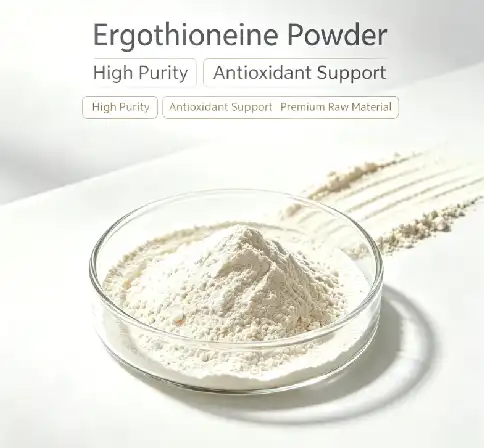
| Appearance | Off-white to white powder |
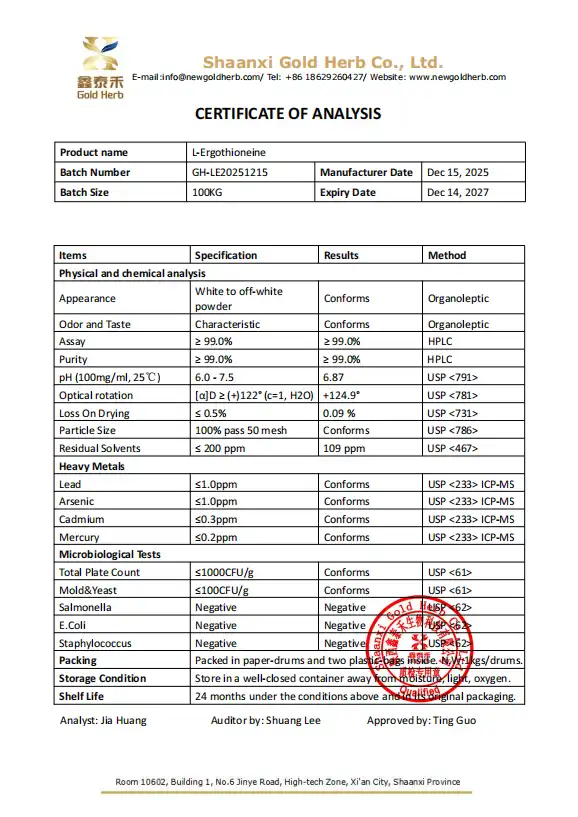
| Purity | ≥99% |
| CAS Number | 497-30-3 |
| Molecular Formula | C₉H₁₅N₃O₂S |
| Molecular Weight | 229.3 |
| Test Method | HPLC |
| pH (50mg/mL, 20℃) | 6.0-7.5 |
| Melting Point | 270-271℃ |
| Loss on Drying | ≤0.5% |
| Particle Size | 100% pass 50 mesh |
Quality Assurance
Certificate of Analysis (COA) for 5-HTP Powder [Request COA]
Understanding Ergothioneine Powder and Its Nutraceutical BenefitsWhat Makes Ergothioneine Unique Among Antioxidants
Ergothioneine Powder (CAS: 497-30-3) is a sulfur-containing amino acid derivative that was initially found in ergot fungus. Today, it is mostly made via careful microbial fermentation to guarantee that it is pure enough for medical use. This chemical crosses cells by way of the OCTN1 transporter, whereas other antioxidants act predominantly outside of cells. This particular method indicates the evolutionary significance of the chemical to human health. The molecular formula C9H15N3O2S indicates that it has a thiol-thione structure, which makes it very stable against autoxidation and active at pH values from 3.0 to 9.0.
Studies have shown that the antioxidant activities of various substances were evaluated, and the results indicated that Ergothioneine Powder has a better ability to scavenge hydroxyl radicals and peroxynitrite than ascorbic acid and tocopherol. The specific optical rotation of +122° to +128° proves the presence of the physiologically active L-isomer – a significant quality parameter for B2B customers verifying supplier credibility. The off-white to white powder is stable at processing temperatures up to 120°C and overcomes the formulation problems that often arise with heat-sensitive components.
Health Benefits Driving Market Demand
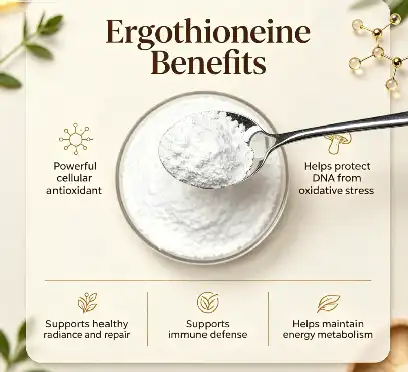
Data that procurement managers need to know about the increasing demand for Ergothioneine Powder in the dietary supplements include: Clinical research has discovered many methods to discriminate products containing this chemical. It’s a big plus because it protects mitochondria, the power plants of cells, which are less able to defend themselves against oxidative damage as individuals get older. This is immediately translated into anti-aging promises that connect with people wanting lifespan support.
Ergothioneine Powder has been of considerable interest for its neuroprotective characteristics as a result of its high concentration in brain tissue and its potential role in protecting cognitive function as we age. Another rapidly growing segment in the supplement industry is immune system support, and the substance may affect inflammatory pathways. It helps protect against UV-induced damage and reduces the obvious indications of ageing in dermatological applications, making it a desirable element for ingestible cosmetic products.
Safety Profile and Dosage Considerations
This is great news for nutraceutical applications. There have been no side effects documented at usual doses. R&D directors have viable formulation parameters with dosage ranges of 5mg to 25mg daily without toxicity issues in human investigations. The chemical is found naturally in food sources, such as mushrooms and organ meats, which supports its GRAS potential; however, the regulatory categorisation differs by country.
The procurement teams should be able to get the complete testing records from the suppliers. The testing documents should include HPLC analysis for validating the purity of >=99%, heavy metal and microbiological safety data. Ergothioneine Powder is readily soluble in water (> 100 mg/mL at room temperature) and may be included in a broad range of delivery systems without requiring any specific solubilisation processes.
Ergothioneine Powder Applications in Nutraceutical Formulations
Antioxidant Supplement Formulations
This component works well in stand-alone antioxidant solutions for cellular health and ageing problems. Because the molecules are stable, Ergothioneine Powder may be made into capsules and tablets that have a long shelf life and don’t have the oxidation difficulties of glutathione or resveratrol. Many manufacturers may add 10 to 20 mg of Ergothioneine Powder with additional antioxidants such as alpha-lipoic acid or CoQ10 to provide total protection against oxidative stress. The crystalline powder is characterised by outstanding flowing qualities which enable direct compression tableting, thereby simplifying manufacture.
Beverage applications are a developing market potential, and the neutral taste profile and 100% water solubility of Ergothioneine Powder make it suitable for ready-to-drink functional beverages. It helps prevent oxidative damage from exercise, and for this reason sports nutrition firms have included it to post-workout recovery solutions. This component is stable at the pH of most beverages, and can withstand pasteurisation methods that would destroy more delicate molecules.
Synergistic Formulation Strategies
Ergothioneine Powder is often stacked with ingredients that target complementary pathways for increased effectiveness. Cognitive health formulations may be formulated in combination with B-vitamins that enhance antioxidant defence and neurotransmitter production. Co-formulation with vitamin D and zinc offers immune-focused goods multi-mechanism support for immune cell activity. These synergistic techniques enable businesses to achieve premium market positioning while offering tangible customer advantages.
The quality of the formulation depends on excipient compatibility. Ergothioneine Powder is compatible with most common fillers and binders. Formulators should undertake stability testing when combining with transition metals, which may catalyse oxidation processes. The low moisture absorption of the chemical reduces packing needs compared to hygroscopic antioxidants that require desiccant protection.
Real-World Integration Success
There is proof of the economic potential of the component, as certain worldwide supplement manufacturers have successfully introduced products using Ergothioneine Powder. A European cognitive health company saw a 30% repeat buy rate for a nootropic mix with 15 mg of the substance, plus lion’s mane extract. And in North America, longevity businesses have made it a staple constituent in premium anti-aging stacks, playing up its “cellular vitamin” properties.
Clean label appeal: OEM manufacturers supplying private label customers observe that Ergothioneine Powder’s clean label appeal fits consumer desires for recognisable ingredients originating from nature. The capability to produce non-GMO, vegan-friendly material targets many market areas. The ingredient’s regulatory acceptability in key markets also aids product development schedules via the avoidance of the delays associated with new compounds needing long pre-market approval processes.
Comparative Analysis: Ergothioneine Powder vs Other Antioxidants
Bioavailability and Cellular Uptake
Ergothioneine Powder has a unique advantage over passive-diffusion antioxidants because of the OCTN1 transporter function. Vitamin C levels drop fast with increasing food consumption as active transport becomes saturated, whereas ergothioneine powder builds up in tissues in response to intake across a larger range. Tissue retention studies indicate half-life values in excess of 30 days, but water-soluble antioxidants are often cleared in a matter of hours. This persistence enables formulators to propose lower daily dosages with prolonged antioxidant coverage.
Glutathione has significant action inside cells; however, there are severe bioavailability problems when taken orally because of enzymatic degradation in the digestive system. The resistance of ergothioneine powder to peptidase activity facilitates its stability during transit through the gastrointestinal tract, delivering intact molecules to absorptive sites. This basic distinction explains why clinical results with oral supplementation typically surpass forecasts based on simple antioxidant capacity tests.
Production Methods and Purity Standards
Modern manufacturing of Ergothioneine Powder involves biosynthetic fermentation with optimised microbial strains, often resulting in purities greater than 99% as confirmed by HPLC testing. That is a far cry from the extraction procedures used in mushrooms, which barely get to 95% purity and have batch-to-batch variability. Procurement managers need to be aware that fermentation-derived materials are more consistent, scalable, and cost-predictable than those extracted from agriculture.
Global distribution depends on quality certificates. Suppliers who are FDA-registered and have ISO9001, HACCP, HALAL and Kosher certifications show their dedication to satisfying a wide range of regulatory standards in different markets across the world. These credentials facilitate product registration and lower compliance risks for companies that sell in numerous countries. These certificates must be verified and should be a compulsory element of supplier qualification processes.
Market Pricing and Supply Dynamics
The current market price for pharmaceutical-grade Ergothioneine Powder generally varies from $3,000 to $6,000 per kilogram, depending on the order volume, purity criteria, and certification needs. Big companies buy in bulk ( 15-25 % off > 10 kg ) and can save a lot of money; thus, they are motivated to keep track of what they have. Its potency enables cost-competitive formulations vs other premium antioxidants such as astaxanthin or resveratrol on a per-dose basis, even with the greater raw material cost.
Several fermentation plants have increased production capacity, greatly improving supply chain dependability. Availability is increasingly constant for top suppliers in Asia, Europe, and North America, but procurement managers should continue qualifying backup sources to reduce supply interruption risks. The substance also has a great stability profile, holding potency for over 36 months when stored properly, enabling inventory strategies that may leverage bulk pricing without undue risk of deterioration.
Procurement Guide: How to Buy Ergothioneine Powder for Nutraceutical Manufacturing
Essential Supplier Selection Criteria
The identification of competent suppliers involves a rigorous review of a range of parameters. Manufacturing certifications such as GMP compliance are proof that a company adheres to pharmaceutical-grade manufacturing standards that ensure the integrity of the ingredients. The analytical capability is crucial; suppliers should exhibit in-house HPLC testing capability with frequent checks of purity, specific rotation and microbiological safety. Only established manufacturers have the statistical process controls to ensure batch-to-batch uniformity.
Growing companies also need to think about production capacity and scalability. Your suppliers should be upfront about existing capacity, lead time for different-sized orders, and expansion plans that fit your development curve. Technical assistance is what makes premium providers distinct from commodity merchants. “Having formulation scientists who understand the unique properties of Ergothioneine Powder can accelerate product development and assist with troubleshooting stability challenges.
Ordering Process and Sample Evaluation
Smart procurement starts with sample assessment before committing to production numbers. Reputable vendors supply samples in the 10-100g range with full certificates of analysis including purity, heavy metals, residual solvents, and microbiological condition. This enables formulators to do compatibility testing with your formulation matrix and to ensure that the organoleptic qualities are as expected.
Minimum order sizes vary by provider but are often 1 kilogram for first orders and escalate to more economical 10-25 kilogram purchases for established items. Lead times of 7-15 working days can fit most production planning cycles for regular standards, while accelerated service options are available for urgent situations. Payment conditions generally need a 30-50% deposit with the rest payable on shipping; however, more favourable terms may be negotiated with existing clients.
Cost Optimization Strategies
There are a number of ways that procurement managers may optimise the total cost of ownership. The component has a good stability profile that allows for consolidating orders to meet volume requirements and to benefit from large per-unit savings without excessive inventory holding costs. By signing long-term supply agreements with set yearly quantities, you may frequently get 10-15% price advantages while assuring continuity of supply. If suppliers can provide value-added services such as custom packaging or formulation help, evaluating these services may lower the overall costs of a project, even if the raw material price is somewhat higher.
Logistics optimisation greatly affects landing costs. Suppliers that store goods in the markets of destination avoid international shipping delays and lower freight costs. The rates indicated include the whole regulatory paperwork package so that you won’t have to pay any unexpected expenses at customs clearance. Some suppliers may absorb shipping for modest purchases, making them desirable for product development before growing to full production numbers.
Future Trends and Innovation in Ergothioneine-Based Nutraceuticals
Emerging Research and Therapeutic Applications
The scientific community is finding new methods to support the extended uses of Ergothioneine Powder. Recent studies on its involvement in mitochondrial biogenesis reveal possibilities for sports recovery and metabolic health formulations beyond standard antioxidant placement. An ophthalmologic study on the preventive impact against blue light damage provides prospects for eye health supplements among digital device users. Emerging evidence of its regulation of inflammatory pathways is positioning it for immunological and inflammatory response products.
A particularly interesting area is personalised nutrition. Genetic diversity in the expression of the OCTN1 transporter creates subpopulations that are more susceptible to supplements, and this may allow for tailored marketing to genetically tested customers. The quantifiable build-up of the chemical in blood and tissues lends itself to biomarker-guided dosage tactics that go beyond one-size-fits-all guidelines to precision supplementing programs.
Market Growth Projections and Consumer Trends
The supplement market containing Ergothioneine Powder is expected to increase at more than 15% per annum through 2030, mostly due to the ageing population in developed regions and growing health awareness in developing nations. This substance is highly appreciated by the clean label movement as consumers are more and more trusting amino acid derivatives instead of synthetic antioxidants. Anti-aging is still the largest application area, but the fastest growth trends are seen in goods targeting cognitive health and longevity.
Regulatory changes also influence commercial potential. Increasing acceptability in key markets lessens the obstacles to market entrance for new goods, and the harmonisation of purity requirements across jurisdictions makes it easier to introduce products in several countries. Brands should keep an eye on current GRAS designations and new food approvals that might help speed mainstream acceptance outside of speciality supplement channels into functional foods and drinks.
Strategic Recommendations for Product Development
Formulators looking to the future should explore a number of techniques to exploit the potential of Ergothioneine Powder. It’s a premium differentiation in crowded antioxidant categories, helping justify higher price ranges and appealing to discriminating customers looking for cutting-edge ingredients. A holistic option that is drawing commercial interest is combining the chemical with senolytic drugs or NAD+ precursors to target several ageing pathways.
Partnerships with authorised suppliers providing technical cooperation expedite innovation cycles and secure supply in growing markets. Manufacturers that invest in quality, as shown by extensive testing, clear documentation and consistent performance, become strategic partners rather than transactional suppliers. These alliances allow for co-development of optimised delivery methods, customised specifications and proprietary formulas that provide competitive advantages.
Conclusion
Ergothioneine Powder is a scientifically proven ingredient that addresses the nutraceutical industry’s need for effective, stable and consumer-friendly antioxidants. With its unique cellular absorption mechanism, superior stability profile, and rising research basis, it is a crucial ingredient for companies in the anti-aging, cognitive health, and general wellness sectors. As consumer recognition and regulatory routes become more defined in global markets, those in procurement who grasp the technical benefits of it, assess supplier capabilities, and include it into new formulations will be the ones to grab considerable market potential.
FAQ
1. What is the optimal daily dosage of ergothioneine in nutraceutical formulations?
Clinical studies have evaluated doses ranging from 5 to 25 mg daily, with 10-15 mg emerging as a practical range balancing efficacy with cost considerations. Higher doses demonstrate excellent safety profiles but may not deliver proportional benefits due to cellular saturation. Formulation managers should consider target health outcomes, with cognitive and longevity applications trending toward the higher end, while general antioxidant support products use lower doses.
2. Does ergothioneine cause any side effects or safety concerns?
Published safety data shows no adverse effects at supplemental doses up to 25 mg daily, with human trials documenting excellent tolerance. Its natural presence in common foods like mushrooms supports safety assumptions. Theoretical concerns about excessive antioxidant intake disrupting beneficial oxidative signaling have not manifested in research. Suppliers should provide toxicology documentation confirming these safety profiles for regulatory submissions.
3. How can I verify the purity and quality of ergothioneine powder from suppliers?
Request certificates of analysis showing HPLC purity testing confirming ≥99% active content, specific optical rotation values between +122° to +128°, and comprehensive impurity screening including heavy metals, residual solvents, and microbial contamination. Reputable suppliers provide third-party testing verification and maintain consistent results across batches. Sample testing through independent laboratories offers additional assurance for high-volume commitments.
Partner with Gold Herb for Premium Ergothioneine Powder Supply
Gold Herb delivers pharmaceutical-grade Ergothioneine Powder meeting the rigorous demands of nutraceutical manufacturers worldwide. Our strategic partnership with leading biotech research institutions ensures access to fermentation-derived material achieving ≥99% purity verified by HPLC, backed by comprehensive certifications including FDA registration, ISO9001, HACCP, HALAL, and Kosher. As an established Ergothioneine Powder supplier, we maintain over one ton of inventory, enabling 24-hour shipping for standard orders, while our U.S. warehouse network guarantees 3-5 business day delivery for North American clients. Contact our technical team at info@newgoldherb.com to request samples, discuss custom formulation support, or explore competitive bulk pricing options.
References
1. Cheah, I.K., and Halliwell, B. (2012). Ergothioneine; antioxidant potential, physiological function and role in disease. Biochimica et Biophysica Acta, 1822(5), 784-793.
2. Gründemann, D., et al. (2005). Discovery of the ergothioneine transporter. Proceedings of the National Academy of Sciences, 102(14), 5256-5261.
3. Halliwell, B., et al. (2018). Ergothioneine - a diet-derived antioxidant with therapeutic potential. FEBS Letters, 592(20), 3357-3366.
4. Paul, B.D., and Snyder, S.H. (2010). The unusual amino acid L-ergothioneine is a physiologic cytoprotectant. Cell Death & Differentiation, 17(7), 1134-1140.
5. Ey, J., et al. (2007). Dietary sources and antioxidant effects of ergothioneine. Journal of Agricultural and Food Chemistry, 55(16), 6466-6474.
6. Servillo, L., et al. (2015). Ergothioneine products derived from microbial biosynthesis and chemical synthesis: comparative analysis for nutraceutical applications. Journal of Functional Foods, 16, 338-345.

Send Inquiry
_1783318600974.webp "Pure BCAA Powder")
Related Industry Knowledge
- 6 Creatine Monohydrate benefits for your body and brain
- What are 4 facts about Lotus Leaf Extract ?
- Fisetin Powder: Benefits, Safety, Applications
- Black Pepper Extract Powder: Benefits, Uses and Bulk Supply Guide
- Urolithin A Explained: Specifications, Uses and Industry Insights
- Unlocking the Power of Pygeum Africanum Extract Powder
- Ergothioneine Benefits for Skin, Brain, and Cellular Health
- Sodium Copper Chlorophyllin for Skin: Acne & Anti-Aging Benefits
- What Is Fisetin? Benefits, Uses, and Market Potential
- Urolithin A: Benefits, Applications, and Market Opportunities for Nutraceutical Brands