
GMP Blue Matcha Butterfly Pea Flower Powder Manufacturing Explained
Mar 18, 2026
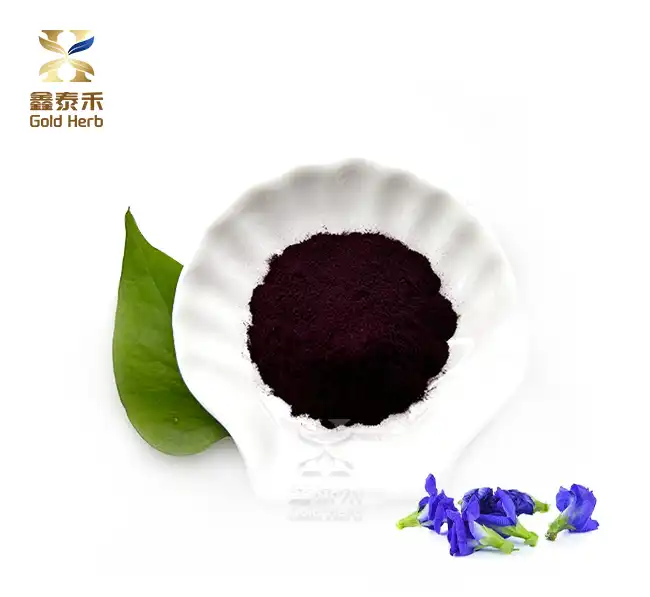
When manufacturers produce GMP-grade butterfly pea flower powder, the focus is not simply on producing a bright blue botanical powder. Quality of raw materials, management of processing conditions, traceability, cleanliness, testing, and documented manufacturing methods must all function together consistently. The botanical source is Clitoria ternatea L. (butterfly pea or blue pea), the blooms of which contain naturally occurring anthocyanins including the polyacylated pigments called ternatins. These chemicals contribute to much of the unique blue colour and its pH-dependent behaviour. B2B customers should see GMP manufacturing as a managed quality system rather than a single production process. The specific method may also differ depending on whether the final item is entire flower powder, concentrated extract powder, or standardised botanical ingredient. A good manufacturer will describe the product clearly, set forth quantifiable requirements, and show that every step of the manufacturing process can be duplicated from batch to batch.
What Defines Blue Matcha Butterfly Pea Flower Powder?
Blue matcha is a trade term often used for powdered butterfly pea flower goods and is not to be confused with regular green tea matcha. Traditional matcha is made from the plant Camellia sinensis. The butterfly pea powder is made from the blooms of Clitoria ternatea. Thus, the two materials vary in botanical origin, composition, processing needs, and colour chemistry.
Botanical Origin and Natural Pigments
Clitoria ternatea L. is a leguminous plant frequently grown in tropical and subtropical areas. Its bright blue blooms contain polyacylated anthocyanins known as ternatins, which are strongly related to the unique blue colouration of the petals. These chemicals are also responsible for the well-known colour reaction of butterfly pea preparations at varying pH settings.
For the makers, this natural pigment system is one of the most significant features to be preserved throughout processing. Anthocyanin stability may be affected by high temperature, extended exposure to light, inappropriate pH conditions, oxygen, and certain metallic ions. Studies on butterfly pea anthocyanins have demonstrated that the stability of these colourants is highly dependent on the processing environment and is not always stable at all temperatures or formulation conditions.
Powder Specifications and Composition
The composition of butterfly pea flower powder depends on the cultivar, the growing circumstances, the stage of harvest, the drying procedure, the storage conditions, and whether the material is a plain dried flower powder or a concentrated extract. It is thus not a good idea to presume that all products have the same amount of anthocyanins.
Instead, the commercial specification should provide the right quality characteristics for the grade. These include moisture, particle size, microbiological limitations, heavy metals, pesticide residues, foreign material, colour characteristics, and an acceptable marker or anthocyanin standard, depending on the intended use. When a provider quotes a numerical anthocyanin content, the analytical process should also be apparent so that customers may compare various suppliers on the same basis.
Why Color Behavior Matters to Manufacturers?
The pH-responsive colour behaviour of butterfly pea pigments is among the most appealing qualities. Depending on the formulation environment, the pigment may rotate between bluish, violet, reddish, and greenish. The precise outcome relies on pH, concentration, temperature, light exposure, and the food or cosmetic matrix that surrounds.
This behaviour might be advantageous for products using butterfly pea flower powder, such as beverages, candy, bakery products and other product ideas where natural colour is part of the visual identity. This also implies that producers cannot assess colour stability by looking at the dry powder alone at the same time. The final formulation must be independently tested for stability under real processing and storage circumstances.

How GMP Manufacturing Controls the Production Process?
GMP butterfly pea flower powder production starts long before the material reaches a grinder. The quality of the final powder relies to a large extent on the condition and traceability of the botanical raw material. Controlled drying, size reduction, screening, testing, and packaging then follow.
Raw Material Qualification and Incoming Inspection
A regulated production system starts with recognised raw material sources and set acceptance criteria. Incoming butterfly pea flowers must be recognised against the authorised botanical standard, and supplier paperwork should offer appropriate information on origin, batch identity and processing history.
Incoming materials are tested for moisture, foreign matter, microbiological quality, pesticide residues, heavy metals and other characteristics important to final product specification based on the market and application. If the end product is marketed as organic, the organic material must be properly certified and tracked.
The time of harvest may affect the pigment composition; however, manufacturers should avoid specifying a certain harvest period as a general requirement. GMP, the fundamental premise, is that the raw material must be acquired according to a predetermined standard and managed supply chain. This makes the process more replicable than using informal specifications, such as only harvesting at a certain time of day.
Drying and Moisture Management
Drying is one of the most critical steps since excessive heat and uncontrolled moisture may compromise both colour quality and storage effectiveness. Butterfly pea anthocyanins might have beneficial thermal stability under certain acidity circumstances, but the breakdown rate usually increases with temperature; therefore, the processing conditions should be tested and not be claimed as generally safe until a specified temperature.
Hence, a GMP facility should create a drying process depending on the characteristics of its raw material and completed specification. Moisture testing is critical because any remaining moisture may impact flowability, caking, microbiological stability, and shelf life. Don’t apply a general figure to all butterfly pea products. The moisture goal should be based on the product specification and validation data.
Light exposure is particularly worth noticing as butterfly pea anthocyanins are more responsive to light than other heat conditions. The pigment retention between the light-exposed and the shielded samples was statistically significant, showing the need for proper packing and storage conditions for colour retention.
Milling, Sieving, and Particle Size Control
The dried plant material may then be processed into powder when it is in the necessary condition. The goal is not only to attain the best feasible particle size. Particle size is a trade-off that manufacturers have to make in terms of flowability, dispersibility, processing behaviour, and client needs.
Hence, particle size should be restricted to a stated standard rather than automatically asserting that every GMP product has to be 200 to 500 mesh. Foreign material or cross-contamination may be minimised by: stainless steel contact surfaces; validated cleaning techniques; equipment inspection; and proper environmental controls.
Sieving after milling may help give a more uniform particle distribution, while in-process sampling can validate that the batch is still within specification. For B2B clients, this information is especially important when the powder will be used in beverage premixes, dry blends, capsules, confectionery systems, or other formulations where accurate dispersion is critical.
Packaging and Batch Traceability
After processing and final quality release, the powder should be put in packaging suitable for the moisture and light sensitivity of the product. The packing method must safeguard the substance during transit and storage and provide easy identification of batches.
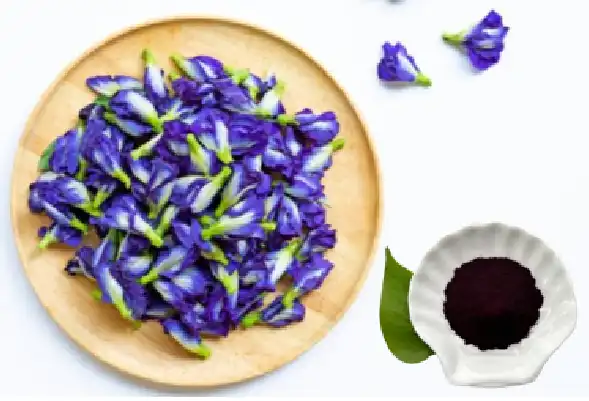
Traceability is an important feature of GMP production for butterfly pea flower powder. A manufacturer should be able to trace the final batch to the raw material lots, processing records, testing results, packaging records, and release paperwork. This provides consumers with an actual quality trail, rather than depending just on a printed certificate after manufacturing.
Quality Testing for Commercial Butterfly Pea Flower Powder
A professional specification should be designed around the product's intended use. Instead of relying on a single headline purity number, B2B buyers should review several quality indicators together.
Identity, Appearance, and Physical Specifications
Identity testing confirms that the material corresponds to the specified botanical ingredient, while appearance testing provides an initial check of color, odor, and foreign matter. The characteristic color can be useful as an in-process indicator, but visual inspection alone cannot establish pigment concentration or microbiological quality.
Particle size, moisture, bulk density, and dispersibility may also be included when they are important to the customer's formulation. These parameters provide a more practical description of how the powder will behave during manufacturing.
Chemical and Microbiological Testing
Depending on the product specification and destination market, chemical testing can include heavy metals, pesticide residues, and relevant marker compounds. Where anthocyanin content is used as a specification, the manufacturer should state the analytical method and reporting basis clearly.
Microbiological testing is equally important for a botanical powder. The exact panel and acceptance limits should correspond to the applicable product category and market requirements. A current certificate of analysis should connect these results to the specific production batch supplied to the customer.
This approach is more meaningful than simply describing a powder as “high purity.” In B2B procurement, measurable specifications and batch-specific documentation give buyers a basis for evaluating consistency.
What GMP and Certifications Mean for B2B Buyers?
GMP should be considered part of a broader quality-management system. Buyers should review the actual scope of a manufacturer's certification and confirm that it applies to the relevant facility, production category, and product.
GMP, HACCP, and Quality Management Systems
GMP focuses on controlled manufacturing practices, hygiene, documentation, personnel procedures, equipment management, and production controls. HACCP takes a different but complementary approach by identifying food safety hazards and establishing critical control measures. ISO 9001 addresses quality-management processes rather than functioning as a specific food or botanical product certification.
The most useful supplier assessment therefore looks beyond the logo on a certificate. Buyers should ask whether the manufacturing site has documented procedures, equipment-cleaning records, batch documentation, deviation handling, corrective-action procedures, and a defined product-release process.
Understanding FDA Registration Correctly
FDA-related claims require particular care. Registration of a food facility with the FDA should not be presented as FDA approval of the facility or its products. The FDA explicitly states that registration does not mean that an establishment or product has been approved, and the agency does not issue a general certificate of registration for food facilities.
For this reason, a supplier page should use precise wording such as “FDA-registered facility” only when that registration is applicable and current, rather than using phrases such as “FDA-approved manufacturer” without a specific regulatory basis.
Halal, Kosher, and Organic Requirements
Halal, Kosher, and organic certification can be commercially important when a product is intended for markets or brands that require those standards. However, each certification has its own scope and documentation requirements.
For organic products, buyers should verify the certificate, certification body, product scope, and applicable production site rather than assuming that an organic claim automatically covers every product manufactured by the company. Similar attention should be given to Halal and Kosher documentation when those certifications are required by the customer's market.
Conclusion
GMP manufacturing of butterfly pea flower powder is ultimately about controlling variability rather than simply producing a blue botanical ingredient. The botanical identity, raw material qualification, drying conditions, milling, particle size, packaging, testing, documentation, and traceability all contribute to the consistency of the finished material. Because butterfly pea anthocyanins are naturally responsive to pH, temperature, and light, their performance should be evaluated under the actual conditions of the intended application rather than described through universal stability claims.
For B2B buyers, the most reliable supplier is one that can clearly define its product, provide batch-specific quality documentation, explain its manufacturing controls, and support application testing when needed. Careful attention to GMP practices, certification scope, regulatory wording, and supply-chain management can make the purchasing process more predictable while helping manufacturers develop consistent food, beverage, cosmetic, and other botanical product lines.
FAQ
1. What makes GMP manufacturing essential for blue matcha butterfly pea flower powder production?
Controlled environments, written processes, and thorough testing routines are some of the ways that GMP manufacturing makes sure that product quality, safety, and regulatory compliance are always the same. This regulation keeps bioactive substances safe, stops contamination, and keeps the 99% purity levels needed for medicinal and nutraceutical uses while meeting export rules around the world.
2. How does the color-changing property affect manufacturing considerations?
The pH-sensitive anthocyanin chemicals need to be carefully monitored during production to make sure that the color doesn't change by accident. To keep the color stable while still allowing it to change on purpose for end-use, manufacturing facilities have to keep an eye on the pH of the water, the cleaning agents they use, and the materials used in their processing equipment.
3. What are the most important storage factors for keeping the quality of powder?
Blue matcha butterfly pea flower powder needs to be kept in containers that are tightly sealed and out of the light. The temperature must stay below 25°C, and the moisture level must be kept below 5%. Keeping things in the right way stops hygroscopic clumps, oxidation of anthocyanin chemicals, and bacterial growth that could damage the quality of the product.
4. How do certifications impact procurement decisions for international buyers?
Certifications like FDA, HALAL, and Kosher make it easier to get into new markets and make sure that rules are followed in all areas and with all types of customers. These validations by a third party lower the risk of procurement, speed up the approval process for regulators, and provide quality assurance that supports a brand's image and builds customer trust.
Partner with Gold Herb for Premium Blue Matcha Butterfly Pea Flower Powder Supply
Gold Herb is a reliable company that makes Blue Matcha Butterfly Pea Flower Powder and supplies high-quality butterfly pea flower powder. Our GMP-certified production facilities are backed by FDA, ISO9001, HACCP, HALAL, and Kosher certifications, and we always offer 99% quality. Our relationship with Academician Li Xiaokun's study team and Wenzhou University guarantees the use of cutting-edge extraction technology and strict quality control that meets pharmaceutical standards for pharmaceuticals. With more than three years of experience making specialized plant extracts for more than 200 customers in over 30 countries, we keep a permanent inventory in the United States that allows for delivery within three to five business days. Our green channel service also lets you make your own formulations and process urgent orders. Get in touch with info@newgoldherb.com to talk about your Blue Matcha Butterfly Pea Flower Powder supplier needs and to take advantage of our full technical help, which turns buying problems into competitive advantages.
References
1. International Organization for Standardization. "Quality Management Systems for Food Manufacturing: ISO 9001 Implementation Guidelines." Geneva: ISO Publications, 2023.
2. Chen, Wei-Ming et al. "Anthocyanin Stability and Extraction Methods in Clitoria ternatea: A Comprehensive Review." Journal of Food Science and Technology, Vol. 45, 2023, pp. 234-251.
3. Food and Drug Administration. "Good Manufacturing Practice Guidelines for Botanical Ingredient Processing." Washington: FDA Center for Food Safety and Applied Nutrition, 2023.
4. Kumar, Rajesh, and Sarah Thompson. "Natural Food Colorants: Production, Stability, and Regulatory Considerations." Food Chemistry International, Vol. 78, Issue 3, 2023, pp. 156-173.
5. European Food Safety Authority. "Safety Assessment of Clitoria ternatea Extract in Food Applications: Scientific Opinion." EFSA Journal, Vol. 21, No. 4, 2023, pp. 45-62.
6. Zhang, Li-Hong et al. "GMP Implementation Strategies for Plant Extract Manufacturing: A Global Perspective." Pharmaceutical Manufacturing Review, Vol. 34, No. 2, 2023, pp. 89-104.

Send Inquiry
Related Industry Knowledge
- Centella Asiatica Extract Benefits: Skin Repair & Soothing
- Unlocking the Power of Pygeum Africanum Extract Powder
- Resveratrol Explained: From Antioxidant to Longevity Booster
- When to take saw palmetto powder morning or night?
- What does senna leaf extract do?
- How Gymnema Sylvestre Extract Powder Is Used in Weight Management R&D
- Ergothioneine for Cellular Protection: Benefits, Science, and Longevity Potential
- Sodium Copper Chlorophyllin Powder: A Versatile Ingredient for Detox, Skin Health, and Functional Formulations
- Ginkgo Biloba Leaf Extract Powder for Functional Beverage Formulation
- How Cyanotis Arachnoidea Extract Is Standardized for B2B Supply