
How to Choose High-Quality Phycocyanin Powder
Sep 09, 2026
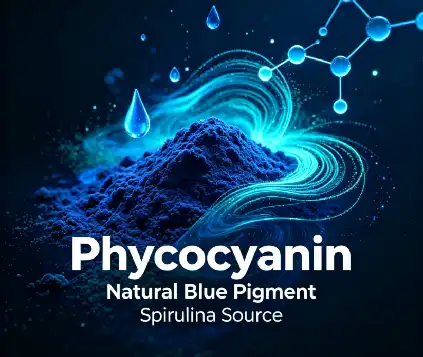
Choosing the right phycocyanin powder starts with understanding what separates a premium-grade ingredient from a substandard one. As a natural blue pigment-protein complex extracted from Spirulina platensis, this ingredient serves dual roles—a vibrant colorant and a potent bioactive compound. For R&D directors, formulation managers, and procurement teams, the selection process must weigh purity specification, source traceability, regulatory compliance, and supply chain reliability. This guide breaks down each criterion so you can source confidently and protect your brand.
Blue Spirulina Phycocyanin Powder Information
|
Product Name |
Blue Spirulina Phycocyanin Powder |
|
Source |
Spirulina platensis |
|
Main Component |
Phycocyanin |
| CAS Number | 11016-15-2 |
| Molecular Formula | C34H39N3O6 |
| Molecular Weight | 585.71 |
|
Appearance |
Blue Powder |
|
Color |
Natural Blue |
|
Solubility |
Soluble in Water |
|
Testing |
UV / HPLC |
| Solubility | Water Soluble |
| pH Stability | Stable at pH 5.0–9.0 |
| Heavy Metals (Pb) | ≤10 ppm |
| Loss on Drying | ≤8% |
| Certificate | FDA, ISO9001, HACCP, HALAL, Kosher |
|
Shelf Life |
24 Months |
|
Packaging |
1kg Foil Bag / 25kg Drum |
Understanding Phycocyanin Powder and Its Market Value
The world market for useful ingredients is moving quickly toward natural, clean-label options. A blue pigment that comes from spirulina is at the center of that change. This botanical colorant meets the growing demand for plant-based, non-GMO ingredients in nutraceuticals, cosmetics, and functional foods. It is different from manufactured options like Brilliant Blue FCF, which are facing more and more regulatory pushback in many places.
Why Does Market Demand Keep Rising?
Grand View Research says that the global spirulina market was worth more than USD 691 million in 2023 and will continue to grow at a rate higher than 10% per year until 2030. One main reason is the high demand for natural blue colorants and bioactives that can do more than one thing. This ingredient fits right into that category. This growth means that there will be more competition for supplies, which means that qualifying suppliers early is no longer just a regular job but a strategic advantage for procurement teams.
Dual Functionality: Color and Bioactivity
Phycocyanin extract is very appealing to business-to-business buyers because it can be used for two different things. It has a deep sapphire blue color that is better than dull colors like Gardenia Blue. At the same time, it has broad-spectrum antioxidant action. There is proof that it can get rid of hydroxyl radicals, superoxide radicals, and peroxide radicals, which lowers oxidative stress at the cellular level. This dual value proposition improves the positioning of products in the food, cosmetics, and supplement categories all at the same time.
Key Criteria for Choosing High-Quality Phycocyanin Powder
Not every blue product made from spirulina is the same. The quality difference between sources can be big, and if you make the wrong choice about where to get your ingredients, you could end up with formulation problems, compliance issues, or damage to your business. Knowing the most important selection factors helps buying pros sort well.
Here are the most important quality factors that every buyer should look at:
- Purity and specification: For high-end business uses, a 98% purity grade, like Gold Herb's Blue Spirulina phycocyanin powder, is the standard. Higher purity makes sure that all production batches have the same color strength and bioactive power. Always ask for a Certificate of Analysis and use spectrophotometry to check the phycocyanin level at 618 nm.
- Botanical source verification: Make sure the extract comes from Arthrospira platensis, the species whose safety and effectiveness profile has been the most thoroughly studied. Source paperwork should include records of where the plants came from, how they were grown, and how they were harvested.
- Certifications and compliance documentation: At the very least, look for FDA registration, ISO 9001, HACCP, and certifications for food safety. For global distribution, HALAL and Kosher certifications make it much easier to reach a lot more customers. These certificates show that safety rules, quality management systems, and tracking standards are always followed.
- Stability and packaging integrity: Phycocyanin is easily damaged by changes in pH, light, and heat. Premium powder should be kept in its original, tightly sealed containers away from light and shipped in controlled conditions. Suppliers who spend money on secure packages show that they know how vulnerable ingredients can be.
These factors work together to describe a good raw material. You should give serious thought to adding to your group suppliers who can provide third-party lab proof for all four dimensions.
Comparing Phycocyanin Powder with Alternative Antioxidants
A lot of the time, buying teams compare phycocyanin extract to spirulina whole powder, chlorophyll, and other vitamins that come from plants.
Phycocyanin vs. Spirulina Whole Powder
Phycocyanin is one of the many parts of spirulina whole powder, but the amount is much lower than in a pure extract. When a precise amount of color or antioxidant activity is needed, a 98% pure extract is better than whole powder because it eliminates formulation variability. The concentrated form also cuts down on the amount needed for each batch, which saves money overall when used on a large scale.
Powder vs. Other Delivery Formats
For business-to-business uses, the phycocyanin powder form is more flexible because it can be used in capsules, functional drinks, cosmetic bases, and food matrices. Formulation scientists can precisely control dosage and make changes to the ingredients across product lines with bulk powder, but not with pre-encapsulated or liquid formats. This flexibility lets OEMs and wholesalers make and sell a wider range of products from a single source of raw materials.
Procurement Strategies for Bulk Purchasing
It takes more than just comparing price sheets to source on a large scale. A good buying strategy includes qualifying suppliers, planning procedures, and managing relationships with suppliers.
Before agreeing to large orders, a strict source check should include getting paperwork from the production facility, looking over recent lab results from a third party, and getting real samples. The most accurate quality signal comes from testing samples in the same conditions as your actual formulation, not just analysis on its own. Gold Herb gives samples to people who ask for them so they can test their compatibility in real life before buying.
Prices for spirulina blue extract depend on the purity grade, whether the product is organically certified, and the size of the order. Setting up volume-based price deals with a single qualified seller is usually cheaper than buying from a bunch of different vendors whose quality profiles aren't always the same. In order to avoid transportation problems, logistics issues like Incoterms, cold-chain needs, and wait times should be included in purchase agreements.
Case Studies: Successful Procurement for B2B Applications
Real procurement decisions show patterns that can't be seen with just a spreadsheet.
An original equipment maker that was looking for ingredients for a high-end line of immune-support supplements put 98% purity phycocyanin with all the necessary legal paperwork at the top of their list. By working with a supplier that had FDA, ISO 9001, HACCP, HALAL, and Kosher certifications, the manufacturer made it easier to enter the US and Middle Eastern markets at the same time. This cut down on compliance costs by putting all of the certification requirements on one supplier.
A healthy beverage brand that was making a line of cold-pressed blue juice had trouble with the recipe because the blue juice was sensitive to pH. The team chose a very pure phycocyanin extract and worked directly with the supplier's technical team to find the best conditions for incorporation. These included keeping the processing temperatures below 50°C and changing the buffer conditions. The end result was a stable product that looked great and did well when it hit the US market.
These results show a consistent pattern: suppliers with a lot of scientific knowledge, good communication, and strong quality processes make product creation faster and less risky.
Conclusion
When choosing a good spirulina blue extract or phycocyanin powder, there are many things to think about besides just the color. Your choice of source affects the strength or weakness of your final product based on things like purity requirements, source traceability, regulatory compliance, formulation compatibility, and supply chain reliability. When buyers use strict evaluation criteria and work together with technically skilled, qualified providers, they always get better formulation results and faster market timelines. The time and effort put into carefully selecting suppliers pays off in every production cycle after the first one.
FAQ
1. Is phycocyanin powder safe for use in dietary supplements and food products?
Yes. This ingredient is FDA-registered and has food-grade certifications, such as HACCP and HALAL, when it comes from Arthrospira platensis, and the quality controls are followed. It is used in a lot of different ways in useful and nutritious foods around the world.
2. What purity level should I specify for B2B applications?
A purity grade of 98% is the standard for high-end formulations in the industry. Lower purity grades can cause color differences between batches and less bioactive consistency, which is especially bad for cosmetic and regulated supplement uses.
3. How do I verify authenticity and quality?
For spectrophotometric readings at 618 nm and third-party lab results, you should ask for a Certificate of Analysis. Certifications like ISO 9001, FDA, and HACCP give providers' quality systems even more formal support.
4. What storage conditions does it require?
Keep in the original containers that are tightly closed and out of direct light and heat. If you store something correctly, the color strength and biological activity will stay the same over time.
Source High-Purity Phycocyanin Powder from Gold Herb
Gold Herb sells phycocyanin powder that is 98% pure and has been approved by the FDA, ISO 9001, HACCP, HALAL, and Kosher. We serve more than 200 customers in more than 30 countries. Our US warehouse has stock that can be shipped within 3–5 business days, and our technical team is quick to respond. To get a sample or bulk price right away, email our team at info@newgoldherb.com.
References
1. Eriksen, N. T. (2008). Production of phycocyanin—a pigment with applications in biology, biotechnology, foods, and medicine. Applied Microbiology and Biotechnology.
2. Romay, C., et al. (2003). C-phycocyanin: a biliprotein with antioxidant, anti-inflammatory, and neuroprotective effects. Current Protein & Peptide Science.
3. Grand View Research. (2023). Spirulina Market Size, Share & Trends Analysis Report.
4. Pleonsil, P., et al. (2013). Antioxidative activity of holo- and apo-c-phycocyanin and their protective effects on human erythrocytes. International Journal of Biological Macromolecules.
5. Duereh, A., et al. (2017). Methodology for replacing synthetic antioxidants in bioactive food-containing polyunsaturated fatty acids with natural ones. Comprehensive Reviews in Food Science and Food Safety.
6. Fernández-Rojas, B., et al. (2014). Nutraceutical properties of phycocyanin. Journal of Functional Foods.

Send Inquiry
Related Industry Knowledge
- Does Alpha-GPC raise dopamine?
- What does black pepper extract do for the body?
- 7 Surprising Piperine Powder Uses for Better Health and Wellness
- What is the use of Green coffee bean extract powder bulk?
- Cistanche Tubulosa Extract Manufacturing, Applications & Market Trends
- Best Tongkat Ali Ingredients for Nutraceutical and Wellness Brands
- What is Tribulus Terrestris Extract good for?
- Fenugreek for Blood Sugar, Digestion & Metabolism Support
- Urolithin A vs. NMN: Which Holds More Potential?
- Coenzyme Q10 98% for Bulk Supply: High-Purity Ingredient for Dietary Supplements