
Matcha Powder vs Green Tea Powder: Differences, Uses and Applications
Sep 09, 2026
The distinction between matcha powder and green tea powder is considerably more than colour and flavour. Matcha powder is produced from shade-grown leaves of Camellia sinensis that are stone-milled at low temperature into an ultra-fine, whole-leaf powder. Green tea powder, in contrast, is often manufactured from leaves that are grown in the conventional way, then dried and ground, but not shaded. For B2B formulators in nutraceuticals, cosmetics, and functional food, these differences directly translate into different bioactive profiles, sensory performance, and formulation repercussions. Brand awareness and efficacy of the product are defined by the buying option of powder selection.
Matcha Powder Specifications
|
Item |
Specification |
|
Product Name |
Matcha Powder |
|
Botanical Source |
Camellia sinensis |
|
Plant Part |
Tea Leaves |
|
Appearance |
Green Fine Powder |
|
Color |
Green to Bright Green |
|
Particle Size |
Customizable |
|
Main Components |
Tea Polyphenols, Catechins, Caffeine, L-Theanine, Chlorophyll |
|
Solubility |
Dispersible in Water |
|
Test Method |
According to Product Specification |
|
Shelf Life |
24 Months |
|
Storage |
Cool, Dry and Protected from Light |
Understanding Matcha Powder and Green Tea Powder
Production Process and Origins
The matcha powder comes from Uji, Nishio, and Kagoshima, Japan. Tea bushes are shaded for 20-30 days before plucking. This process makes a lot of chlorophyll, and the amount of L-theanine goes up a lot. Green tea powder is produced in a wider range of places and ways. Longjing, Chinese steamed or pan-fried, and blended kinds of tea, Sencha. Then they are ground to powder without going through a shading stage.
It’s not only appearance that causes a production gap. Tencha leaves grown in shade contain far higher amounts of L-theanine and chlorophyll. But ordinary green tea powder is kept out in the sun longer and thus produces catechins, principally EGCG, and has more antioxidants. That is the first thing you have to know before you go about choosing compounds carefully on the molecular scale.
Nutritional Density and Caffeine Content
Matcha powder is the whole leaf in suspension. It provides more nutrients per gram than green tea powder or brewed green tea. A good matcha powder contains around 34 milligrams of caffeine per gram. It also includes a good amount of L-theanine that reduces the stimulating effect. Many typical green tea powders contain more catechins than amino acids but lack the umami depth.
Ceremonial-grade matcha powder has a distinct amino acid and catechin composition, making it a niche ingredient for supplement makers looking to target brain or metabolic processes. If you are looking for high antioxidants and durability over a mild flavour, both normal green tea powder and culinary-grade matcha powder will be good choices.
Common Misconceptions
It's a common misconception that all green powders are the same – they're not. They are not. For example, if you switch matcha powder for green tea powder in an RTD beverage, you will notice differences in taste, suspension stability and colour brightness. To recap, procurement teams should think of them as separate ingredient groupings, not commodity alternatives.
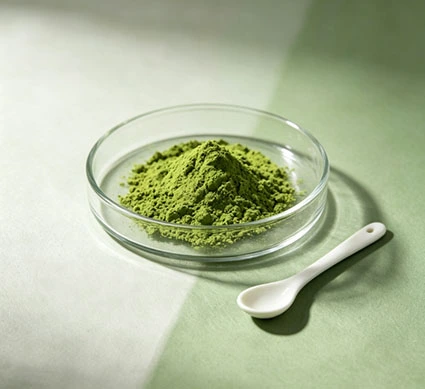
Key Differences Between Matcha Powder and Green Tea Powder
Quality Grades and Classification
This ceremonial-grade matcha powder, gathered in early spring, includes most of the amino acids and catechins. Culinary grade is for late harvests that include higher catechin levels so that taste is preserved in high-fat, high-sugar matrices. The necessary procedures have been taken in the land and manufacturing process to manufacture organic green tea powder with USDA Organic or JAS certification. These distinctions have clear ramifications for formulation decisions and label claims.
Sensory and Functional Profile
Those two powders have to taste different. It is important for the company. Matcha powder has a rich, umami-vegetal taste. The culinary grade is quite bitter; the ceremonial grade is not so sour. Green tea powder offers a simpler flavour. It's green and somewhat bitter. Low-temperature processing preserves the volatile aromatics of matcha powder. This gives rise to a more powerful and nuanced aromatic note, which may be exploited in taste and scent applications.
Matcha powder is richer in L-theanine and chlorophyll; thus, it’s a better botanical active for products designed to slow down the ageing process and to soothe the skin. However, green tea extract has a high concentration of EGCG; thus, it’s a better alternative for skin products that are focused on antioxidants.
Multi-Industry Application Alignment
Powders have distinct roles in different industries. Matcha powder is the best option for ready-to-drink beverages since it is stable to processing at high temperatures. Culinary-grade tea powder is perfect for baking and confectionery. Health Pill Green Tea Extract Powder Has a More Accurate EGCG Specification. Beauty scientists are using the bioactive density of matcha powder to create premium serums and masks.
Uses and Applications: How to Use Matcha Powder and Green Tea Powder?
Preparation and Formulation Techniques
In the standard technique, matcha powder is sifted and whisked into 70-80°C water to make a stable suspension. This means that high-shear mixing equipment and pre-blending with dry carriers such as maltodextrin are required on an industrial scale to avoid hygroscopic clumping. Some green tea granules are coarser and hence scatter more readily but aren’t as visually vibrant in the finished product.
Industrial formulators employing these ingredients should be mindful that matcha powder is particularly vulnerable to oxidation and thus should be kept below 15°C in nitrogen-flushed containers. The catechin profile of green tea powder is somewhat more heat-stable in various matrices but still sensitive.
Dosage and Efficacy Considerations
Functional dosage ranges of both drugs are based on published studies. Research published in the American Journal of Clinical Nutrition and Nutrients found that eating 1 to 4 grams of matcha powder or standardised green tea powder each day may boost metabolism and provide antioxidant protection. Supplement manufacturers may utilise this range to assist in guiding capsule fill weights and powder mix ratios.
B2B Implementation Spotlight
A good example of this is our Blue Matcha Butterfly Pea Flower Powder, a unique alternative to traditional matcha powder, which is made from 99% pure Clitoria ternatea L. Although it’s not tea, fans of “blue matcha” like this purple-blue botanical powder. It’s a working colour. It is high in anthocyanin, which is a powerful antioxidant. Its hue varies with the pH level. Blue when the pH level is neutral, purple-pink when the pH level is acidic, and considerably green when the pH level is alkaline. This provides a distinct visual appeal in functional drinks, confectionery, and cosmetics.
The primary technical advantages of this substance are:
- 100% natural and caffeine-free – exactly what customers expect from clean-label consumer expectations and a real alternative to lab-made hues.
- pH-sensitive colour change: provides an interactive aspect to drinks, which is a value in the new premium functional beverage creation.
- Anthocyanin: Claims to promote antioxidant activity, which may aid in battling free radicals and promoting collagen production in ingestible and topical therapies.
- Good formulation stability: soluble in water and fundamentally stable at high temperatures and in alcoholic matrices, which improves compatibility in application.
These qualities make it particularly attractive for product manufacturers seeking natural differentiation without sacrificing processability. It is certified by FDA, ISO9001, HACCP, HALAL, and Kosher and meets the regulatory standards of major global markets. Custom specifications and samples are available upon request.
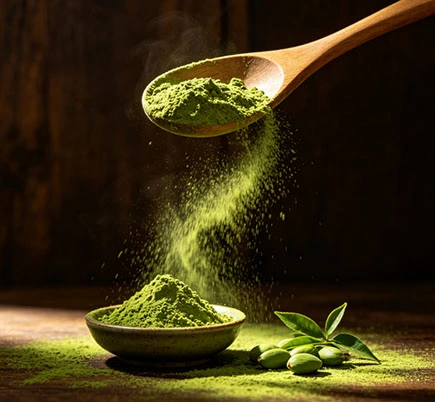
Procurement and Sourcing Strategies for Matcha and Green Tea Powders
Supply Regions and Quality Assurance
In general, ceremonial- and high-end culinary-grade matcha powder is imported from Japan. Conversely, China has the lowest costs for food-grade green tea powder. What certifications do I need to ask my vendors for? JAS, USDA Organic, ISO22000, and other regional food safety standards are worth it. Quality checkpoints should be non-negotiable, including ICP-MS heavy metal testing and bioactive content verification by HPLC.
Bulk sourcing requires suppliers to produce a certificate of analysis, third-party lab results, and traceability documentation for the farm or extraction facility. FDA compliance documentation is required for admission into the US market.
Bulk Purchasing and Cost Structures
Wholesale pricing for culinary-grade matcha powder varies from $15 to $40/kg based on the origin, organic certification, and volume commitment. Premium, ceremonial grade is substantially more expensive. The regular green tea powder is becoming accessible from $8 to $20/kg with food quality specifications. Procurement teams may verify quality with trial programmes, subscription agreements and volume-tiered pricing before making big purchase orders.
Comparative Decision Guide: Choosing Between Matcha Powder and Green Tea Powder
The strategy for selection is based on 3 variables: brand positioning, application environment, and target bioactive profile. Ceremonial-grade matcha powder is recommended for luxury cosmetics and supplement companies concerned with provenance and sensory uniqueness. Culinary-grade matcha powder and green tea powder are workhorses for high-volume food, beverage, and mid-range nutraceutical manufacturing where catechin density and cost-effectiveness are paramount.
Look for trends like the fast-growing “blue matcha” segment, which is mostly driven by butterfly pea flower powder. There is also a growing interest in plant chemicals that are adaptogenic, colourful, and caffeine alternatives. As these categories expand in the U.S. market, procurement teams that establish supplier relationships with both classic and emerging tea-adjacent powders will be ahead of the sourcing curve.
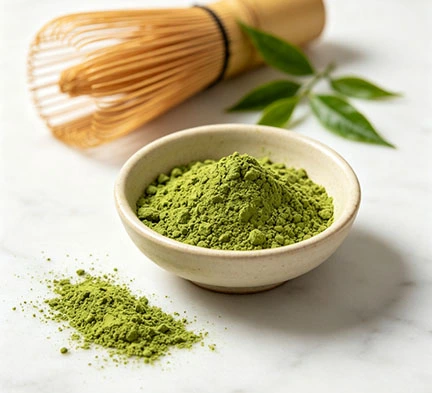
Conclusion
Abstract matcha powder and green tea powder have separate but complementary uses in the space of beneficial ingredients. Differences in production, nutritional value, sensory characteristics, and formulation behaviour make procurement professionals see them as different ingredient categories. In addition to classic green powders, new botanical ingredients like Blue Matcha Butterfly Pea Flower Powder are emerging in functional beverages, vitamins, and cosmetics. Educated sourcing selection starts with an understanding of these distinctions and working with suppliers with both technical depth and established quality certifications.
FAQ
1. What is the main difference in caffeine content between matcha and green tea powder?
Matcha powder typically contains 34–70 mg of caffeine per gram, depending on the grade and preparation. It also has L-theanine, which modulates the stimulant effect. In standard green tea powder, there is less caffeine per gram, but it contains more EGCG relative to amino acids. For caffeine-sensitive formulations, butterfly pea flower powder offers a caffeine-free botanical alternative.
2. Can green tea powder substitute for matcha in formulations?
Substitution is technically possible, but it impacts suspension stability, colour vibrancy, and flavour profile measurably. Formulators should conduct sensory and stability testing before any substitution at scale.
3. How do I verify supplier authenticity for matcha sourcing?
Require HPLC analysis confirming the amino acid-to-catechin ratio, a traceable CoA, and third-party lab verification. JAS certification for Japanese-origin matcha powder is a strong provenance indicator.
4. What certifications should a reliable green tea powder supplier hold?
At minimum: FDA compliance documentation, ISO9001, HACCP, and relevant organic certifications. Halal and Kosher certifications are increasingly important for global distribution.
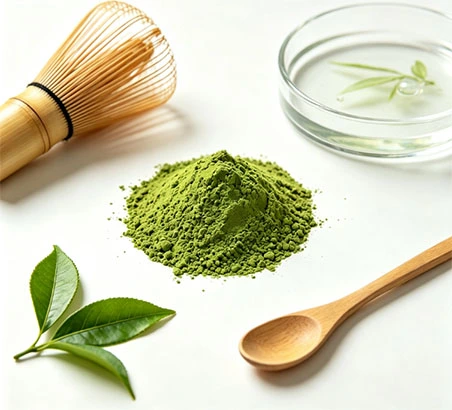
Partner with Gold Herb for Certified Matcha Powder and Botanical Ingredients
Gold Herb supplies verified bulk-grade matcha powder and speciality botanical actives—including our 99% purity Blue Matcha Butterfly Pea Flower Powder—to nutraceutical, cosmetic, food, and pharmaceutical manufacturers worldwide. With FDA, ISO9001, HACCP, HALAL, and Kosher certifications, US warehouse stock, and customised OEM support, we deliver both quality and speed. Reach out to our team at info@newgoldherb.com to request samples and pricing.
References
1. Weiss, D. J., & Anderton, C. R. (2003). Journal of Chromatography A — Determination of catechins in matcha green tea.
2. Kochman, J., et al. (2021). "Health Benefits and Chemical Composition of Matcha Green Tea." Molecules.
3. Dietz, C., & Dekker, M. (2017). "Effect of Green Tea Phytochemicals on Mood and Cognition." Current Pharmaceutical Design.
4. Suzuki, T., et al. (2012). "Shade Treatment and Amino Acid Composition in Green Tea." Journal of Agricultural and Food Chemistry.
5. Eng, Q. Y., et al. (2018). "Molecular Understanding of Epigallocatechin Gallate (EGCG) in Cardiovascular and Metabolic Diseases." Journal of Ethnopharmacology.
6. Khoo, H. E., et al. (2017). "Anthocyanidins and Anthocyanins: Coloured Pigments as Food, Pharmaceutical Ingredients, and the Potential Health Benefits." Food & Nutrition Research.

Send Inquiry
Related Industry Knowledge
- Premium Black Pepper Extract Powder Manufacturer & Bulk Supplier
- What is in 5-Hydroxytryptophan Powder?
- Resveratrol Extract Powder: A Potent Antioxidant for Modern Wellness Brands
- Ashwagandha Extract Guide: Active Compounds, Benefits & Dosage
- Ashwagandha for Men: Testosterone, Stress & Energy Support
- Silymarin Benefits: Liver Support, Detox & Antioxidant Effects
- Sodium Copper Chlorophyllin Benefits for Skin, Detox & Health
- Ergothioneine vs CoQ10: Which Supports Cellular Energy Better?
- The Truth About Garcinia Extract: The Secret To Effective Weight Loss?
- Where to Buy Natural Gardenia Blue Color Powder?