
PQQ Powder vs CoQ10: Key Differences for Formulators
Aug 27, 2026
When developing cutting-edge nutraceutical products, formulators face a critical choice between two mitochondrial-supporting compounds: PQQ Powder and Coenzyme Q10. Both ingredients have carved distinct niches in the supplement industry, yet their mechanisms, applications, and formulation requirements differ significantly. Understanding these differences enables R&D teams to craft products that deliver targeted health benefits while meeting rigorous quality standards. This comprehensive guide examines the biochemical profiles, functional advantages, and practical formulation considerations that separate these two bioactive compounds, empowering procurement managers and product developers to make strategic ingredient decisions that drive market success.
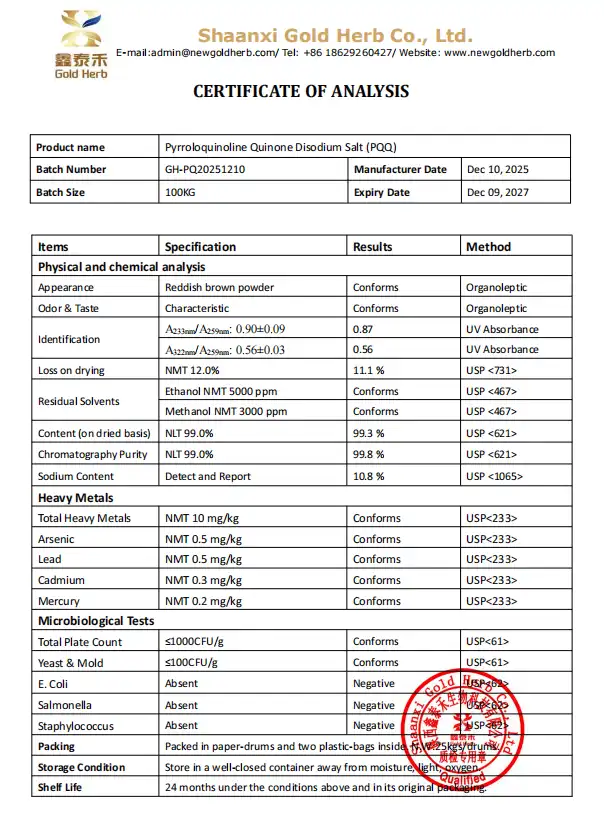
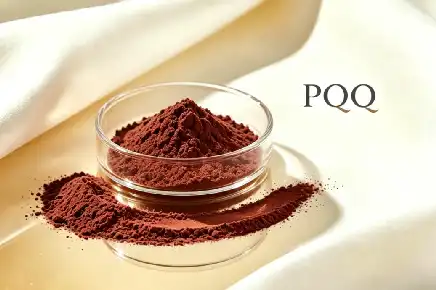
Product Specifications
| Parameter | Specification |
|---|---|
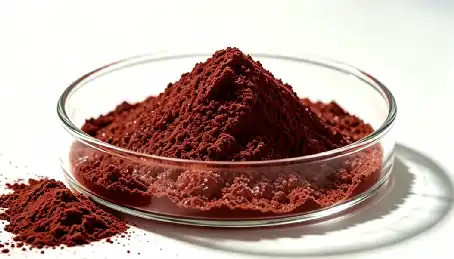
| Appearance | Dark red powder |
| Assay | ≥98.0% |
| Molecular Formula | C₁₄H₄N₂Na₂O₈ |
| Molecular Weight | 374.17 |
| CAS Number | 122628-50-6 |
| pH | 7.0-9.0 |
| Melting Point | >300℃ |
| Water Solubility | 3g/L at 25℃ |
| Loss on Drying | ≤12.0% |
| Particle Size | ≥99.0% through 20 Mesh |
| Storage | Tightly closed container, protected from light |
| Certificates | FDA, ISO9001, HACCP, HALAL, Kosher |
Quality Assurance
Certificate of Analysis (COA) for PQQ Powder [Request COA]
Understanding the Basics of PQQ Powder and CoQ10
Chemical Nature and Origin
After being separated from its disodium salt form, pyrroloquinoline quinone, which is a redox cofactor, takes on the appearance of a dark crimson powder during the separation process. This molecule, which has the molecular formula C14H4N2Na2O8 and the CAS number 122628-50-6, is very stable and dissolves quickly in water when it is kept in containers that are designed to prevent light from entering the container. It is appropriate for a wide variety of administration techniques, ranging from capsules to functional beverages, because of its high purity criteria of ≥98%, which ensure steady formulation outcomes.
CoQ10 is referred to as ubiquinone in the scientific community when it undergoes oxidation. In appearance, it is a solid powder that is yellow-orange in colour and is fat-soluble. There are two naturally occurring forms of this fat-soluble molecule that are capable of transforming into one another. These forms are ubiquinone and ubiquinol. In contrast to pyrroloquinoline quinone, which is soluble in water, coenzyme Q10 is not. It is necessary to distribute it using lipid-based systems or highly specialised solubilisation technologies in order to make it bioavailable in supplement forms.
Physiological Roles and Mechanisms
Pyrroloquinoline quinone's ability to activate the PGC-1α pathway is responsible for its ability to accelerate the process of mitochondrial biogenesis. In essence, this contributes to the formation of new power plants inside cells. Due to the fact that this redox cofactor is capable of undergoing thousands of catalytic cycles without deteriorating, it is a far more powerful antioxidant than vitamin C. Studies have shown that it protects neurons from oxidative damage by simultaneously enhancing the synthesis of Nerve Growth Factor and inhibiting oxidative damage. This is accomplished by combining the two processes.
Through its participation in the electron transport chain, CoQ10 contributes to the production of ATP, which is the fundamental component of cellular energy. Considering that it is responsible for the transfer of electrons between Complex I/II and Complex III, it is an essential component of aerobic respiration. In addition to its role in the production of energy, coenzyme Q10 also serves as an antioxidant, which is particularly useful in lipid-rich regions such as the heart cells when it comes to protecting membranes. The natural decline in endogenous CoQ10 levels that occurs with advancing age creates a significant need for supplementation.
Key Functional Differences Between PQQ Powder and CoQ10
Mitochondrial Support Mechanisms
The primary distinction is in the actions that they take on mitochondria. Through its ability to stimulate the formation of brand-new mitochondria, pyrroloquinoline quinone is able to resolve energy issues in cells at the point where they originate. As a result of its ability to aid in the process of biogenesis, it is very valuable for the production of brain health products that combat the neurodegeneration that often occurs with advancing age. According to research, it has the ability to enhance short-term memory and aid in the recovery process for those who have had brain injuries by repairing neuronal circuits that have been disrupted.
Coenzyme Q10 promotes the functioning of mitochondria rather than causing the production of additional organelles. In order to extract the maximum amount of ATP from the mitochondria that are accessible, it ensures that electrons pass through the respiratory complexes in a smooth manner. Because of this, CoQ10 is an excellent ingredient for cardiovascular compositions since it decreases the amount of oxidative stress that is placed on heart tissues and helps the heart meet its myocardial energy requirements. Evidence from clinical studies suggests that it has the potential to reduce the severity of myocardial infarction and speed up the recovery process after cardiac events.
Antioxidant Capacity Comparison
Pyrroloquinoline quinone has a unique capability to execute redox cycles in a continuous manner, and it is capable of performing anywhere from 5,000 to 20,000 catalytic reactions before it runs out of energy. Microdosing is able to function efficiently as a result of its remarkable efficacy, with daily dosages ranging from 10 mg to 20 mg often being sufficient to provide robust antioxidant protection. As a result of its redox potential, reactive oxygen species are neutralised throughout the whole of the cell, ensuring that both aqueous and fatty environments remain risk-free.
By acting as an antioxidant, CoQ10 is able to break chains in lipid membranes, therefore preventing the spread of lipid peroxidation. Furthermore, it only goes through one cycle of oxidation and reduction, which means that it has to be replenished by other antioxidants such as vitamin E. This is despite the fact that it is quite powerful. That is why the majority of individuals take between 100 and 300 milligrams of it on a daily basis. By virtue of the fact that the ubiquinol form is more bioavailable than the ubiquinone form, it is particularly beneficial for elderly individuals who have a diminished capacity for conversion.
Cognitive and Energy Enhancement
The protective properties of PQQ Powder make brain health formulas work better. It improves brain function in several ways, including by encouraging learning, increasing blood flow to the brain, and stopping memory loss caused by neurodegenerative diseases. Its effect on sleep quality comes from improving mitochondrial function in brain cells, which helps cells heal during rest cycles. The chemical also protects the liver by speeding up fat metabolism and healing both short-term and long-term liver damage, including fatty liver tumors.
CoQ10 gives you long-lasting energy by improving the heart's function and the supply of ATP in your muscles. Better endurance and fewer signs of tiredness are good for athletes and other busy people. Cardiovascular benefits of CoQ10 go beyond making energy. It also helps keep blood pressure, vascular function, and lipid profiles in a healthy range. Because it protects the myocardium, it is an essential part of heart health products for older people or people who have heart disease risk factors.
Practical Considerations for Formulators
Dosage Optimization and Delivery Forms
Taking 10 mg to 20 mg of pyrroloquinoline quinone every day is usually enough to make it work, but some performance-based products contain up to 40 mg. The disodium salt form dissolves easily in water, which lets a lot of different delivery choices work, like powders, pills, capsules, and liquid solutions. Bulk powder specifications with a purity level of at least 98% ensure that all production batches have the same amount of potency. Because hygroscopic substances need to be stored in dry places and in the right packaging materials, they stay stable over the course of a product's shelf life.
CoQ10 supplements usually have between 100 mg and 300 mg per serving, but doses of up to 600 mg have been studied in clinical studies for certain medical uses. Because it is lipophilic, release patterns need to be carefully thought out. You can choose from oil-based softgels, emulsified solutions, or solid powder mixed with dietary fats. Ubiquinol formulations are more expensive, but they are better at being absorbed, which is especially helpful for groups that have trouble converting nutrients. When formulators choose between ubiquinone and ubiquinol specifications, they have to weigh the costs and benefits of bioavailability.
Synergistic Formulation Strategies
Putting pyrroloquinoline quinone and CoQ10 together makes mitochondrial support that works better and supports biogenesis. This combination works well for complete energy and brain health formulas. Adding alpha-lipoic acid makes the network of antioxidants stronger because it rebuilds both molecules. B-vitamin complexes help make cofactors available for pathways in the energy metabolism that these ingredients turn on.
Combining pyrroloquinoline quinone with citicoline or phosphatidylserine in nootropic stacks is helpful for improving cognitive performance in many ways. CoQ10, creatine, and carnitine can all be found in sports nutrition formulas together to boost mitochondrial energy output during intense physical activity. Stability tests should be done on complicated blends because pH, moisture content, and how ingredients interact with each other can affect how long they last and how well they work.
Regulatory Compliance and Quality Assurance
High-quality pyrroloquinoline quinone bulk powder meets strict international standards, such as being registered with the FDA, having ISO9001 quality management, following HACCP food safety practices, and being certified as HALAL and Kosher. These credentials make sure that you follow the rules in a lot of different places, which makes it easier to get into markets in North America, Europe, and other places. A third party checks the accuracy of HPLC purity tests, confirms heavy metal limits, and looks for microbes that could be harmful.
In the same way, CoQ10 providers must show that they follow GMP and give Certificates of Analysis that prove identity, purity, and effectiveness. The EU's Novel Food status and the US's GRAS recognition set the rules for how these chemicals can be used. Formulators should ask for information on the residual solvent, especially for pyrroloquinoline quinone sources that come from fermentation and synthetic CoQ10 sources. As global requirements for supply chain transparency change, traceability documentation becomes more and more important.
Market and Procurement Insights for B2B Clients
Supplier Landscape and Sourcing Options
On the market for pyrroloquinoline quinone, there are specialized companies that use bacterial fermentation methods, mostly Hyphomicrobium denitrificans strains, to make sure the molecules have the same bio-identical structure. Shaanxi Gold Herb is a strategic sourcing partner that combines cutting-edge biotechnology with the dependability of a global supply chain. Because they work with Ancooin Biotechnology and have access to Academician Li Xiaokun's research, they can be sure that the ingredients they use are scientifically sound and that they will get strong technical support throughout the product development process.
Japan, China, and a few sites in Europe are the main places where CoQ10 is made by a Nutraceutical Ingredients Supplier. Both fermentation and semi-synthetic methods are used. Quality varies between sellers, which is why it's important to carefully choose a vendor. When building ties with suppliers, purchasing managers should look at the suppliers' production capacity, batch consistency records, and certification portfolios. Dual-sourcing methods keep quality standards high while lowering the risk of supply disruptions.
Bulk Purchasing Considerations
For testing and sampling, the smallest amount of premium pyrroloquinoline quinone bulk powder that can be ordered is usually 1 kilogram. For business use, the minimum order quantity ranges from 25 to 100 kilograms, based on the size of the formulation. Prices depend on the level of purity, the need for approval, and the size of the order. Unit economics are best when you commit to buying in bulk. Gold Herb keeps more than a ton of standard specifications in stock, which lets them quickly fulfill orders within 24 hours of confirmation—a key benefit for just-in-time manufacturing.
The prices of ubiquinone and ubiquinol types of CoQ10 are very different, with ubiquinol being more expensive because it is more bioavailable. Orders in bulk usually start at 5 to 25 kilograms, and higher commitments are rewarded with lower prices. Professionals in charge of buying things should work out supply agreements that balance lowering costs with allowing for easy changes to the formula. For international transactions that involve more than one regulatory authority, payment terms, lead times, and logistics coordination become even more important.
Distribution Channels and Logistics
Gold Herb works with major transportation companies like DHL, SF Express, and FedEx to make sure that foreign shipping goes smoothly. Their constant U.S. warehouse stock guarantees that North American customers will get their orders within 3 to 5 working days. This gets rid of long shipping delays and makes the import process easier. This strategy for storing goods in the United States works especially well for small to medium-sized brands that need quick access to supplies but don't want to commit to full container loads.
Customized solutions include more than just providing ingredients. They also include formulating new medicines, choosing between powder, liquid, or microcapsule dosage forms, and making sure that the package meets the needs of the business. With OEM and ODM relationships, it's easier to get a product idea to market, and full development processes can be finished in 20 days or less. Researchers led by Academician Li Xiaokun and Wenzhou University help formulators with technical issues and give them scientific advice during the product optimization stages.
Formulator's Decision-Making Framework: Choosing Between PQQ Powder and CoQ10
Prioritizing Ingredients by Product Goals
Pyrroloquinoline quinone should be the main ingredient in cognitive enhancement products that help with memory, focus, and neuroprotection. Its ability to create new mitochondria and stimulate Nerve Growth Factors directly targets the mechanisms that cause cognitive decline with age. When you mix it with nootropics that work well with it, you get unique brain health goods that appeal to both older people and people who want to perform better mentally.
Cardiovascular and physical energy formulas work best with CoQ10 as the main ingredient. People who know about CoQ10's research background will understand how it affects heart health, ATP production, and exercise performance. Sports nutrition companies can use this popularity to help them make goods that help athletes' endurance and recovery in measured ways.
Combining these two chemicals gives multi-benefit anti-aging formulas a strategic edge. Pyrroloquinoline quinone helps cells grow back, the liver work properly, and skin look younger by affecting tissue repair and collagen production. CoQ10 helps the body's antioxidants work better and protects the heart. This mix works well for high-end supplement areas where full support for longevity explains higher prices.
Evaluation Metrics for Ingredient Selection
The first step in figuring out potency is to look at clinical studies that show the drug works at certain dosage levels. At doses of 10 mg to 20 mg daily, pyrroloquinoline quinone has noticeable effects, which makes it possible for small serving sizes and cost-effective formulations. CoQ10 needs higher doses, but it has a lot of clinical evidence from decades of study that makes it easier to submit to regulators and make marketing promises.
Bioavailability affects both the choice of ingredients and the choice of delivery form. Water-soluble pyrroloquinoline quinone allows for flexible formulations and consistent absorption across a wide range of people. Lipophilic CoQ10 needs special solubilization methods, and ubiquinol is especially helpful for older people because it improves uptake. When formulators choose chemical types, they should weigh the benefits of bioavailability against the costs that come with them.
The power to make money is affected by regulations and market demand. Both substances are considered GRAS in the US and Novel Foods in Europe, which makes them easier to get into a lot of markets. More people are becoming aware of mitochondrial health, and the population is also getting older, which is driving up demand for both ingredients. Differentiating products depends less and less on new ingredients and more on new formulations, clear quality claims, and trustworthy scientific positioning.
Conclusion
To choose between PQQ Powder and CoQ10, you need to carefully look at your formulation goals, your target audience, and how you want to market your product. Pyrroloquinoline quinone is great for brain health because it protects neurons and helps mitochondria grow. CoQ10, on the other hand, is best for heart health and physical energy because it makes ATP production more efficient. Their different functions make it possible for them to work together in ways that help with a wide range of health issues. Partnering with certified suppliers that offer consistent quality, regulatory compliance, and technical support throughout development cycles is key to successful procurement. By using the decision-making frameworks described here, formulators can safely use these powerful ingredients to make new goods that meet market needs and offer health benefits that have been proven by science.
FAQ
1. Can pyrroloquinoline quinone and CoQ10 be safely combined in a single formulation?
Putting these things together is safe and good for your strategy. In ways that work hand-in-hand, pyrroloquinoline quinone helps make new mitochondria, and CoQ10 improves the function of old mitochondria. Clinical studies show that they don't combine negatively, and the way they work together to change the way cells use energy gives each product its own unique benefits. Formulators should test for stability to make sure that other formula parts and delivery systems will work with the formula.
2. What factors determine optimal ingredient quality and supplier credibility?
Checking the quality starts with looking at the Certificates of Analysis, which show that the samples were pure through HPLC, heavy metal screening, and microbe testing. Certifications like FDA registration, ISO9001, HACCP, HALAL, and Kosher show that quality systems are complete. Additional signs of credibility include the supplier's technical support, the openness of their production capacity, and records of batch consistency. Asking for samples lets you try something out before committing to a large buy.
3. How do storage requirements differ between these ingredients?
Because it absorbs water, pyrroloquinoline quinone bulk powder should be kept in containers that are tightly sealed, out of the light, and with controlled humidity. To keep its effectiveness from fading, CoQ10 needs to be kept away from light, heat, and air. Both products last longer if they are stored in the fridge, but they can also be kept at room temperature as long as the right packing and handling steps are taken.
Partner with Gold Herb for Premium Pyrroloquinoline Quinone Bulk Powder
Gold Herb is a reliable source for PQQ Powder because they only sell ingredients that have been proven to work by science and are backed by strict quality control and technical know-how. Our ≥98% pure bulk powder is approved by the FDA, ISO9001, HACCP, HALAL, and Kosher, and it meets the strict requirements of supplement and nutritional formulators all over the world. We are here to help you every step of the way as you build your product. Our constant U.S. warehouse stock means that orders can be filled in 3 to 5 days, and we can finish custom OEM solutions in 20 days. Working with Academician Li Xiaokun's research team and Wenzhou University makes sure that you get cutting-edge anti-aging ingredients that are backed by strong science. Email our team at info@newgoldherb.com to ask for samples, talk about buying in bulk, or look into how we can help you with your own formulations.
References
1. Chowanadisai, W., et al. (2010). "Pyrroloquinoline Quinone Stimulates Mitochondrial Biogenesis through cAMP Response Element-binding Protein Phosphorylation and Increased PGC-1α Expression." Journal of Biological Chemistry, 285(1), 142-152.
2. Rucker, R., et al. (2009). "Potential Physiological Importance of Pyrroloquinoline Quinone." Alternative Medicine Review, 14(3), 268-277.
3. Littarru, G.P., and Tiano, L. (2007). "Bioenergetic and Antioxidant Properties of Coenzyme Q10: Recent Developments." Molecular Biotechnology, 37(1), 31-37.
4. Nakano, M., et al. (2016). "Effects of Antioxidant Supplements on Cognitive Function: A Systematic Review and Meta-Analysis." Nutritional Neuroscience, 19(8), 345-359.
5. Harris, C.B., et al. (2013). "Dietary Pyrroloquinoline Quinone Alters Indicators of Inflammation and Mitochondrial-Related Metabolism in Human Subjects." Journal of Nutritional Biochemistry, 24(12), 2076-2084.
6. Mortensen, S.A., et al. (2014). "The Effect of Coenzyme Q10 on Morbidity and Mortality in Chronic Heart Failure: Results from Q-SYMBIO Randomized Double-Blind Trial." JACC: Heart Failure, 2(6), 641-649.

Send Inquiry
Related Industry Knowledge
- Dihydromyricetin: Uses, Interactions, Dosage, and Science
- Echinacea: Benefits, Uses & Dosage for Immune Support
- What is in 5-Hydroxytryptophan Powder?
- Cistanche Tubulosa Extract for Men’s Health and Performance Support
- What Is Coleus forskohlii extract and How Does It Work?
- Why Urolithin A Is the Future of Anti-Aging Science
- Fisetin vs Quercetin: Which Is Better for Anti-Aging?
- GMP Dihydromyricetin powder for Dietary Supplement Development
- What Is Fisetin? A Complete Guide for Supplement Manufacturers
- Ergothioneine: Unlocking B2B Opportunities in the Functional Nutrition Market