
Resveratrol Powder Manufacturing Process and Purity Testing Guide
Aug 31, 2026
Resveratrol Powder represents a highly concentrated polyphenolic compound extracted primarily from the root of Polygonum cuspidatum, valued for its antioxidant properties and natural bioactive profile. The manufacturing process involves multiple extraction, purification, and testing phases to ensure the final product—ranging from 10% water-soluble to 98% ethanol-soluble trans-resveratrol—meets pharmaceutical-grade standards. Sourcing quality raw materials, applying validated extraction methods, and employing rigorous purity testing protocols like High-Performance Liquid Chromatography ensure product consistency, efficacy, and regulatory compliance across nutraceutical, cosmetic, and functional food applications.
Trans-Resveratrol Powder Specification
|
Item |
Specification |
|
Product Name |
Trans-Resveratrol Powder |
|
Botanical Source |
Polygonum cuspidatum Root Extract |
|
Plant Part |
Root |
|
Active Ingredient |
Trans-Resveratrol |
|
Purity |
50%, 98%, 99% |
|
Test Method |
HPLC |
|
CAS No. |
501-36-0 |
|
Molecular Formula |
C14H12O3 |
|
Appearance |
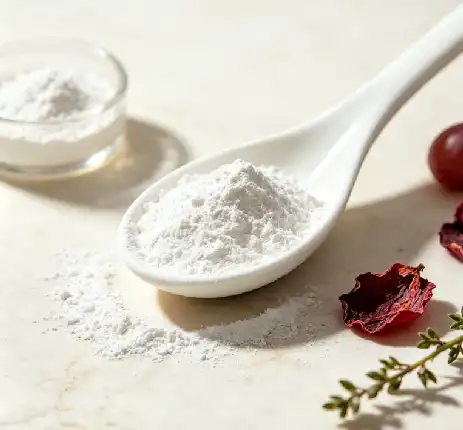
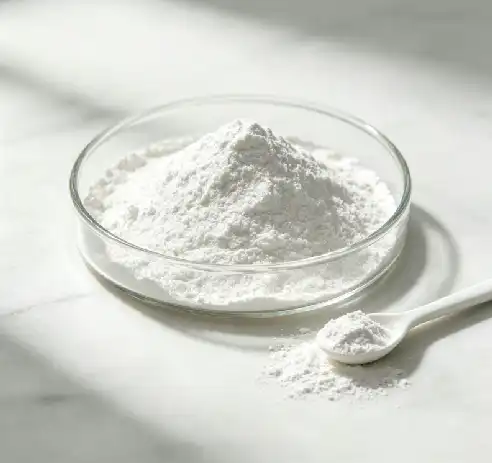
White to Off-White Fine Powder |
|
Shelf Life |
24 Months |
|
Packaging |
1 kg Aluminum Foil Bag / 25 kg Fiber Drum |
|
Storage |
Cool, Dry Place Protected from Moisture |
|
MOQ |
Flexible |
Quality Assurance
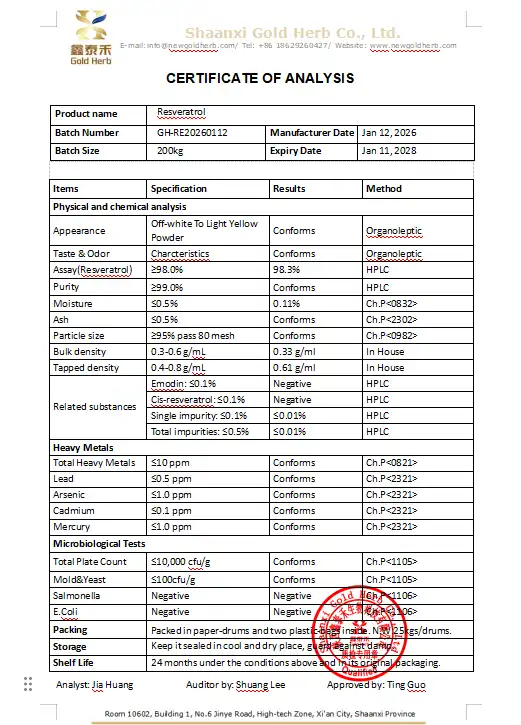
Certificate of Analysis (COA) for Specification Powder [Request COA]
Understanding the Resveratrol Powder Manufacturing Process
The first thing that needs to be done to make a good resveratrol extract is to find the right raw materials. The next steps are to remove, treat, and package the food. Each step changes the end product in a way that makes it more pure, stable, and valuable.
Raw Material Sourcing and Traceability
The best plant source for trans-resveratrol is still Polygonum cuspidatum root, which has more of it than other choices like grape skins or fermentation-based ones. Good manufacturers look for sources that can show proof that their products are pure and don't contain GMOs. These licenses make it easier to keep track of goods and lower the chance that they will be tainted. Buying teams can find proof that raw materials came from farms that were checked out. This includes permits of Origin, phytosanitary permits, and records of tests for each batch. This openness helps brands that want to have a "clean label" image and follow strict rules around the world.
Extraction Methods and Their Impact on Quality
Different extraction methods leave behind different amounts of purity, solubility, and liquid that can't be used. An ethanol extraction method is most often used because it works well and can separate trans-resveratrol while keeping the isomer whole. Maceration and percolation usually take place at controlled temperatures so that the process doesn't break down from the heat. Another choice is supercritical CO2 extraction, which doesn't use any solvents and makes very pure material that can be used in high-end makeup and goods. With this method, less chemical residue is left behind, but the antioxidant power that is important for heart health and anti-aging products is still there. Water-based extraction is used to make lower-potency blends of about 10% resveratrol that dissolve in water. These work well for making drinks that need to be simple to mix.
Purification and Concentration Stages
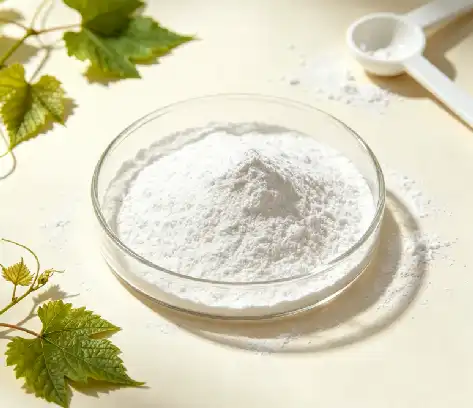
Wax, carbs, and chemicals that don't work are taken out of the raw resveratrol extract. To separate pure trans-resveratrol crystals, recrystallization is used. HPLC tests show that the purity is more than 98%. Filtering through activated carbon and molecular sieves gets rid of flaws in color and smell, leaving behind a white to off-white powder with stable taste qualities. Spray-drying or vacuum-drying technologies keep the final powder form stable. This protects the bioactivity and stops the powder from breaking down when it's stored or transported with water.
Purity Testing Methods and Quality Control in Resveratrol Powder
To make sure of quality, strong analytical testing is used. This helps buyers and formulators double-check what suppliers say and ensure that all batches are the same.
HPLC Analysis for Potency Verification
High-performance liquid chromatography is the best way to find out how much trans-resveratrol is in Resveratrol Powder. A certified reference standard (CAS Number: 501-36-0) is used by HPLC to accurately separate and measure the target compound. This checks to see if a product meets the 98% or 10% active material that it says it has. This method can also find cis-resveratrol isomers that you don't want. These are made when light hits them and don't do much biologically. Every batch from a reliable source comes with an HPLC chromatogram, which shows the best level of purity and makes sure there are no impurities.
Screening for Contaminants and Residual Solvents
For safety checks, inductively coupled plasma mass spectrometry is used to find heavy metals like lead, cadmium, mercury, and arsenic and check how strong they are. This test looks for any ethanol, acetone, or other chemical products that are still there after extraction. This makes sure that the US Pharmacopeia and the European Pharmacopoeia's rules are followed. Total plate count, yeast, mold, and pathogen tests on the powder show that it is clean enough to be used in pharmaceutical- or food-grade cosmetics and mouth vitamins.
Certifications and Third-Party Validation
A company that has ISO9001, HACCP, FDA registration, HALAL, and Kosher certifications shows that it follows Good Manufacturing Practices and has good ways to check the quality of its products. When procurement teams look for new sellers, they have more faith in testing services from independent third-party labs because they know the services are fair. There should be clear audit trails that show when raw materials are received, when products are checked during production, and when they are released as finished goods. This way, the company can be ready for checks from the government or customers.
Comparing Resveratrol Powder with Other Forms and Related Compounds
Formulation experts and buying managers can make the best plans for developing new products if they know the pros and cons of different antioxidants and how they work with each other.
Powder Versus Capsules and Liquid Forms
Resveratrol bulk powder is very adaptable and can be used in a lot of different ways, like in drinks, tablets, capsules, and creams that you put on your skin. Changes in dose can be made accurately with it, and it works with these formulations. It lasts longer if you keep it in the right way, out of the light, and in containers that keep air out below 25°C. That lessens loss and makes it easier to keep track of stock. People who use capsules and liquids find them useful, but they add extra steps and ingredients to the process, which could lower the quality or bioavailability. With bulk powder, private-label brands and contract makers can change the strength, mix the ingredients, and meet specific legal or marketing needs right away, instead of having to wait for re-formulation.
Organic Versus Synthetic Resveratrol
Organic resveratrol from Polygonum cuspidatum root has labels that natural product companies and people who want real plants like. It's possible for synthetic resveratrol to have the same molecular structures and amounts of purity as plant extracts. However, it may not have the co-factors and plant molecules that work together as plant extracts do. These sources are not all the same when it comes to how much they cost, how they affect the world, and how people see them. For this reason, getting organic approval is a key way for high-end OEM products meant for clean-label markets to stand out.
Complementary Antioxidants in Formulation
Most of the time, quercetin, grape seed extract, curcumin, and other polyphenolic antioxidants work better when mixed with resveratrol. When formulators pick ingredients that go well together, they think about how well they mix, how stable they are during processing, and how much they cost compared to how well they work. Procurement teams can speed up time-to-market and make the process of making goods easy when sellers offer portfolios of different ingredients and expert support.
Procurement Considerations for Resveratrol Powder: Sourcing and Supplier Selection
To find the best manufacturing partner as a Healthy Aging Ingredients Supplier, you should look at how well they can make things, how well they can follow the rules, how well they can customize your products, and how reliable their supply chain is.
Evaluating Manufacturing Capabilities and Certifications
Manufacturers that are licensed by the FDA, ISO9001, HACCP, HALAL, and Kosher show that they care about quality processes and following the rules. How much you can make, how many goods you have, and how long you have to wait are all very important. On the other hand, Gold Herb keeps more than a ton of standard specs in stock, which means that orders can be sent out 24 hours after they are confirmed. Custom formulations can be made in 7 to 15 business days. For example, versions that dissolve in water or ethanol and have different strengths can be made. Faster emergency orders can be sent through green channels, and they can arrive in as little as 5 to 7 days.
Geographic Sourcing and Cost Considerations
Some of China's industrial hubs sell high-purity resveratrol at a reasonable price. This is possible because they have easy access to many raw materials and well-developed systems for getting them. People who want to save time and money on shipping like it when sellers have goods in stock in U.S. warehouses and can fill orders within 3 to 5 business days. Pricing models look at how pure the product is, how it was extracted, the standards for approval, and the size of the order. This is called economies of scale, and it can save you a lot of money.
Customization and Private Labeling
When brands work with OEM and ODM companies, they can make their products stand out by using unique ingredients, packaging designs, and label claims. As part of the customization service, the strength, microcapsule shapes, and mixing ratios can be changed to fit different uses, such as sports nutrition, anti-aging skin care, or heart health. Streamlined development cycles help companies get ahead of the competition and speed up product launches. These cycles are often finished in 20 days or less.
Ensuring Product Quality and Optimizing Supply Chain Performance
Quality management that is proactive and an open supply chain can help lower risk and build long-term relationships with suppliers.
Incoming Batch Testing and Interpretation
A third party should check each new batch to make sure it is strong, has the right mix of isomers, and doesn't have any bacteria or contaminants in it. When you compare the supplier's Certificates of Analysis with results from a different lab, you can be sure they are correct and quickly find any problems. It is safer for customers and better for business to have clear rules for what is acceptable and what is not.
Supply Chain Transparency and Traceability
You can see everything in real time with modern tracking systems, such as digital certificates and blockchain-based tracking. This includes when the raw materials are picked up and when the finished goods are delivered. With records like batch production records, liquid certificates, and test results, it's easier to file with the government and check up on customers. When you talk to your providers directly and clearly, you can cut down on delays and better meet the needs of the market.
Building Strategic Supplier Partnerships
The supply chain is more reliable when everyone works together, has clear quality KPIs, checks things often, and works on projects to keep getting better. Not only do low-cost providers add strategic value, but so do those who offer expert help such as formulation advice, stable data, and regulatory paperwork. Brands can grow their businesses with confidence when they have preferred vendor agreements with certified manufacturers. These agreements make sure that brands always have access to high-quality ingredients.
Conclusion
You need to know a lot about where to get the raw materials, how to remove them, how to study them, and how to judge a seller before you can make Resveratrol Powder and test its purity. It is good for procurement professionals to work with certified manufacturers who value openness, quality control, and customization. To get consistent, high-purity resveratrol bulk powder that meets regulatory standards and consumer expectations for use in nutraceutical, cosmetic, and functional food products, brands can set up strict testing protocols for incoming products, use third-party validation, and build long-term relationships with suppliers.
FAQ
1. What is the difference between 10% and 98% resveratrol specifications?
The 10% resveratrol mix that mixes easily with water is made for use in drinks and foods that need to be easy to mix. Trans-resveratrol that dissolves in 98% ethanol is the best form for high-dose supplements, cosmetic serums, and capsules because it is bioavailable and works well.
2. How do I verify the authenticity of resveratrol powder?
Ask for an Analysis Certificate that has HPLC chromatograms that show that the trans-resveratrol is pure and that there is no cis-isomer contamination. A third-party lab's tests for heavy metals, residual solvents, and microbial load add to the proof. Suppliers who have a good name provide examples and clear paperwork.
3. Why is trans-resveratrol preferred over cis-resveratrol?
There is one type of resveratrol that is biologically active. Clinical tests have shown that this type has strong antioxidant and Sirtuin stimulation properties. When cis-resveratrol is exposed to light, it changes into another form. However, it has much lower bioactivity and is usually thought of as an impurity in pure formulations.
4. What storage conditions are required to maintain potency?
Avoid letting light into containers that hold Resveratrol Powder and make sure the lids are tight. Don't let the container get above 25°C. Stay away from water, air, and direct sunlight. It takes longer for these things to break down plants because they speed up photo-oxidation and heat breakdown.
Partner with Gold Herb for Premium Resveratrol Powder Sourcing
Many people know and trust Gold Herb, which makes Resveratrol Powder. They sell approved trans-resveratrol in two different forms: one that dissolves in 10% water and one that dissolves in 98% ethanol. Our products are safe and up to the high standards of quality set by the biggest names in cosmetics and nutrition. They have FDA, ISO9001, HACCP, HALAL, and Kosher certifications to back them up. We keep over a thousand standard specs in stock, which lets us fill orders quickly (within 24 hours). Custom recipes, on the other hand, take 7 to 15 business days to finish. Because we always keep stock in U.S. warehouses, we promise shipping within 3 to 5 business days and help with contact in the same time zone. We can guarantee reliable supply chain performance and custom OEM/ODM solutions thanks to the technical knowledge we've gained from working with Academician Li Xiaokun's team and Wenzhou University. To ask for samples and talk about what you want to buy, email us at info@newgoldherb.com.
References
1. Baur, J. A., & Sinclair, D. A. (2006). Therapeutic potential of resveratrol: The in vivo evidence. Nature Reviews Drug Discovery, 5(6), 493-506.
2. Walle, T. (2011). Bioavailability of resveratrol. Annals of the New York Academy of Sciences, 1215(1), 9-15.
3. Gambini, J., Inglés, M., Olaso, G., López-Grueso, R., Bonet-Costa, V., Gimeno-Mallench, L., & Vina, J. (2015). Properties of resveratrol: In vitro and in vivo studies about metabolism, bioavailability, and biological effects in animal models and humans. Oxidative Medicine and Cellular Longevity, 2015, 837042.
4. Harikumar, K. B., & Aggarwal, B. B. (2008). Resveratrol: A multitargeted agent for age-associated chronic diseases. Cell Cycle, 7(8), 1020-1035.
5. Li, Y., Yao, J., Han, C., Yang, J., Chaudhry, M. T., Wang, S., & Yin, Y. (2016). Quercetin, inflammation and immunity. Nutrients, 8(3), 167.
6. Kerem, Z., Bilkis, I., Flaishman, M. A., & Sivan, L. (2006). Antioxidant activity and inhibition of alpha-glucosidase by trans-resveratrol, piceid, and a novel trans-stilbene from the roots of Israeli Rumex bucephalophorus L. Journal of Agricultural and Food Chemistry, 54(4), 1243-1247.

Send Inquiry
Related Industry Knowledge
- Top Benefits and Uses of PQQ Powder in Supplements
- What is the use of Green coffee bean extract powder bulk?
- Why Is Urolithin A Popular in Healthy Aging Supplements?
- Where to Buy High-Purity Fisetin Powder?
- High-Purity Ashwagandha Powder for Nutraceutical Formulations
- Best Kava Extract for Stress, Sleep and Mental Wellness
- Egcg green tea extract: A Natural Solution for Obesity
- Tongkat Ali Benefits for Fitness, Recovery and Muscle Support
- Senna Extract vs Senna Powder: Which Works Better for Digestive Health?
- Dihydromyricetin vs Green Tea Extract: Which Fits EU Supplements?