
What Is Sodium Copper Chlorophyllin? Benefits, Uses & Bulk Supply
Mar 31, 2026
In today's world—where the pursuit of naturalness, health, and eco-friendliness is paramount—a plant-derived compound possessing an emerald-like hue, known as Sodium Copper Chlorophyllin, is emerging as a "star molecule" bridging the gap between nature and technology. Distinguished by its unique color and broad spectrum of biological activities, it spans diverse fields ranging from food and pharmaceuticals to cosmetics. It serves not only as a safe coloring agent that imparts a vibrant green appearance to ice cream and candies but also acts as a medicinal ingredient that promotes wound healing and supports liver health. This article provides a comprehensive analysis of this semi-synthetic natural derivative—exploring its fundamental nature, its remarkable health benefits, its diverse applications, and the market landscape for its bulk supply as a raw material.
What is Sodium Copper Chlorophyllin?
Sodium Copper Chlorophyllin is a water-soluble, semi-synthetic derivative of chlorophyll. Rather than being extracted directly in its final form, it is refined through a series of processes—including saponification, copper substitution, and salt formation—using natural chlorophyll as a base material (typically extracted from plant sources such as silkworm feces, alfalfa, clover, and bamboo). The core chemical transformation involved in this process entails replacing the unstable magnesium ion (Mg²⁺) located at the center of the natural chlorophyll molecule with a copper ion (Cu²⁺), followed by the formation of a sodium or potassium salt; this modification endows the resulting compound with exceptional stability and water solubility.
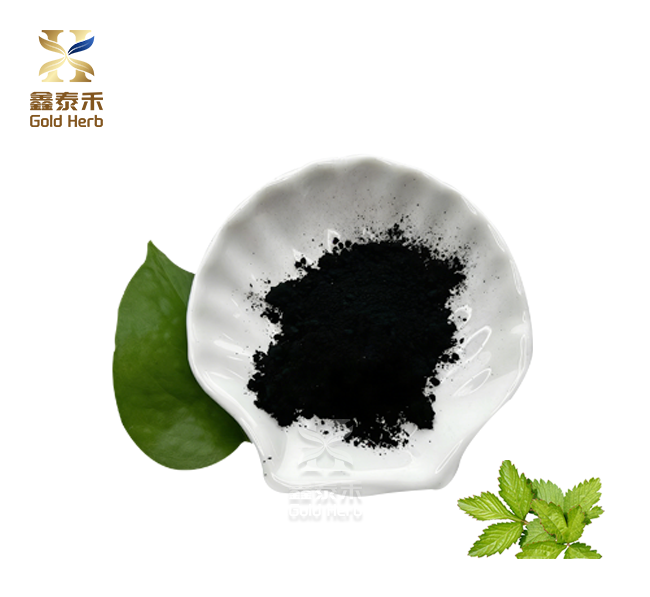
Physical Properties: The finished product presents as a dark green powder with a slight metallic luster, possessing either no odor or a faint ammonia-like scent. It dissolves readily in water to form a transparent, emerald-green solution, yet remains virtually insoluble in oils and diethyl ether. Its stability significantly surpasses that of natural chlorophyll, exhibiting superior resistance to both light and heat; however, it is prone to precipitation in acidic environments (pH < 6.5) or in the presence of calcium ions.
Regulatory Status: Sodium Copper Chlorophyllin is globally recognized as a safe food coloring agent. In China, it is designated under the food additive code 08.009; in the United States, it is listed as FD&C Green No. 3; and within the European Union, it is identified as E141. China's National Standard GB 2760 permits its use in a wide variety of food products—including fruit and vegetable juices, ice cream, candies, pastries, and compounded alcoholic beverages—typically with a maximum allowable usage limit of 0.5 grams per kilogram.

Health Benefits and Versatile Applications
The value of Sodium Copper Chlorophyllin extends far beyond its function as a coloring agent. Its molecular structure bears a striking resemblance to human hemoglobin, endowing it with a unique array of physiological activities that allow it to shine in the fields of pharmaceuticals and health supplements.
1. Core Applications in the Pharmaceutical Sector
Promoting Hematopoiesis and Alleviating Anemia: Due to its structural similarity to hemoglobin, it participates in iron metabolism and promotes hemoglobin synthesis. Clinically, it is used to treat iron-deficiency anemia as well as leukopenia (a reduction in white blood cells) caused by radiotherapy and chemotherapy for malignant tumors.
Liver Protection and Support: As the primary active ingredient in the prescription medication "Sodium Copper Chlorophyllin Tablets," it serves as an adjuvant therapy for both acute and chronic hepatitis. Its mechanism involves stabilizing hepatocyte membranes, mitigating toxin-induced damage, and activating the liver's reticuloendothelial cells to promote hepatocyte repair and regeneration, thereby helping to reduce liver enlargement.
Promoting Wound Healing: It stimulates fibroblast proliferation and collagen synthesis, thereby accelerating the growth of granulation tissue. Consequently, it is utilized in the formulation of burn ointments, hemorrhoid creams, oral ulcer patches, and wound dressings.
Antioxidant and Anti-mutagenic Properties: It possesses a demonstrable capacity to scavenge free radicals and inhibit lipid peroxidation. Research suggests that it may exert its anti-tumor potential through various mechanisms, including complexing with planar aromatic carcinogens, inhibiting carcinogenic activity, and facilitating the degradation of carcinogenic substances.
2. Extensive Daily and Industrial Applications
An Exceptional Natural Coloring Agent: As a food-grade green pigment, it is characterized by its vivid color, strong tinting strength, and high stability. It is widely incorporated into products such as canned green peas, fruit and vegetable juices, jellies, ice cream, baked goods, confectionery, and fortified wines.
A Highly Effective Natural Deodorizer: Its molecules are capable of binding with malodor-causing sulfur- and nitrogen-containing compounds (such as ammonia and methyl mercaptan), thereby neutralizing the offensive odors. Consequently, it is utilized in toothpastes, mouthwashes, breath-freshening products, pet deodorizers, and for managing wound-related odors.
Cosmetic Additive: Due to its stable green hue and low toxicity, it is employed as a coloring agent in various cosmetic products, including lipsticks, eyeshadows, and soaps. Other Potential Applications: Research also explores its use in eco-friendly textile dyeing, as a sensitizer in photoelectric conversion materials, and as a feed additive to enhance the coloration of animal products.
Safety: When used within regulatory dosage limits, sodium copper chlorophyllin is essentially harmless to humans. When taken as a medication, it may cause a harmless green discoloration of the stool—a normal phenomenon that resolves upon discontinuation of the treatment. It is contraindicated for individuals with disorders of copper metabolism.

How Can One Obtain Sodium Copper Chlorophyllin?
The human body cannot synthesize sodium copper chlorophyllin on its own; daily intake primarily relies on the following channels:
Dietary Sources: Natural chlorophyll can be obtained by consuming dark green vegetables (such as spinach and broccoli); however, the stable sodium copper salt form cannot be acquired directly through this method.
Pharmaceutical Preparations: For specific medical conditions (such as hepatitis or leukopenia), sodium copper chlorophyllin tablets or capsules (typically containing 20 mg per tablet) may be used under the guidance of a physician.
Functional Foods and Daily Consumer Products: It is present as an additive in certain green-colored foods, health supplements marketed for their deodorizing or "detoxifying" properties, as well as in toothpastes and mouthwashes.

Conclusion
Sodium Copper Chlorophyllin perfectly exemplifies how modern technology can be harnessed to maximize the value of natural products. It successfully transforms inherently unstable natural chlorophyll into a "green treasure" characterized by exceptional stability, excellent water solubility, and complete safety and non-toxicity. Its applications span multiple dimensions of daily life—from adding vibrant color to our meals, to serving as an adjunctive therapy for liver ailments in our medicine cabinets, and acting as a reliable deodorizing agent in our personal care routines.
For manufacturers, it serves a dual purpose: acting as a powerful coloring agent for creating visually striking products, while also functioning as an effective active ingredient for developing functional products with specific health claims. Given the multitude of suppliers in the market, the key lies in clearly defining one's specific requirements and maintaining rigorous control over the quality and regulatory compliance of raw materials; in doing so, this "color of life"—derived directly from plants—can safely and effectively enhance the value of the final product.
Contact our team at info@newgoldherb.com or visit newgoldherb.com to explore how our Sodium Copper Chlorophyllin powder supplier services can enhance your product portfolio and accelerate market success.

Send Inquiry
Related Industry Knowledge
- Resveratrol Explained: From Antioxidant to Longevity Booster
- Berberine HCL powder: The Natural Compound Backed by Science
- Urolithin A vs. NMN: A Comprehensive Comparison of Anti-Aging Rising Stars
- How to Choose the Best EGCG Green Tea Extract for Supplements?
- Blue Matcha Butterfly Pea Flower Powder vs Gardenia Blue: Which to Choose
- Top Fisetin Benefits for Anti-Inflammation and Aging
- Ergothioneine for Cellular Protection: Benefits, Science, and Longevity Potential
- Fisetin for Anti-Aging: Science, Benefits, and Supplement Trends
- What Is Dihydromyricetin? Uses & Benefits for USA Nutraceutical Brands
- How Resveratrol Powder Is Used in Anti-Aging R&D