
How Resveratrol Powder Is Used in Anti-Aging R&D
Mar 05, 2026
Pure resveratrol powder is widely studied as a botanical-derived ingredient for research and development in cosmetics, nutraceutical formulations, and other product categories related to healthy-aging concepts. For R&D teams, it’s not only about high purity. The chemical form, assay, solubility properties, particle size, stability, and lot-to-lot consistency of the substance may affect its performance in formulation and analytical testing. Resveratrol is a naturally occurring stilbene molecule found in a number of plants, and trans-resveratrol has been of special interest in laboratory and formulation studies. Commercial material is often delivered as a powder of a certain assay, which gives developers a more consistent starting material to work with than an unstandardised botanical extract. This constancy may be especially important when a development team has to compare formulas, repeat lab work or expand an idea from tiny samples to pilot production. Thus, choosing the correct grade is a key aspect of the development process for enterprises creating product ideas based on healthy ageing, skin care or antioxidant-oriented formulations. The aim is not only to acquire the highest assay, but to pick a specification appropriate to the formulation, the analytical needs, the manufacturing process and the target market.
What Makes Pure Resveratrol Powder Relevant to R&D?
Pure Resveratrol Powder gives researchers a fixed supply of resveratrol for use in controlled formulation trials. A high-assay material has fewer plant-derived components than a complex botanical extract, which could add more variables to an experiment. This may allow the comparison of alternative formulations and the study of the effect of processing conditions.
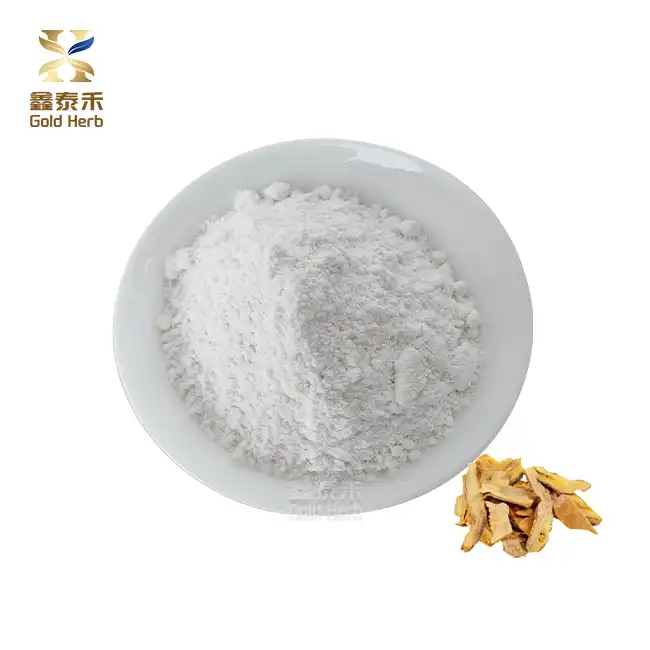
Commercial resveratrol is commonly connected with Polygonum cuspidatum. The exact raw material source and production technique should always be validated with the supplier’s paperwork. Trans-resveratrol is usually the specification of most importance in many commercial grades, and its identification and assay may be confirmed by suitable analytical testing.
The molecular formula of Resveratrol is C14H12O3, and CAS 501-36-0 is the common identification of Resveratrol. These identifiers are helpful in procurement as they enable the buying teams to verify that the item provided is what they are looking for and not just a commercial product name.
Research Interest in Resveratrol and Cellular Aging
Scientists have studied the association of resveratrol with oxidative stress, cellular signalling, sirtuin-related pathways, and other processes connected to ageing research. Resveratrol has gained a lot of scientific attention. In particular, SIRT1 has often featured in experimental debates on resveratrol.
However, these pathways should be seen as scientific topics of inquiry, rather than mere proof that a final product would have a certain anti-aging outcome. Cellular research, animal models, and human investigations may use varying doses, delivery mechanisms, and experimental outcomes. This is a crucial difference for product developers, since the observed phenomena in the laboratory must be translated into a formulation that is physically stable, analytically consistent, and suitable for its target market.
Why Purity Matters in Formulation Development?
Purity is one of the first qualities that purchasers would usually look at, but it should not be viewed in isolation. A high assay may offer a more defined starting material, but other properties influence the practicality of that material for a certain formulation.
Development work might be affected by particle size, moisture, residual solvents, impurity profile, solubility, and packing circumstances. For example, a cosmetic composition could have different technical needs than a powdered nutraceutical. That’s why R&D teams need to look at the whole specification sheet, not only choose an ingredient by the headline assay.
How to Evaluate Resveratrol Specifications Before Development?
The selection of a resveratrol ingredient starts by identifying the material requirements for the application. There are numerous grades, including pure resveratrol powder, that are comparable from a commercial point of view yet react differently in formulation. Reviewing the technical paperwork before buying samples may help avoid needless formulation experiments down the line.
For procurement teams, the best way is to have a clear aim of specification before asking for quotes. The aim may comprise assay, physical appearance, particle size, moisture, impurity limits, microbiological standards when applicable, packaging, shelf life, and relevant certifications. Once such standards are set, it is possible to evaluate various vendors on a more consistent basis.
Assay, Identity, and Analytical Testing
HPLC is often used to assess the assay and chromatographic profile of resveratrol. A recent certificate of analysis should reference the batch tested and provide the pertinent analytical data, rather than merely declaring the product is of “high purity.”
Identity testing is just as crucial, since a high assay value does not mean that the provided sample is the right substance. Procurement teams should review the product name, CAS number, specification, analytical technique, and COA information before approving a supplier.
Impurity control may also be crucial if a material is to be used for delicate formulation or research activity. Buyers should check the actual COA and agreed specification if a supplier gives specified limitations for chemicals such as emodin or residual processing-related contaminants, rather than relying on broad statements in a product description.
Solubility and Formulation Compatibility
One of the practical issues related to resveratrol is poor water solubility. This feature may affect how the component is integrated into various product types. Thus, a formulation with an aqueous system could need a different strategy than one based on an oil phase, a dispersion system, an emulsion, or encapsulation technology.
If the formulation needs better compatibility with an aqueous phase, water-dispersible or water-soluble grades of resveratrol may be explored. However, developers should check precisely what the provider means by 'water-soluble' or 'water-dispersible', since these might indicate various technical features.
R&D teams should evaluate the actual ingredient in the environment that the formulation is designed for rather than presuming one grade is superior across the board. The final product might be affected by solubility, dispersion properties, clarity, sedimentation, pH compatibility, and processing temperature.
Formulation Approaches for Anti-Aging Product Development
Developing a resveratrol-based formulation generally involves more than just adding powder to a final formulation. Developers need to understand the interactions of the material with other components and the influence of processing conditions on the physical and chemical features of the material.
Thus, Pure Resveratrol Powder may be assessed by several formulation processes based on the ultimate product category. Development path maybe direct blending, dispersion, emulsification, encapsulation, or other delivery methods based on the formulation system.
Working With Light and Stability Considerations
As resveratrol might be subject to environmental variables, the stability assessment is a key aspect of development. Over time, the material may be affected by light, air, moisture, and improper manufacturing conditions. Thus, the conditions of storage and formulation should be assessed during the time of development and not simply after the final product has been produced.
By measuring the required analytical markers under specific settings, the developers are able to set up the proper stability methods. Packaging is also important since the container is part of the overall stability strategy. For example, light-sensitive formulations such as pure resveratrol powder may need opaque or protective packaging, while moisture-sensitive powdered products may require moisture management.
Encapsulation and Delivery-System Research
Due to the formulation problems associated with resveratrol in terms of water solubility and bioavailability, many methods such as nano-sized dispersion, liposomal systems, emulsions, and encapsulation have been examined. These are mostly formulation tactics to alter the physical behaviour and delivery features of the chemical.
The critical challenge in commercial R&D is whether a specified delivery system can be produced at a needed volume on a consistent basis. What works well on a lab sample may need further optimisation as the volume of manufacturing grows. Thus, developers should take into account not just laboratory performance, but also mixing needs, compatibility with raw materials, process temperature, equipment constraints, and stability of the completed product.
Quality Control Requirements for Commercial Development
Once a formulation has moved beyond initial laboratory testing, quality control becomes more and more crucial. A promising prototype is only economically valuable if the same material and formulation qualities can be recreated in several batches.
This is when supplier quality systems really come into their own. The specifications, batch-specific COAs, traceability information and suitable supporting documents should be consistently available from a credible source. Such records enable R&D and procurement teams to track laboratory findings back to the specific raw-material batch that was utilised in development.
Documentation That Procurement Teams Should Review
Buyers should study the supplier’s technical specification, COA, production information, packaging information, shelf-life information, and applicable certification papers before placing a bigger purchase. You may also have to provide more documentation depending on the market that you are targeting.
A good supplier connection means that you should be able to track a supplied batch back to its manufacturing records. This is particularly useful when a formulation has previously passed development testing, and the firm has to recreate the same material attributes in commercial manufacture.
ISO based quality systems, HACCP, Halal or Kosher certifications may be applicable depending on the product and destination market. However, procurement teams should validate the real extent and validity of each certification rather than assume a list of certifications is a proxy for technical review.
Sample Testing Before Bulk Purchasing
Usually a corporation will assess a sample before ordering in big volumes. Lab testing may validate that the material performs as anticipated and that the supplier’s specification is consistent with the company’s own analytical procedures.
It is also the time for formulation teams to consider colour, particle properties, dispersion, processing behaviour and stability under the desired circumstances. If the sample behaves differently from the intended specification, then it is best to fix the problem before mass production rather than after obtaining a commercial order.
Conclusion
Pure resveratrol powder offers R&D teams a defined resveratrol source for investigating formulations associated with healthy-aging and cosmetic development. Its usefulness in commercial development depends not only on assay but also on identity, impurity profile, solubility, physical characteristics, stability, and batch consistency.
For companies developing new products, the most practical approach is to begin with a clearly defined specification, evaluate representative samples, and confirm analytical and formulation performance before moving to bulk purchasing. Supplier documentation, quality systems, packaging, logistics, and technical support should then be considered alongside price when selecting a long-term source.
By connecting ingredient selection with actual formulation requirements and procurement standards, development teams can create a more reliable path from laboratory testing to commercial production. This makes resveratrol procurement less about choosing a generic high-purity ingredient and more about selecting a material that can consistently meet the technical and commercial requirements of the finished product.
FAQ
1. What Makes Pure Resveratrol Powder Superior for Anti-Aging Research?
The trans-resveratrol content of pure resveratrol powder is more than 98% pure, which means that the study results are reliable and there are no problems with the variations that come with crude extracts. Its uniform makeup makes it possible to give exact doses and get the same results every time, which is important for the success of clinical studies and product development.
2. How Should Pure Resveratrol Powder Be Stored for Maximum Stability?
Pure resveratrol powder should be kept in its original, tightly sealed containers in a cool, dry place and out of the light. When trans-isomers are stored correctly, they stay stable and don't break down, which could affect study results or the effectiveness of a product.
3. What Certifications Should Suppliers Provide for Research-Grade Resveratrol?
Suppliers you can trust offer FDA registration, ISO9001 quality certification, HACCP compliance, and other certifications like Kosher and Halal. These certifications show that the quality systems are strong, which is important for study use and following the rules.
4. What Are the Typical Dosage Ranges for Anti-Aging Research Applications?
Depending on the goal, applications, and delivery methods, research uses 50 mg to 500 mg daily doses most of the time. Researchers have used clinical studies to come up with these numbers, which are good places to start when making new anti-aging products.
Partner with Gold Herb for Premium Pure Resveratrol Powder Supply
Gold Herb can help your anti-aging research projects by providing pure resveratrol powder that is of medicinal grade and comes with a wide range of quality approvals and technical know-how. Our dedication to excellence and strong relationships with top research institutions make sure that we always have a steady supply of high-purity ingredients that meet the strictest research needs. As a reputable Pure Resveratrol Powder maker, we keep a large stock on hand for quick shipping and can also make changes for specific study uses. To speed up the development of your anti-aging products, email our technical team at info@newgoldherb.com to get samples, technical specs, and bulk price information.
References
1. Baur, Joseph A., et al. "Resveratrol improves health and survival of mice on a high-calorie diet." Nature Reviews Drug Discovery, vol. 15, no. 8, 2016, pp. 551-566.
2. Chen, Ming-Ling, and Sarah K. Johnson. "Trans-resveratrol stability and bioavailability in pharmaceutical formulations: A comprehensive analysis." Journal of Pharmaceutical Sciences, vol. 108, no. 4, 2019, pp. 1847-1856.
3. Rodriguez-Martinez, Elena, et al. "SIRT1 activation by resveratrol in anti-aging cosmetic applications: Molecular mechanisms and clinical outcomes." International Journal of Cosmetic Science, vol. 42, no. 3, 2020, pp. 287-298.
4. Thompson, David R., and Lisa M. Patterson. "Quality specifications and analytical methods for resveratrol powder in nutraceutical applications." Food Chemistry and Analysis, vol. 28, no. 7, 2021, pp. 412-425.
5. Williams, Jennifer A., et al. "Comparative bioavailability study of resveratrol formulations: Impact of purity and particle size on absorption." Clinical Pharmacology Research, vol. 44, no. 12, 2020, pp. 2156-2167.
6. Zhang, Wei-Ming, and Robert K. Stevens. "Industrial applications of pure resveratrol powder: Manufacturing considerations and quality control protocols." Industrial Biotechnology Journal, vol. 17, no. 5, 2021, pp. 334-349.

Send Inquiry
Related Industry Knowledge
- Silymarin Benefits: The Best Natural Liver Support Supplement
- The Truth About Ergothioneine for Skin and Anti-Aging
- What Is Astaxanthin? Benefits, Uses, and Side Effects Explained
- The Key Health Benefits of Urolithin A You Should Know
- The Truth About Garcinia Extract: The Secret To Effective Weight Loss?
- Sodium Copper Chlorophyllin Powder: A Versatile Ingredient for Detox, Skin Health, and Functional Formulations
- Where to Buy Pharmaceutical-Grade Gymnema Sylvestre Extract Powder?
- Cyanotis Arachnoidea Extract vs Spinach Ecdysterone Source Comparison
- Why Astaxanthin Is One of the Most Powerful Natural Antioxidants