
Why AKBA Content Matters in Boswellia Extract Powder?
Mar 18, 2026
For buyers comparing standardized botanical ingredients, the specification of a Boswellia extract is often more important than the name on the product label. Among the naturally occurring boswellic acids found in Boswellia serrata extracts, Acetyl-11-Keto-β-Boswellic Acid, commonly known as AKBA, is one of the most frequently discussed marker compounds. Its presence and concentration can provide useful information when buyers compare different extract specifications, evaluate analytical data, and determine whether a raw material is suitable for a particular formulation. However, AKBA should not be treated as the only measure of raw material quality. A commercial boswellia extract should also be evaluated according to its botanical source, extraction process, standardization method, overall boswellic acid profile, analytical testing, physical characteristics, documentation, and batch-to-batch consistency. For manufacturers and ingredient distributors, knowing how AKBA fits into this larger quality picture makes it simpler to pick a standard that meets the criteria of the end product.
What Makes AKBA Important in Boswellia Extract Powder?
Boswellia serrata is a resin-producing tree historically native to the Indian subcontinent and other countries of South Asia. The resin comprises a category of naturally occurring chemicals called boswellic acids. Manufacturers may extract and concentrate the resin to make powders with specific quantities of various boswellic acids.
AKBA is one of the best-known chemicals in this category and is often used as an identifier when referring to standardised Boswellia constituents. The amount of particular boswellic acids may fluctuate based on the raw material and the production method. Therefore, specification of AKBA might serve to provide a clearer foundation for comparison of different commercial extracts.
This is especially true for B2B buyers. Two powders may both be called Boswellia extract, yet their standardisation profiles may be quite different. One may specify total boswellic acids while another may specify a certain AKBA level. The buyer cannot presume that two goods of similar names will behave the same way when formulating or processing without looking at the real specification and analytical data.
Therefore, AKBA content is best considered as one crucial specification element within a larger quality-control system, not as a stand-alone description of product quality.
Understanding the Boswellic Acid Profile
Boswellic acid is the active component in an extract of Boswellia. Depending on the technique of extraction and the standardisation aim, the profile may comprise molecules such as AKBA, acetyl-alpha-boswellic acid, beta-boswellic acid and other similar elements.
Their relative concentrations may vary according to the botanical source, harvesting circumstances, extraction method, purification and concentration. Therefore, the term ‘Boswellia extract’ alone does not provide sufficient information to a procurement team to correctly compare commodities.
Therefore, a good product specification should mention the botanical source and explicitly the required standardisation factors. If AKBA is a critical criterion for the final formulation, the purchaser should validate the quoted percentage and the analytical procedure used to establish it.
This also greatly simplifies communication between the ingredient supplier and the finished-product maker. Instead of describing the raw material in generic terms, both parties may work from requirements that can be measured.
Why Standardization Matters for Commercial Formulation?
Standardisation gives practical means of reducing variance from batch to batch. Natural botanical materials may be variable even before the extraction process; thus, producers need to have suitable controls to get an extract with a more predictable chemical profile.
One of the markers that may be used to determine the goal specification for a standardised boswellia extract is AKBA. The precise proportion will depend on the application, product idea, regulatory restrictions, and formulation design. For every application, a higher claimed AKBA % should not inherently be better.
This difference is crucial in the comparison of providers. A material with a greater concentration may cost more per kg, but the comparison should be made in terms of the actual specification needed by the formulation. In contrast, there may not be a significant economic benefit to spend more for an overly concentrated extract if the final product does not have to meet that standard.
So the aim is not merely to have the highest AKBA number. The objective is to find a standardised ingredient with a specification that can be reliably provided and analytically validated.
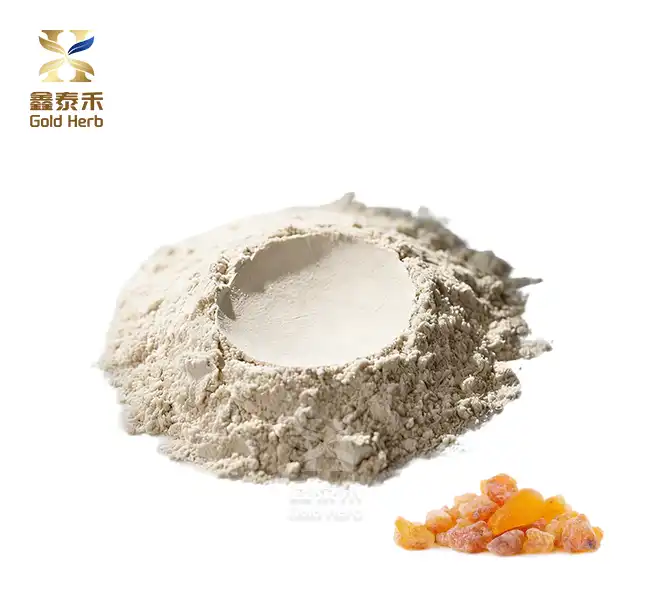
How AKBA Content Is Verified in Boswellia Extract?
AKBA utilised as a commercial standard requires analytical testing. Appearance and generic product descriptions may be helpful for some preliminary information, but cannot determine the concentration of a particular botanical identifier.
High-performance liquid chromatography (HPLC) is a frequently used technique for the study of plant extracts and may be employed for the measurement of specific boswellic acids in boswellia extract. Procurement teams should offer enough detail in an analytical report to comprehend what was measured and how the result relates to the approved product specification.
When you are assessing your provider, a Certificate of Analysis or COA is important. Instead of just seeing a product website or spec sheet, buyers have the option to request to see a current COA connected with a real manufacturing batch. This also offers the buying team a stronger foundation for judging whether the supplier can consistently match the declared AKBA requirements.
Beyond AKBA: Other Quality Parameters
AKBA is given a lot of consideration but should not be taken in isolation. A commercial botanical ingredient may additionally need to be tested for moisture, microbiological limits, heavy metals, residual solvents, pesticide residues, and other characteristics as required by the target market and regulatory requirements.
Physical qualities may also be important during production. The particle size, powder flow, bulk density, colour, odour, and solubility or dispersibility might impact the behaviour of an extract during mixing, filling, granulation or other processing processes.
For example, a customer formulating a powder may have a particle size specification to promote mixing uniformity. Depending on the needs of its target market, another producer may lay more emphasis on microbiological parameters or residual-solvent restrictions.
So a good quality requirement should be a reflection of the real process of manufacture and not just one pretty figure.
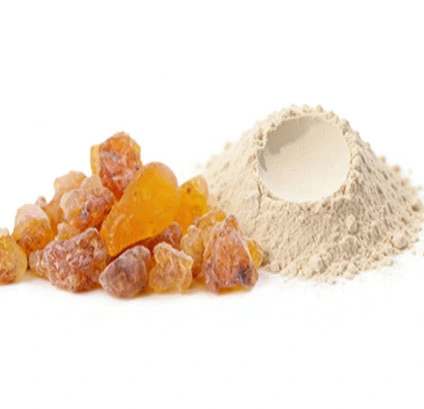
Comparing Different Boswellia Extract Specifications
Buyers comparing several boswellia extract vendors should first ensure that the items are in fact equivalent. A comparison of price per kilogram without taking into account the standardisation levels may lead to a false conclusion.
For example, one seller may provide an extract with a specified AKBA standardisation, whereas another supplier may provide a broad Boswellia powder without a corresponding standardisation claim. The two materials should not be immediately considered comparable. Their extraction procedures, concentration ranges, analytical approaches, and chemical profile might vary.
A more meaningful comparison for buying is the specification and pricing. The buyers may then establish the approximate cost of raw material at the needed level of the desired compound. This gives a more relevant foundation for business talks than merely picking the lowest price per kilogram.
Consistency between batches is also critical. Additional work for formulation and quality-control teams may be needed by a provider that makes a single good-quality batch, but cannot repeat the same specification on consecutive orders. Thus, consistent analytical data are of immediate importance to businesses that plan for repeat manufacturing.
Documentation Should Support the Specification
A competent boswellia extract supplier should be able to give paperwork that correlates to the actual material supplied. Depending on the market and application, this might comprise a product specification, COA, testing records, technical data, origin information and necessary certification papers.
Buyers have to pay special attention to whether the papers specify the product, batch, test settings, and analytical findings. Generic reports that do not match the content you have provided have less value while you are qualifying.
This documentation is also necessary for a manufacturer when compiling its own technical file or when responding to queries from its downstream customers. The availability of clear records makes it simpler to establish that the raw material has been examined against pre-determined requirements.
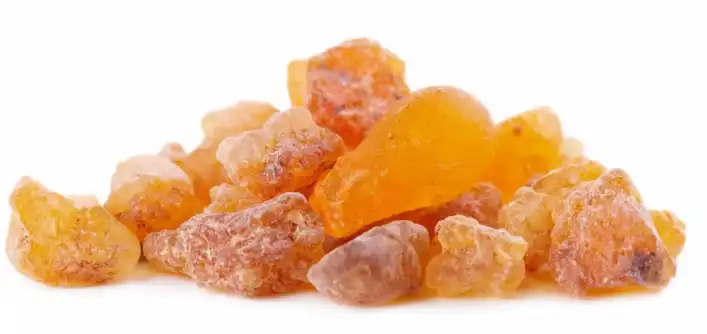
Selecting Boswellia Extract for Different Product Applications
The specification of a Boswellia constituent varies upon the usage of the substance. Capsule/tablet/powder blend/beverage/cosmetic formulation manufacturers may have varied technical criteria.
For solid dosage forms, the concentration and the properties of the powder are typically significant, as the chemical must be compatible with other dry materials. Cosmetic formulators could be more concerned with colour, odour, dispersibility and compatibility with the formulation method used.
For each scenario, the whole technical profile should be assessed along with the AKBA standard. A good provider can describe the numerous grades and assist consumers in comprehending the variations between them without pushing one standard as universally better.
Cosmetic Formulation Considerations
Ingredients obtained from Boswellia are also part of the creation of cosmetic and personal-care products. In these applications, the formulator may be concerned with botanical origin, standardisation, appearance, odour, compatibility and documentation.
AKBA may be considered in the chemical characterisation of the extract; however, cosmetic claims should be created in line with the appropriate rules of the target market. The existence of a certain chemical alone does not guarantee that a final cosmetic product may make a certain functional claim.
This is particularly crucial for multinational businesses, because ingredient standards and acceptable marketing language might differ from market to market.
Formulation Flexibility and Powder Specifications
For producers, powdered plant extracts are easy to handle, since they can be included in various dry formulations and may also be adjusted to the required amount of inclusion. However, physical properties of the powder may impact manufacturing efficiency.
The customer should check if the provider can supply stable powder with constant particle properties and acceptable packaging. In the case when the ingredient is for large-scale automated manufacturing, information on flow behaviour, bulk density, moisture and handling conditions may also be requested from the technical team of the manufacturer.
When procurement choices are made based on the AKBA % alone, these subtleties are typically forgotten.
Conclusion
AKBA is a key marker chemical to consider when assessing standardised Boswellia constituents; however, it should not be regarded as the only criterion of boswellia extract quality. A relevant procurement evaluation should link the claimed AKBA standard to the botanical source, extraction procedure, analytical method, physical attributes, documentation, and batch-to-batch consistency.
This wider approach makes it easier for businesses sourcing botanical ingredients at commercial scale to compare suppliers and minimises the danger of selecting a material just based on pricing or one particular feature. Buyers may obtain the relevant analytical data, study the full technical profile, analyse samples and set explicit acceptance criteria to pick a Boswellia extract that is better suited to their formulation and supply-chain needs.
FAQ
1. Why does AKBA content remain the critical quality marker for sourcing Boswellia extract powder?
AKBA is the best way to tell if an extract is good for you and whether it can help with inflammation because it is much stronger than other boswellic acids. Its specific 5-LOX inhibition method makes it more effective while reducing side effects. This makes sure that the product works the same way in all kinds of situations.
2. What verification methods work best for confirming AKBA content in large-scale shipments?
The most accurate way to measure AKBA is with HPLC analysis, which lets you measure each boswellic acid component precisely. Suppliers with a good reputation include full certificates of analysis with every package. For more independent confirmation on important purchasing choices, third-party testing services are available.
3. How do varying AKBA concentration levels affect anti-inflammatory product effectiveness?
Higher AKBA ratios provide better therapeutic effects with lower dosage needs, which makes the product more cost-effective and easier for customers to follow. Products with little AKBA might need much higher doses to get the same results, which could hurt the formulation's cost-effectiveness and the user's happiness.
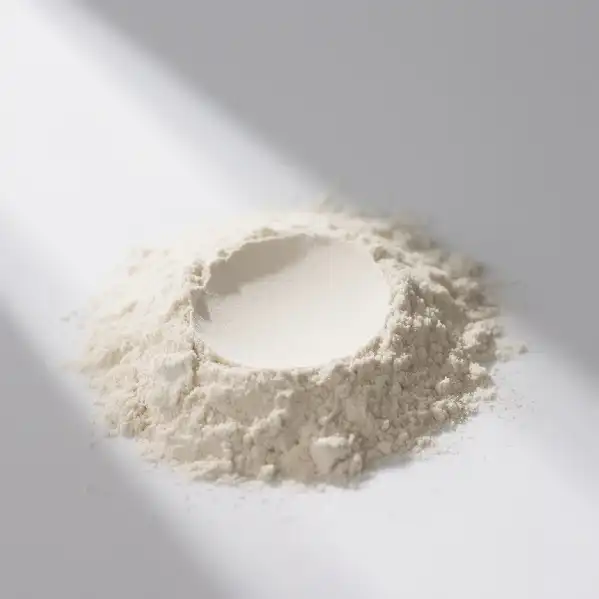
Partner with Gold Herb for Premium Boswellia Extract Powder
Join forces with Gold Herb to get high-quality boswellia extract powder. Gold Herb provides pharmaceutical-grade Boswellia extract powder that has been standardized to meet high AKBA content standards. These ingredients have been scientifically proven to work in your formulations. Our FDA-registered and ISO9001-certified production methods make sure that the quality is always the same and meets the needs of HACCP, Halal, and Kosher markets around the world. As a reliable Boswellia extract powder provider, we keep a large stock that lets us ship standard orders 24 hours a day, seven days a week. We can also help with special formulations within seven to fifteen working days. Send an email to info@newgoldherb.com right now to get samples and find out how our premium extracts can help your product line with their proven medicinal benefits.
References
1. Ammon, H.P.T. (2016). Boswellic acids and their role in chronic inflammatory diseases. Advances in Experimental Medicine and Biology, 928, 291-327.
2. Abdel-Tawab, M., Werz, O., & Schubert-Zsilavecz, M. (2011). Boswellia serrata: an overall assessment of in vitro, preclinical, pharmacokinetic, and clinical data. Clinical Pharmacokinetics, 50(6), 349-369.
3. Roy, N.K., Deka, A., Bordoloi, D., Mishra, S., Kumar, A.P., Sethi, G., & Kunnumakkara, A.B. (2016). The role of boswellic acids in therapy of various chronic inflammatory diseases. Bioorganic & Medicinal Chemistry Letters, 26(17), 4101-4108.
4. Sharma, M.L., Khajuria, A., Kaul, A., Singh, S., Singh, G.B., & Atal, C.K. (1988). Effect of salai guggal ex-Boswellia serrata on cellular and humoral immune responses and leucocyte migration. Agents and Actions, 24(1-2), 161-164.
5. Singh, S., Khajuria, A., Taneja, S.C., Johri, R.K., Singh, J., & Qazi, G.N. (2008). Boswellic acids: A leukotriene inhibitor also effective through topical application in inflammatory disorders. Phytomedicine, 15(6-7), 400-407.
6. Krieglstein, C.F., Anthoni, C., Rijcken, E.J., Laukötter, M., Spiegel, H.U., Boden, S.E., Schweitzer, S., Saftig, P., Senninger, N., & Russell, J. (2001). Acetyl-11-keto-β-boswellic acid, a constituent of a herbal medicine from Boswellia serrata resin, attenuates experimental ileitis. International Journal of Colorectal Disease, 16(2), 88-95.

Send Inquiry
Related Industry Knowledge
- Top Benefits of Kava Extract for Stress, Mood, and Sleep Quality
- Is fulvic acid hard on the liver?
- What Is Fenugreek? Benefits, Uses, and Science Explained
- What Is Gymnema Sylvestre Extract Powder Used For in Blood Sugar Control?
- The Truth About Ergothioneine for Skin and Anti-Aging
- What is the best time to take garcinia cambogia extract powder?
- Ergothioneine Powder for Skincare & Supplements | Supplier Guide
- Natural 5-Hydroxytryptophan (5-HTP) Powder Supplier for Functional Nutrition Products
- GMP Cyanotis Arachnoidea Extract Manufacturing Requirements
- Ergothioneine: Unlocking B2B Opportunities in the Functional Nutrition Market