
Why Astaxanthin Is One of the Most Powerful Natural Antioxidants
Mar 16, 2026
Within the realm of natural active ingredients, antioxidants have consistently remained a core, high-demand category. From common staples like Vitamin C and Vitamin E to ingredients that have garnered significant popularity in recent years—such as ergothioneine and resveratrol—various compounds have successfully carved out their own niches by leveraging their unique strengths. However, amidst this vast array of natural antioxidants, astaxanthin (CAS 472-61-7) consistently occupies the "pinnacle position," widely recognized by research institutions and industry professionals worldwide as "one of the most potent natural antioxidants." It not only boasts antioxidant activity far exceeding that of comparable ingredients but also possesses unique targeted protective capabilities and broad applicability across various fields. The foundation of its "potent" status lies in the multifaceted support derived from its molecular structure, mechanisms of action, scientific validation, and practical application—factors that collectively constitute its core competitive advantage, distinguishing it from other antioxidants.
To fully grasp the "potency" of astaxanthin, one must first understand the core value of antioxidants: to scavenge excess reactive oxygen species (such as hydroxyl radicals and singlet oxygen) within the body, thereby blocking the cellular damage caused by oxidative stress. Indeed, oxidative stress is identified as a primary underlying cause of numerous health issues, including aging, chronic diseases, and skin senescence. The fundamental reason astaxanthin stands out from the crowd is that it surpasses other natural antioxidants across four key dimensions: scavenging efficiency, scope of protection, safety profile, and adaptability—advantages for which there exists robust scientific data and broad industry consensus.
The Core Foundation: A Unique Molecular Structure Underpins Potent Antioxidant Efficacy
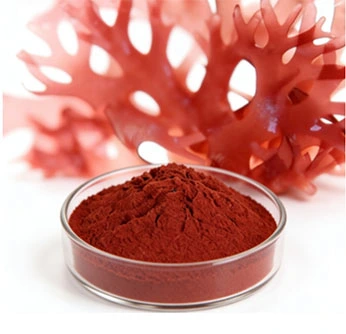
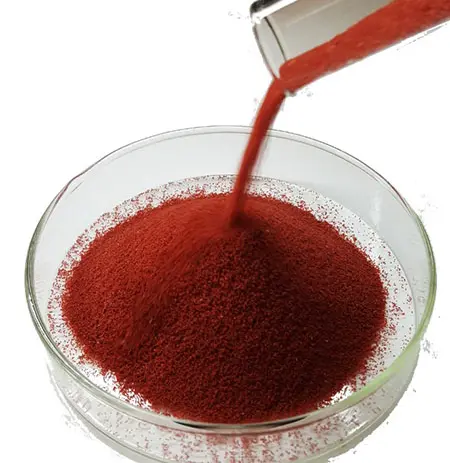
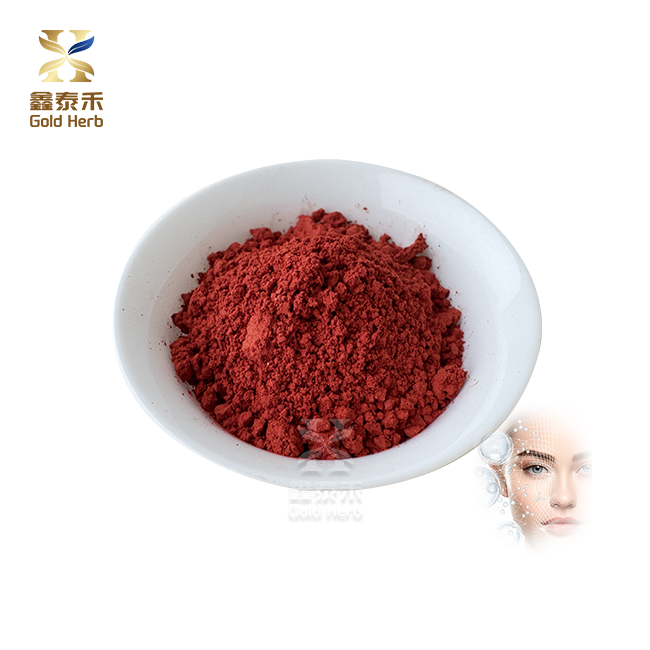
The potent antioxidant capacity of astaxanthin stems from its unique chemical structure. A member of the carotenoid family, it is a lipid-soluble natural pigment with the chemical formula C40H52O4 and a molecular weight of 596.86. Appearing as a red crystalline powder, it occurs naturally in marine organisms—such as *Haematococcus pluvialis* (a type of microalgae), salmon, krill, and crabs—as well as in certain plants. Among these sources, *Haematococcus pluvialis* stands out as the primary source of natural astaxanthin; its content can reach 10–40 mg/g, making it the key raw material for industrial extraction.
Compared to other antioxidants, astaxanthin’s molecular structure possesses two key advantages that directly determine the upper limit of its antioxidant activity. First, the molecule contains 13 conjugated double bonds. This long-chain conjugated structure endows it with exceptional electron-transfer capabilities, enabling it to rapidly scavenge and neutralize reactive oxygen species within the body—particularly the hydroxyl radical and singlet oxygen, which inflict the greatest damage upon human tissues. Singlet oxygen is a primary culprit behind skin photoaging and cellular DNA damage; astaxanthin’s capacity to scavenge singlet oxygen is 550 times greater than that of Vitamin E, 6,000 times greater than that of Vitamin C, and 10 times greater than that of beta-carotene—far surpassing other popular ingredients such as ergothioneine (whose scavenging capacity is approximately 40 times that of Vitamin C) and resveratrol.
Second, the molecule features two hydroxyl groups and two ketone groups situated at its terminal ends. This structural configuration renders it lipid-soluble while simultaneously allowing for partial water solubility through optimized formulation techniques. This breaks through the limitations of traditional antioxidants—which are typically restricted to being either solely lipid-soluble or solely water-soluble—enabling astaxanthin to penetrate cell membranes, mitochondrial membranes, the blood-brain barrier, and even the skin barrier. By targeting the core structures of cells, it delivers "comprehensive, deep-level" antioxidant protection. In contrast, Vitamin C functions exclusively within the aqueous environment of body fluids; while ergothioneine can target cells, its antioxidant activity falls short of astaxanthin’s; and beta-carotene struggles to penetrate the blood-brain barrier, thereby offering a more limited scope of protection. More importantly, astaxanthin does not generate toxic intermediate products upon oxidation; instead, it can be regenerated through the body's endogenous reduction systems (such as glutathione), thereby restoring its antioxidant activity. This establishes a sustained "scavenge-regenerate-rescavenge" cycle, effectively avoiding the issue of "oxidative stress rebound"—a potential side effect associated with certain antioxidants (such as excessive Vitamin C)—and serves as the key to its ability to exert potent, long-lasting antioxidant effects.
Surpassing Competitors Across Four Key Dimensions: Solidifying the Consensus as the "Most Potent" Antioxidant
Beyond the inherent advantages conferred by its molecular structure, astaxanthin exhibits four core characteristics in practice that have led the industry to unanimously recognize it as the "most potent natural antioxidant." These characteristics are mutually reinforcing, establishing a competitive edge that is truly irreplaceable.
(I) Extreme Antioxidant Activity: Scavenging Efficiency That Far Outstrips Competitors
This constitutes astaxanthin's most fundamental advantage and serves as the bedrock for its widespread recognition. Numerous authoritative scientific studies have confirmed that astaxanthin’s antioxidant activity ranks at the very pinnacle among natural compounds. In experiments involving the scavenging of hydroxyl radicals—the most toxic form of reactive oxygen species (ROS) in the human body—astaxanthin’s IC50 value (the half-maximal inhibitory concentration) was a mere 0.1 μmol/L. This figure is significantly lower than those of Vitamin C (10 μmol/L), Ergothioneine (0.8 μmol/L), and Curcumin (2.5 μmol/L). Furthermore, in experiments assessing the scavenging of singlet oxygen, astaxanthin’s quenching rate constant reached 1.0 × 10¹⁰ L/(mol·s)—a figure 550 times greater than that of Vitamin E and 10 times greater than that of beta-carotene—enabling it to block singlet oxygen-induced cellular damage within an extremely short timeframe.
This exceptional scavenging efficiency implies that a remarkably small dosage of astaxanthin is sufficient to achieve protective effects far superior to those of other antioxidants. For instance, a daily supplement of just 2–4 mg of natural astaxanthin delivers antioxidant benefits equivalent to supplementing with 1,000 mg of Vitamin C or 500 mg of Vitamin E. This not only reduces the required dosage but also mitigates the risks associated with excessive supplementation—a key reason why it is so highly favored within the field of nutritional health and wellness.
(II) Outstanding Targeted Protective Capabilities: Covering Multiple Organs and Systems
Conventional antioxidants are often limited to acting upon the body's surface or within its fluid environments; they frequently struggle to penetrate cellular barriers and are thus unable to provide protection to the core structures of the cell. Astaxanthin, however, leverages its unique dual nature—being both lipophilic (fat-soluble) and hydrophilic (water-soluble)—to effortlessly traverse cellular membranes, mitochondrial membranes, the blood-brain barrier, the retinal barrier, and even the skin barrier, thereby delivering targeted protection to the body's vital organs and cells. For instance, it can cross the blood-brain barrier to scavenge reactive oxygen species within the brain, thereby protecting neurons and aiding in the improvement of memory and the delay of neurodegenerative diseases. It can also cross the retinal barrier to protect retinal cells, alleviating eye fatigue and preventing age-related ocular degeneration. Furthermore, it can penetrate the skin barrier to neutralize free radicals induced by ultraviolet radiation, delaying photoaging of the skin and reducing fine lines and dullness. Additionally, it protects cardiovascular endothelial cells and hepatocytes, helping to maintain cardiovascular health and mitigate oxidative damage to the liver. This comprehensive, deep-acting, and targeted protective capability is a feat that few other natural antioxidants can match—a quality that significantly broadens the scope of astaxanthin's potential applications.
(III) Exceptional Safety Profile: Suitable for Long-Term Supplementation
As a natural antioxidant, "safety" serves as the fundamental prerequisite for its widespread application; indeed, the safety of astaxanthin has been rigorously validated through extensive scientific research and extensive market usage. Natural astaxanthin (particularly that derived from *Haematococcus pluvialis*) is a well-tolerated natural compound for the human body. Acute toxicity studies have established an oral LD50 (Lethal Dose 50) of >5000 mg/kg in rats—a level far exceeding typical daily supplementation dosages. Furthermore, long-term continuous supplementation (at daily doses of 2–10 mg) has demonstrated no significant adverse effects; only a small minority of individuals may experience mild gastrointestinal discomfort, which is typically alleviated quickly following a dosage adjustment.
Compared to synthetic antioxidants, natural astaxanthin exhibits excellent biocompatibility; it does not accumulate within the body, and its metabolic byproducts are naturally excreted via urine and feces. Moreover, unlike certain other natural antioxidants (such as curcumin, which often requires piperine to enhance absorption, or Vitamin C, which carries a risk of kidney stone formation if consumed in excess), astaxanthin requires no additional absorption enhancers and poses no risk associated with excessive intake. This makes it suitable for long-term supplementation across a wide range of demographics—a factor that serves as a crucial safeguard for its status as a "potent" agent. After all, true potency can only deliver its full value when underpinned by absolute safety.
(IV) Synergistic Action: Antioxidant and Anti-Inflammatory Effects Yield Results Greater Than the Sum of Their Parts
Oxidative stress and chronic inflammation are often inextricably linked: oxidative stress can trigger inflammatory responses, while these inflammatory responses, in turn, generate even more reactive oxygen species, thereby creating a self-perpetuating vicious cycle. Astaxanthin not only possesses potent antioxidant capabilities but also exerts a dual "antioxidant + anti-inflammatory" effect by inhibiting the NF-κB inflammatory pathway and reducing the secretion of inflammatory cytokines such as TNF-α and IL-6; in doing so, it fundamentally interrupts the vicious cycle of oxidation and inflammation.
This synergistic action allows astaxanthin's protective effects to far surpass those of single-component antioxidants. For instance, in skincare, it simultaneously scavenges UV-induced free radicals—thereby delaying photoaging—and alleviates skin inflammation, improving issues such as redness and sensitivity. Regarding joint health, it both mitigates oxidative damage to joint cells and reduces joint inflammation, thereby relieving pain. In the realm of cardiovascular protection, it inhibits the oxidation of low-density lipoproteins (LDL) while simultaneously reducing vascular endothelial inflammation, thereby minimizing the formation of atherosclerotic plaques. This "dual efficacy" further solidifies its preeminent status among natural antioxidants.
Scientific Research and Industry Recognition: Consensus Rooted in Rigorous Validation
Astaxanthin’s status as "one of the most potent natural antioxidants" is not merely a product of industry hype; rather, it stems from extensive, long-term validation by global research institutions and endorsements from authoritative bodies. Since the 1990s, a vast number of clinical trials and fundamental research studies on astaxanthin have been conducted worldwide. To date, over 10,000 scientific papers have been published on the subject, covering diverse fields such as antioxidant activity, anti-inflammation, eye health, cardiovascular protection, and skincare. Collectively, these studies consistently confirm its powerful antioxidant capabilities and multifaceted health benefits.
Concurrently, astaxanthin has garnered recognition from numerous authoritative organizations across the globe: The U.S. FDA has designated it as a "Generally Recognized as Safe" (GRAS) ingredient, permitting its use in dietary supplements and food products; the European Food Safety Authority (EFSA) has validated health claims regarding its "antioxidant and vision-protecting" properties; and China’s National Health Commission has approved astaxanthin derived from *Haematococcus pluvialis* as a novel food ingredient, authorizing its inclusion in both food products and dietary supplements. These authoritative endorsements have further solidified the perception—among both the industry and consumers—of astaxanthin as a "powerful natural antioxidant," thereby establishing a broad and widely accepted consensus.
Practical Application: Translating Potent Advantages into Tangible Value
Astaxanthin’s potent antioxidant advantages have not only received validation from the scientific community and the industry but have also been fully realized in practical applications. It is now widely utilized across diverse sectors—including nutritional supplements, cosmetics and skincare, food products, and pharmaceuticals—serving as a pivotal bridge that connects "scientific value" with "market value." In the field of nutritional supplements, astaxanthin serves as a core ingredient in premium anti-aging, eye-care, and heart-health products. Emphasizing "potent antioxidant activity and targeted protection," it is ideally suited for middle-aged and elderly individuals, professionals facing high work-related stress, and those who engage in prolonged visual tasks. In the realm of cosmetics and skincare, astaxanthin stands out as a "star ingredient" in high-end anti-aging formulations; at inclusion levels ranging from just 0.05% to 0.5%, it effectively delivers powerful antioxidant benefits, delays photoaging, and brightens skin tone, making it suitable for all skin types. Within the food industry, astaxanthin functions as both a natural colorant and an antioxidant, finding applications in products such as beverages, confectionery, and dietary supplements—thereby enhancing visual appeal while simultaneously extending shelf life. Finally, in the pharmaceutical sector, the synergistic "antioxidant-plus-anti-inflammatory" properties of astaxanthin hold great promise for use as an adjunctive therapy in the treatment of neurodegenerative, cardiovascular, and inflammatory diseases, pointing to a future with immense potential for clinical application.
The "Potency" of Astaxanthin: A Dual Testament to Inherent Efficacy and Collective Consensus
In summary, the reason Astaxanthin is widely acknowledged as one of the most potent natural antioxidants lies in a dual foundation: its "inherent advantages" coupled with "empirical validation." Its unique molecular structure endows it with exceptional antioxidant activity and targeted protective capabilities, while four core advantages allow it to surpass other natural antioxidants in its class. Furthermore, a wealth of scientific data and endorsements from authoritative institutions have further solidified its industry standing, fostering a broad consensus across both the industry and the market.
Compared to other natural antioxidants, Astaxanthin’s "potency" is not merely a single-dimensional advantage, but rather a comprehensive leadership spanning four key pillars: "activity, protection, safety, and synergy." It not only efficiently scavenges reactive oxygen species but also offers targeted protection to the cellular core; it is safe for long-term supplementation while simultaneously delivering synergistic antioxidant and anti-inflammatory effects. This comprehensive strength allows it to stand out within the natural antioxidant landscape, earning it the well-deserved title of the "King of Potency."
As scientific research continues to deepen and extraction technologies undergo continuous optimization, the application scenarios for Astaxanthin are poised to expand further. Consequently, its status as a "potent natural antioxidant" will become even more firmly established, offering superior and more efficient natural solutions for human health and beauty.
Partner with Gold Herb for Premium Astaxanthin Supply
You can trust Gold Herb to give you good Astaxanthin because they use advanced extraction methods and strict quality control checks. Our new companies make products that are all the same and meet the standards for 65%, 70%, and 85% boswellic acid. There are documents from the FDA, ISO9001, HACCP, Halal, and Kosher that back up these extracts. We've been in business for over three years and have helped over 200 people in 30 different countries. We always have more than a ton of things on hand so that we can ship your order right away, within 24 hours of getting it. We will always be able to come up with new ideas and make better goods because we work together with Academician Li Xiaokun's study team. Email info@newgoldherb.com to tell us about your specific needs, get samples, or find out more about our full customization services, which will save you a lot of money on your recipe needs.

Send Inquiry
Related Industry Knowledge
- What Is Fenugreek? Here Are Its 7 Potential Health Benefits
- How Silymarin Supports Liver Function Naturally
- What Is Sodium Copper Chlorophyllin Powder Used For?
- Which is better, niacinamide or Centella asiatica extract?
- Sodium Copper Chlorophyllin: Natural Deodorizing & Antioxidant Agent
- Ergothioneine Powder for Skincare & Supplements | Supplier Guide
- What About Coconuts, Coconut Milk, and Coconut Oil MCTs?
- Why B2B Partners Choose Our chlorophyllin sodium copper salt: Premium chlorophyllin sodium copper salt, Professional Service, and Sustainable Value
- Fisetin Ingredient for Anti-Aging, Brain Health, and Antioxidant Supplements
- Cyanotis Arachnoidea Extract vs Spinach Ecdysterone Source Comparison