
Best Uses of black pepper extract powder in Supplements
Sep 09, 2026
Black pepper extract powder is one of the most strategically valuable botanical ingredients in modern supplement formulation. Derived from the fruit of Piper nigrum and standardized to 95% or 98% piperine via HPLC, this white powder functions as a potent bio-enhancer rather than a standalone nutrient. For nutraceutical brands, sports nutrition manufacturers, and functional food producers, understanding how piperine extract integrates into formulations can meaningfully elevate product performance and market differentiation.
Key Product Specifications
| Parameter | Specification |
|---|---|
| Product Name | Black pepper extract powder |
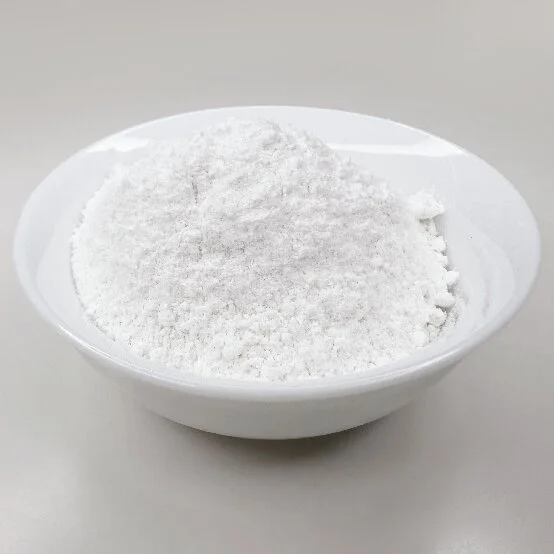
| Appearance | White powder |
| Active Content | 95%, 98% Piperine |
| CAS Number | 94-62-2 |
| Molecular Formula | C17H19NO3 |
| Molecular Weight | 285.34 |
| Part Used | Fruit |
| Test Method | HPLC |
| Mesh Size | ≥95% Pass 80 mesh |
| Loss on Drying | ≤5.0% |
| Shelf Life | 2 years |
| Storage | Tightly closed container, protected from light |
| Certifications | FDA, ISO9001, HACCP, HALAL, Kosher |
Quality Assurance
Certificate of Analysis (COA) for Black pepper extract [Request COA]
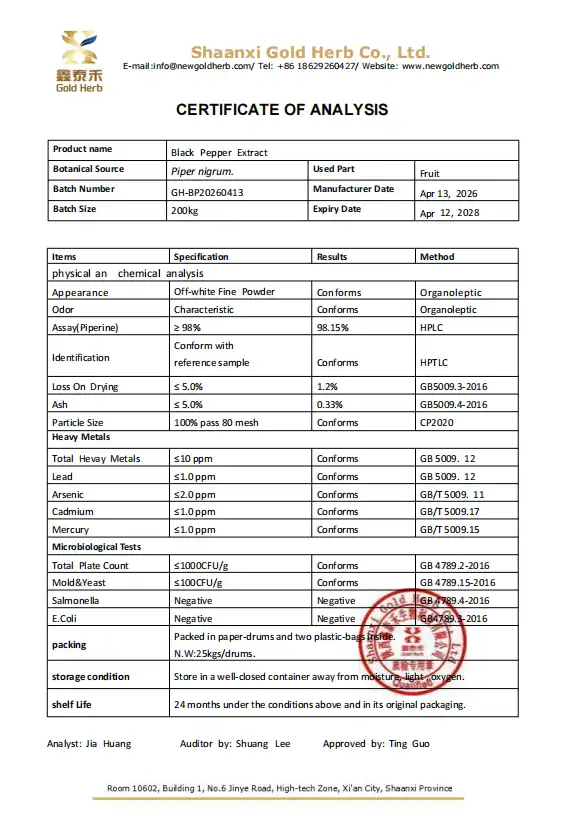
Understanding Black Pepper Extract Powder and Its Core Benefits
Most people who buy supplements know that what the label says about an ingredient doesn't mean much if the body can't absorb it. That's where standardized black pepper extract powder concentrate proves its worth in precise mixtures.
What Makes Piperine Different from Generic Black Pepper?
Only 1% to 3% of the weight of regular cooking pepper is piperine. A pharmaceutical-grade extract that is standardized to 95% or 98% piperine gives a much stronger, measured amount that stays the same from batch to batch, as shown by HPLC. Pure piperine has the CAS number 94-62-2, and reliable sources test each batch to make sure it meets the requirements. This level of standardization is a must for R&D directors who are making formulas that work.
Core Functional Properties Worth Knowing
Black pepper extract powder works in a number of well-known ways that make it an essential ingredient in useful supplement stacks:
- Bioavailability amplification: Piperine stops CYP3A4 and P-glycoprotein from working in the liver and intestinal walls, which slows the metabolism of nutrients that are given at the same time. A major study in Planta Medica found that giving 20 mg of piperine along with curcumin improved the body's ability to use curcumin by 2,000%.
- Antioxidant activity: Piperine is an antioxidant that gets rid of reactive oxygen species, which lowers the oxidative stress on cells. This property supports the clean-label positioning that customers want more and more these days.
- Metabolic support: Studies show that piperine may increase thermogenesis and help fat metabolism by changing enzymes that work with lipids. This makes it a natural addition to weight-management supplements.
- Digestive function support: Piperine increases the release of digestive enzymes and improves gut movement. This may help end users who sometimes feel bloated and have trouble digesting food.
Together, these qualities explain why black pepper extract powder is now commonly found in high-end supplement stacks—it's not just a filler but an active booster.
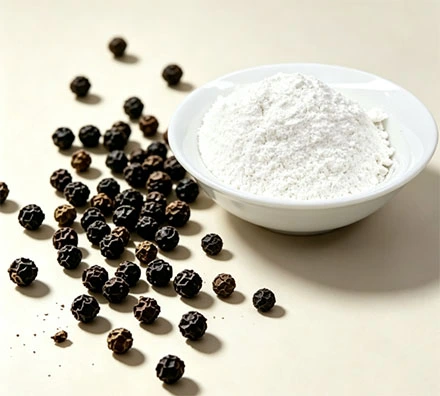
How to Use Black Pepper Extract Powder in Supplement Formulations?
It's one thing to know about science. Another thing is knowing how to turn it into a stable black pepper extract powder product that can be made.
Recommended Dosage and Safety Considerations
The usual amount of piperine in food supplements is between 5 mg and 20 mg per dose. Piperine has bio-enhancement effects at these levels, and it doesn't have many harmful effects on healthy adults. But formulators should look at how their products combine with medicines that are broken down by CYP3A4 and make that clear on the labels of final goods. Because different compounds need different levels of enhancement, the dosage should be based on the target nutrient that is being co-formulated.
Synergistic Ingredient Pairings
The most profitable uses of black pepper extract powder take advantage of how well it works with other plants. Combinations of curcumin and piperine make up most of the supplements for joint health and pain relief. Piperine and coenzyme Q10 work together to improve CoQ10 absorption, which is low by nature because it has a lipophilic structure. When you combine it with resveratrol, ashwagandha, or bacopa monnieri extract, the effects of each ingredient are closer to what they could be. When choosing these pairings, getting all of the ingredients from the same GMP-certified source lowers the risk of contamination and makes it easier to keep track of quality.
Suitable Product Formats and Stability Notes
Black pepper extract powder comes in the form of a white powder that mixes easily into capsules, tablets, and sachets. It stays stable for a long time when kept in its original, tightly sealed package away from light and water. For functional drinks, microencapsulation might be a good way to hide the effect on the senses and keep the activity even after being heated. During the creation process, formulators should make sure that the product is compatible with the excipients, especially when it comes to chewable and liquid forms.
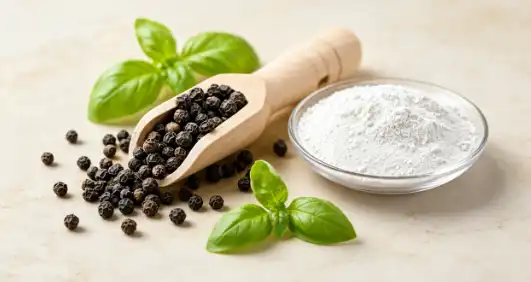
Comparing Black Pepper Extract Powder Options in the Market
Each black pepper extract powder is different in what it can do for you. If the procurement team treats this ingredient like a product, the whole recipe could be harmed.
Organic vs. Standard Specifications
Clean-label brands in the U.S. and Europe that want to attract health-conscious customers like organic black pepper extract powder. Organic approval doesn't always mean that the piperine level is higher, but it does mean that there are stricter rules on pesticide residues and farming methods. Standard 95% or 98% piperine extract from a GMP-certified facility often gives the same functional performance at a better price per kilogram for brands that don't have to use clean labels.
Evaluating Suppliers: Beyond Price Per Kilogram
The price is an input, not a strategy, in the buying process. R&D and QA teams should put these factors at the top of their list when looking for a black pepper extract powder supplier:
- Certifications held: FDA registration, ISO 9001, HACCP, HALAL, and Kosher coverage meet the needs of a wide range of end markets when it comes to compliance.
- Test method transparency: Suppliers who share full HPLC certificates of analysis, not just summary documents, show that they are truly responsible for quality.
- Traceability documentation: Being able to track all of the raw materials from where the fruit comes from to how it is extracted and finally packaged lowers the risk of regulatory action for both the buyer and the supplier.
- Customization capability: OEM and ODM buyers benefit from providers who can change specifications, dosage forms, or packages to meet the needs of their own formulations.
If you judge sellers based on these factors, you'll be less likely to have to pay for formula changes, face problems with the law, or have problems with customer safety in the future.
Procurement Best Practices: How to Buy Black Pepper Extract Powder Wholesale?
To get a lot of black pepper extract powder, you need to use an organized buying process. Reactively buying from distributors you haven't checked out adds a risk that is hard to fix after a formula has been released.
Working directly with manufacturers who have their own quality control labs cuts down on the time it takes for problems with specifications to be fixed. Before placing a business order, you should always ask for a verified sample to be checked by a separate laboratory. This step makes sure that the HPLC data from the seller matches your own testing procedures and stops shocks from batch to batch.
Negotiating the minimum order number is most important for new names. Manufacturers who have been around for a while and have enough supplies can often handle smaller original orders without having to raise prices too much. For buyers from other countries, making sure that a supplier keeps warehouse stock that is easy to get to, especially in the U.S., cuts down on lead time and customs problems for regular restocking. Private label and custom package services are more useful for distributors who are making their own product lines to sell in retail outlets that are competitive.
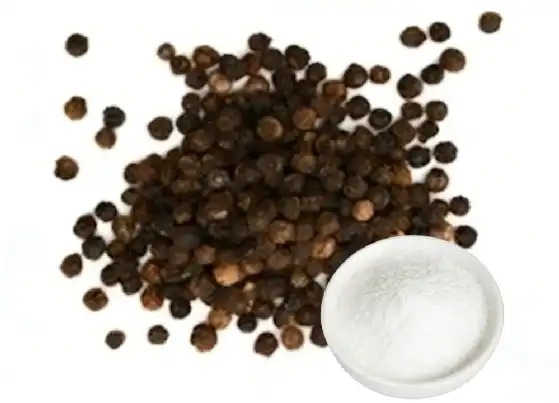
Why Gold Herb Is the Right Black Pepper Extract Powder Supplier for Your Brand
Gold Herb stands out as a technically sound and certified source for high-quality black pepper extract powder made for supplement markets around the world. If you sell in the U.S., the EU, or the Middle East, Shaanxi Gold Herb Co., Ltd. is registered with the FDA and has ISO 9001, HACCP, HALAL, and Kosher certifications. This means that every batch meets the standards of your target market.
Our black pepper extract powder comes from the fruit of the Piper nigrum plant and is tested by HPLC to make sure it contains between 95% and 98% piperine. It is a clean white powder. You can get samples if you ask for them, and our customization service includes making changes to the formulation, setting the requirements for packaging, and creating new dosage forms. Standard items are shipped within 24 hours of an order being confirmed, and North American buyers can get their orders in 3–5 business days from our U.S. center.
Gold Herb has more than 200 customers in more than 30 countries, and Academician Li Xiaokun's study team at Wenzhou University helps with technical issues. They offer a relationship with their customers that goes beyond a transaction. We help you with your research and development from the prototype stage to the launch of your product in stores.
Conclusion
Black pepper extract powder is still one of the most useful ingredients in supplements that has the most research behind it. It can increase the absorption of other active compounds, help the body's antioxidant defenses, and support metabolic function, which makes it a very useful addition to many types of products. The science behind piperine is important, but the quality of the source is even more important for sourcing teams and formulation managers looking for their next ingredient partner. The best way to be sure that a product works as promised is to buy it from a supplier whose certifications have been checked, whose testing is open, and whose customer service is real.
FAQ
1. What is the standard piperine content in a quality black pepper extract?
HPLC tests show that a good black pepper extract powder is standardized to either 95% or 98% piperine. This keeps the strength the same from batch to batch, which is important for making supplement formulas that can be used again and again.
2. How does piperine improve supplement bioavailability?
Piperine stops CYP3A4 and P-glycoprotein from working in the liver and intestinal walls, which slows down the processing of nutrients that are given together. This process has been studied the most with curcumin, where 20 mg of piperine was found to increase absorption by 2000%.
3. What certifications should I look for when sourcing piperine extract?
It is important to look for FDA registration, ISO 9001, HACCP, and, if necessary, HALAL and Kosher certifications. These certificates show that the provider meets safety, quality, and traceability standards around the world.
4. Can piperine extract be used in functional beverages?
Yes, but microencapsulation is often suggested to keep the bioactivity after heat treatment and to control the taste properties in liquid forms.
Partner with Gold Herb for Certified Piperine Extract
Gold Herb is a reliable company that makes black pepper extract powder for skincare, functional food, and nutraceuticals all over the world. Our 95% and 98% piperine extracts are certified, HPLC-tested, and ready to make your supplement recipes better. We make it easy to source high-quality goods by having U.S. warehouses available, fast fulfillment, and full OEM/ODM support. To get your sample today, email us at info@newgoldherb.com.
References
1. Shoba, G., et al. "Influence of Piperine on the Pharmacokinetics of Curcumin in Animals and Human Volunteers." Planta Medica, 1998.
2. Kesarwani, K., & Gupta, R. "Bioavailability Enhancers of Herbal Origin: An Overview. "Asian Pacific Journal of Tropical Biomedicine, 2013.
3. Butt, M. S., et al. "Black Pepper and Health Claims: A Comprehensive Treatise." Critical Reviews in Food Science and Nutrition, 2013.
4. Majdalawieh, A. F., & Carr, R. I. "In Vitro Investigation of the Potential Immunomodulatory and Anti-Cancer Activities of Black Pepper." Journal of Medicinal Food, 2010.
5. Meghwal, M., & Goswami, T. K. "Piper nigrum and Piperine: An Update." Phytotherapy Research, 2013.
6. Rout, P. K., et al. "Standardization and Characterization of Black Pepper (Piper nigrum) Extracts for Nutraceutical Applications." Industrial Crops and Products, 2019.

Send Inquiry

Related Industry Knowledge
- Bacopa Monnieri: Memory-Boosting Herb For Anxiety
- Does urolithin A help with weight loss?
- Where to Buy Pharmaceutical-Grade Chlorophyllin Powder?
- Coleus forskohlii extract Tonic for a Healthy Heart and Lungs
- What is maca powder extract?
- 5-Hydroxytryptophan for Sleep & Mood Support | Natural Serotonin Booster Explained
- Sodium Copper Chlorophyllin vs Natural Chlorophyll: Which Should You Choose?
- Quality Control Standards for Ginkgo Biloba Leaf Extract Powder
- Why Astaxanthin Is One of the Most Powerful Natural Antioxidants
- Coenzyme Q10 98% for Bulk Supply: High-Purity Ingredient for Dietary Supplements