
Echinacea extract:properties, uses, and supplementation
Jul 28, 2026
Formulation scientists and sourcing teams seeking natural immune-support solutions are increasingly using echinacea extract. By providing medically beneficial bioactives including chicoric acid, polyphenols, and echinacosides, this Echinacea purpurea plant raw material may help supplement and functional food companies stand out. A product's R&D directors and buying managers can choose regulatory- and clean-label-compliant strategies based on botanical makeup, active ingredient stability, and quality requirements.

Understanding Echinacea Purpurea and Its Key Properties
Botanical and Chemical Profile of Echinacea Purpurea
Purple coneflower (Echinacea purpurea) thrives in North American grasslands. A plant's flowers, leaves, and roots decide the Echinacea extract's use. For procurement experts, root and aerial extracts differ by bioactive ingredient content and usage.
Alkamides, caffeic acid complexes, and polysaccharides react. N-isobutyl-dodeca-2E,4E,8Z,10E-tetraenamide stimulates macrophages and alters the immune system via cytokines. Chicoric acid (caffeine acid) distinguishes high-quality aerial extracts. Arabicinogalactans and polysaccharides activate complement pathways to boost immunity.
Active Compounds and Their Functional Roles
Standardized Echinacea extract powder contains 4%–12% polyphenol, 1%–8% chicoric acid, and 1%–4% echinacoside. Batch stability is difficult for nutraceutical companies serving specific health demands. These recommendations aid.
Flowers have the most chicoric acid, which may be used in antioxidants. High alkamide levels in root products directly stimulate the immune system via cannabis receptors. R&D teams may find raw materials that meet product claims and regulatory proof standards using this two-marker technique.
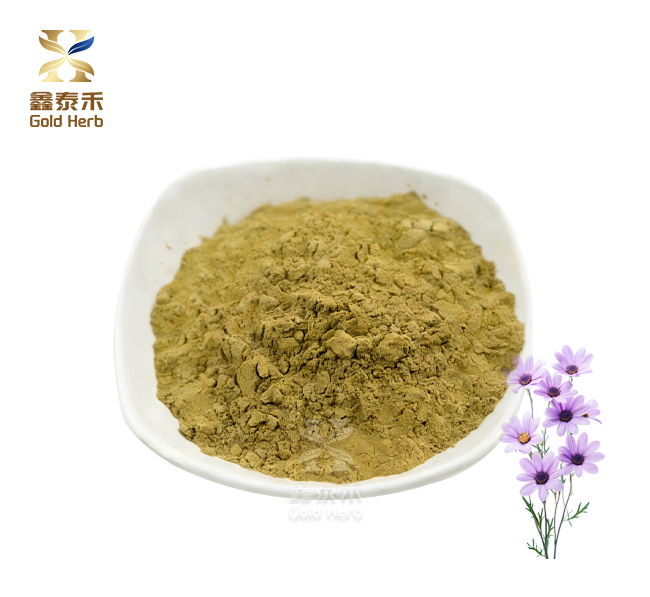
HPLC-checked brownish-green powder verifies chemical identity and purity. CAS 520-27-4 is a standard legal documentation and international commerce guidebook. Cosmetic chemists manufacturing anti-inflammatory skin care and sports dietitians making recovery supplements need these scientific standards.
Quality Control Standards and Safety Considerations
Echinacea raw material quality assurance requires analytical data from multiple testing methods. HPTLC separates Echinacea purpurea from Cichorium intybus. Brand and customers are safeguarded. HPLC quantification accurately detects chicoric and caftaric acids to substantiate claims.
USP-compliant ICP-MS tests for lead, arsenic, mercury, and cadmium. GC-MS/MS multi-residue pesticide analysis meets FSMA criteria for healthy drinks and meals. The product is pathogen-free and GFSI-compliant following microbiological safety testing.
How something is stored determines security. Manufacturers should package and preserve echinacea extract powder from light. Keeps heat-sensitive alkamides and phenolics intact. Packaging and tableting are easier with a regulated bulk density of 0.40–0.60 g/ml and moisture below 5.0%.

Practical Uses and Supplementation of Echinacea Extract
Recommended Dosages and Delivery Forms
Echinacea extracts comprising 300 mg to 500 mg of standardized extract should be taken three times a day when the immune system is stressed. Consumer products formulators chose administration modes depending on bioavailability and mass production. Supplement brands that seek clear labeling and few fillers benefit from capsules' precision dosage and shelf durability.
Tincture preparations operate swiftly under the tongue, alcohol may limit their application in specific markets. Protein blends, functional beverage mixes, and individualized nutrition packs may be made with powders for maximum formulation versatility. In increasing post-workout healing formulas, sports nutrition firms are blending immune-boosting Echinacea extract powder with muscle-repairing substances.
Comparative Analysis with Complementary Ingredients
Manufacturers test Echinacea extract with other immune-boosting herbs to improve blends. Echinacea extract's antioxidant capacity is boosted by electron-donating ascorbic acid. Elderberry anthocyanins combat infections in many ways. This combination strategy helps brands offer multi-ingredient immunity solutions with broader efficacy claims.
Panax notoginseng's ginsenoside is adaptogenic, while Andrographis paniculata's andrographolide alters the immune system. Buying teams may negotiate ingredient packages for seasonal health seekers and performance athletes who need immune support year-round by understanding these distinctions.

Sourcing and Procurement: Navigating the Echinacea Extract Market
Critical Factors for Wholesale Purchasing Decisions
When purchasing, professionals look at Echinacea extract providers, they need to look at more than just the basic certificate of analysis (COA) paperwork to see how good the products are. Consistent phytochemical profiles can be guaranteed by systems that keep track of farming methods, harvest times, and extraction conditions. Good manufacturing practices (GMP) show that suppliers keep an eye on quality from the time they receive raw materials to the time they release finished goods.
Portfolios of certifications have a big effect on brand positioning and market access. FDA registration makes it easy to get into the U.S. market, and ISO9001 approval shows that the process is reliable. Food safety risks that are important for useful foods are covered by HACCP certification, and speciality market routes are opened by Halal or Kosher certification. These credentials lower regulatory risk and shorten the time it takes to launch a product.
The prices are based on a number of factors, such as the concentration of the extract, whether it is organically certified, and the minimum order quantity. Depending on the level of chicoric acid standardization, regular Echinacea extract powder prices range from moderate to high. Organic-certified materials cost 20% to 40% more than other materials, but they allow products to be positioned as high-end and appeal to customers who care about clean labels.
Evaluating Supplier Capabilities and Service Models
Leading ingredient suppliers keep a lot of stock on hand so that orders can be filled quickly, which gives them a competitive edge when seasonal demand goes up. Distributors that can ship standard items within 24 hours and make custom formulations in 7 to 15 business days show operational excellence that fast-moving supplement brands value. Product development that is flexible to the market is helped by emergency fulfillment options that use faster production routes.
Contract manufacturing partnerships are useful for brands that don't have the ability to encapsulate or table themselves. Time-to-market is sped up with OEM services that include formula development, stability testing, and packaging design. Intellectual property is also protected. Getting technical help from sources who have worked with R&D before can help you figure out how to solve recipe problems like making powders flow better or hiding tastes in chewable forms.

Strategic Insights for B2B Clients: Optimizing Echinacea Product Portfolios
Aligning Formulations with Market Segments
High-potency Echinacea extract products standardized to maximum chicoric acid concentrations are good for nutraceutical businesses that want to sell to health-conscious people. The higher retail prices of these high-end goods are justified by their better bioactive delivery and marketing claims that are backed up by proof. On the other hand, brands that focus on value may choose polyphenol specifications that are in the middle, balancing effectiveness with low cost.
Cosmetic companies are using Echinacea extract more and more in anti-aging and skin repair products because it reduces inflammation and fights free radicals through polyphenols. In cosmetics, where changes in color or activity can affect how the product looks and how well it works, batch-to-batch stability is very important. Formulation development can be done with confidence when suppliers offer thorough stability data and application testing help.
Emerging Trends Shaping Procurement Strategies
New trends are changing how procurement strategies are used. Procurement teams look for sellers with clear sustainability plans because customers want ingredients that are sustainable and properly acquired. Brands that want to tell stories about being good environmental stewards are interested in regenerative farming methods that improve soil health and wildlife. Digital traceability systems that use blockchain technology make the supply chain clear and can be checked, which eases worries about validity in high-end markets.
Regulatory settings are still changing, and claims about immune systems are being looked at more closely. When suppliers offer regulatory guidance documents, mechanism-of-action data, and summaries of clinical research, they stop being transactional vendors and become strategic partners. This consultative method helps brands deal with the structure-function claim rules set by the FDA and the reviews of new foods around the world.
Conclusion
Echinacea extract powder comes from a plant and has been scientifically proven to work. It can be used in many ways in cosmetics, useful foods, and nutritional supplements. To be good at procurement, you need to look at suppliers through a lot of different quality lenses, such as how well they can analyze data, how well they follow regulations, how reliable their supplies are, and how well they can work with you technically. As more people buy natural and "clean label" goods, Echinacea extract becomes an important ingredient for brands that want to stand out by using ingredients that have been shown to work and being clear about where their ingredients come from. If R&D directors and buying managers know a lot about standardization factors, formulation problems that are specific to an application, and criteria for evaluating suppliers, they can put together the best product lines while keeping cost and compliance risks under control.
FAQ
Q1: How effective is echinacea for immune support?
Early use of standardized Echinacea extracts with 2% to 4% chicoric acid reduces immune difficulties in clinical investigations. The alkamide and polysaccharide components stimulate macrophages and natural killer cells to improve defenses. Extract quality and dosing consistency determine efficacy. Choosing a supplier and standardizing the product are crucial.
Q2: What distinguishes liquid extracts from capsule forms?
Though simpler to administer and absorb, liquid medications must be stored with alcohol, limiting their shelf life and market usage. Most supplement producers utilize capsules because they are easy to use, can accurately dose, and preserve ingredients. Powders allow specific mixing for individualized nutrition products and functional beverages.
Q3: How can buyers verify supplier authenticity and quality?
HPLC chromatograms, heavy metal screening reports, pesticide residue analyses, and microorganism testing results are requested. Request site audits and verify the facility's certificates. Good suppliers openly discuss how they get products, assess quality, and provide samples to other parties for testing.

Partner with a Trusted Echinacea Extract Supplier
Shaanxi Gold Herb delivers pharmaceutical-grade echinacea extract powder standardized to polyphenol concentrations from 4% to 12%, chicoric acid levels between 1% and 8%, and echinacoside content from 1% to 4%—all verified through rigorous HPLC testing. Our brownish-green powder maintains exceptional batch consistency backed by FDA, ISO9001, HACCP, Halal, and Kosher certifications, meeting stringent global compliance standards critical for nutraceutical and cosmetic applications. With permanent U.S. warehouse inventory enabling 3 to 5 business-day fulfillment and customized formulation services completed within 20 days, we support your product development timeline efficiently. Our technical team, leveraging collaborative research from Academician Li Xiaokun's laboratory, provides comprehensive application guidance addressing stability optimization, dosage form selection, and regulatory substantiation. Contact our procurement specialists at info@newgoldherb.com to request product samples and discuss your specific echinacea extract manufacturer partnership requirements today.
References
1. Barrett, B. (2003). Medicinal properties of Echinacea: A critical review. Phytomedicine, 10(1), 66-86.
2. Pellati, F., Benvenuti, S., Magro, L., Melegari, M., & Soragni, F. (2004). Analysis of phenolic compounds and radical scavenging activity of Echinacea spp. Journal of Pharmaceutical and Biomedical Analysis, 35(2), 289-301.
3. Sharma, M., Arnason, J. T., Burt, A., & Hudson, J. B. (2006). Echinacea extracts modulate the pattern of chemokine and cytokine secretion in rhinovirus-infected and uninfected epithelial cells. Phytotherapy Research, 20(2), 147-152.
4. Woelkart, K., & Bauer, R. (2007). The role of alkamides as an active principle of Echinacea. Planta Medica, 73(7), 615-623.
5. Barnes, J., Anderson, L. A., Gibbons, S., & Phillipson, J. D. (2005). Echinacea species (Echinacea angustifolia, E. pallida, E. purpurea): A review of their chemistry, pharmacology and clinical properties. Journal of Pharmacy and Pharmacology, 57(8), 929-954.
6. Schoop, R., Klein, P., Suter, A., & Johnston, S. L. (2006). Echinacea in the prevention of induced rhinovirus colds: A meta-analysis. Clinical Therapeutics, 28(2), 174-183.

Send Inquiry
Related Industry Knowledge
- Ergothioneine Supplement Guide: Facts, Benefits, and Usage
- What is Fisetin Bulk Powder good for?
- Urolithin A Powder Supplement: Science, Benefits, and Dosage
- Blue Spirulina Phycocyanin Price Guide for Global Buyers
- Best Blue Spirulina Phycocyanin Powder for Beverage Brands
- Berberine HCL powder: The Natural Compound Backed by Science
- 5-Hydroxytryptophan Benefits for Sleep, Mood, and Stress Relief Explained
- OEM Boswellia Extract Powder Solutions for Supplement Brands
- Urolithin A in Anti-Aging Supplements: Market Trends and B2B Opportunities
- GMP Fisetin Powder for Pharmaceutical R&D Use