
Matcha Powder Uses: A Guide for Food, Beverage, and Nutritional Applications
Sep 01, 2026
When formulating innovative products for the health and wellness market, ingredient selection determines both consumer appeal and functional efficacy. Matcha Powder—a finely milled powder from shade-grown tea leaves—offers exceptional versatility across food, beverage, and nutritional applications. Beyond traditional green tea variants, emerging alternatives like Blue Matcha Butterfly Pea Flower Powder provide unique visual appeal and antioxidant benefits without caffeine, expanding possibilities for product developers seeking differentiation in competitive markets.
Matcha Powder Specifications
|
Item |
Specification |
|
Product Name |
Matcha Powder |
|
Botanical Source |
Camellia sinensis |
|
Plant Part |
Tea Leaves |
|
Appearance |
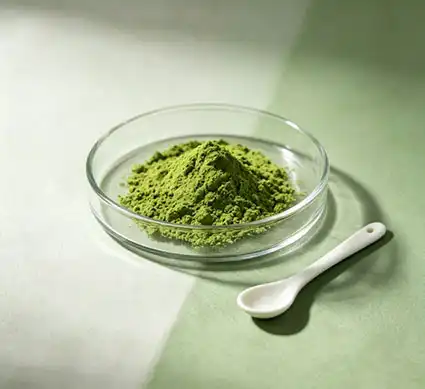
Green Fine Powder |
|
Color |
Green to Bright Green |
|
Particle Size |
Customizable |
|
Main Components |
Tea Polyphenols, Catechins, Caffeine, L-Theanine, Chlorophyll |
|
Solubility |
Dispersible in Water |
|
Test Method |
According to Product Specification |
|
Shelf Life |
24 Months |
|
Storage |
Cool, Dry and Protected from Light |
Understanding Matcha Powder: Origins, Types, and Nutritional Profile
Traditional Production and Cultural Heritage
Real matcha comes from Japan, where Camellia sinensis plants are shaded for 20 to 30 days before they are picked. This intentional stress response raises the amount of chlorophyll and the production of amino acids, especially L-theanine, which helps create the unique umami flavor profile. After being picked, the leaves are steamed, dried, and stone-ground into a very fine powder. This process keeps the volatile aromatic compounds that are normally lost during tea processing. This careful way of making things explains why quality stability is so important in business settings.
Grade Classifications for Commercial Applications
When buying, teams understand the differences between grades; they can match products perfectly to their intended uses. Ceremonial grade has a bright green color, a smooth texture, and a high amino acid content, making it good for high-end drinks where matcha is the main flavoring. The later harvesting of the culinary grade makes the flavor stronger and the catechin concentration higher. This makes it perfect for baked goods, sweets, and mixed recipes where strong flavor penetration is needed. Organic approvals are useful for brands that want to be seen as having clean labels, but to make sure they have real organic supply lines, suppliers need to be carefully audited [^1].
Nutritional Composition and Functional Benefits
Matcha has a lot of polyphenols, especially epigallocatechin gallate (EGCG), which can be tested for its strong antioxidant action using the ORAC method. A normal dose has 25–35 mg of caffeine and L-theanine, which work together to give you a balanced energy level that is different from coffee's stimulating effect. Formulators are making cognitive support products, pre-workout supplements, and functional drinks that give you long-lasting energy without making you feel jittery, thanks to this biochemical synergy. Compared to spirulina or turmeric, matcha has a wider range of flavors and is easier to incorporate into different types of recipes.
Alternative Options: Blue Matcha Innovation
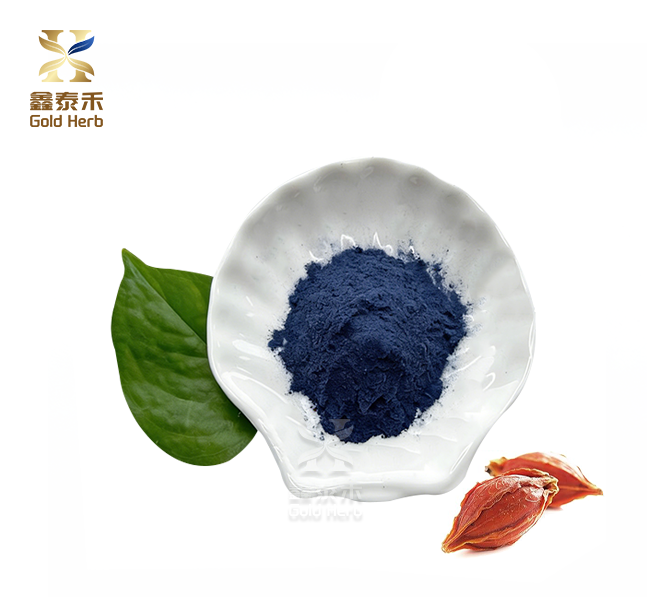
Blue Matcha Butterfly Pea Flower Powder, which comes from Clitoria ternatea L., is a big step forward for brands that want to focus on both function and appearance. This purple-blue Matcha Powder is 99% pure and can be used in recipes without caffeine. It has the same amount of anthocyanin-rich antioxidants as regular matcha. Its amazing pH-responsive color change—from blue to purple when acidic ingredients like lemon juice are added—makes drinks more interesting for customers, especially "magic lemonade" ideas that are becoming popular in functional drink markets. Gold Herb's Blue Matcha is very stable at high temperatures and dissolves easily in water, which makes it a good choice for both hot and cold uses.

Practical Uses of Matcha Powder in Food and Beverage Applications
Beverage Formulation Strategies
When ready-to-drink beverage makers add matcha, they have to deal with certain technical issues, such as keeping the color stable over time and making sure that the taste stays the same from batch to batch. Ultra-fine particle size distribution (usually 5–10 microns) makes it possible for clean-label beverages to have better suspension properties without the need for stabilizing gums. UHT pasteurization temperatures can break down chlorophyll, so pH buffering systems and UV-protective packaging are needed to keep the food looking good while it's being shipped. Commercial versions that work well balance the amount of matcha (usually between 0.3 and 1.5% by weight) with sweeteners and tastes that go well with it so that a lot of people like it.
Blue Matcha has clear benefits in drinking uses that need to stand out visually. Its neutral pH makes it look bright blue, but that color changes quickly when citrus flavors are added. This interactive feature encourages people to connect on social media and make return purchases, especially among younger people. Because it doesn't contain caffeine, it can also be used in the evening, which isn't possible with regular matcha products.
Baking and Confectionery Integration
Oxidation can happen at high temperatures, which can damage both the color and the antioxidant content. Culinary-grade matcha can handle these conditions better than ceremonial grades because the Maillard reactions that happen when it browns keep the structure intact. It is suggested that you use between 1% and 3% in cookies and cakes and between 5 and 8% in more intense recipes like chocolate mousse or ice cream bases. Fat-soluble taste compounds in matcha mix well with butter-based recipes, making the color spread evenly without streaking or settling, which can happen with natural colorants that are based on water.
Product designers should expect flavors to change slightly during baking—for example, grassiness will fade while umami qualities will get stronger. When you mix matcha with flavors that go well with it, like white chocolate, vanilla, or coconut, the bitterness is hidden, and the good tastes are boosted. When used in sweets, Blue Matcha gives bright colors without changing the taste, so it can be used in delicate things like cookies or white chocolate bark for a better taste.
Nutritional Supplement Applications
Bioavailability and consumer acceptance of supplement formulations depend on the encapsulation technologies used. Matcha Powder mixes easily into protein blends, greens superfood mixes, and pre-workout formulas, adding both health benefits and a "clean label" appeal. Consistency in particle size affects how well capsules flow during filling. To avoid processing problems, suppliers should provide granulometry reports that confirm D50 values below 15 microns. A moisture level of less than 5% keeps the product from clumping while it's being stored and keeps it stable on the shelf for the normal 24-month expiration window.
Blue Matcha Butterfly Pea Flower Powder has anthocyanins that help the body make collagen. This makes it a great ingredient for beauty-from-within supplements. Because it says it is 99% pure, you don't have to worry about fillers or carriers that make labels less clear. When dealing with legal standards in different foreign markets, these technical details are very important.

Choosing the Right Matcha Powder for Your Business Needs
Quality Assessment Criteria
To figure out what a supplier can do, you have to look at more than just basic organoleptic characteristics. To meet FDA import warning levels and EU rules, heavy metal tests with an ICP-MS should show that lead levels are below 2.0 ppm, cadmium levels are below 1.0 ppm, and arsenic levels are below 2.0 ppm. Analyzing pesticide residues that include more than 400 chemicals shows that farming practices are honest, especially for sources that aren't organic. Total plate counts for microbes should be less than 10,000 CFU/g, and tests for pathogens like Salmonella and E. coli should come back negative. coli.
Studies that speed up the aging process can be used to predict how well a product will do on a shelf in real life. Hunter Lab numbers should be given by suppliers that show color retention at high temperatures (40°C/75% RH) for 90 days. Increased b values that cause big changes toward yellow show that the material is more likely to oxidize, which will show up as quality problems during distribution[^3].
Sourcing Strategy Considerations
Both cost structure and quality traits are affected by where something comes from. Japanese matcha is very expensive because it is made with a lot of work and has a reputation for being of high quality. Chinese suppliers are cheaper, but because quality varies between them, they need to be checked out more thoroughly. Newer origins, like South Korea and Vietnam, are starting to show up. They are going after the middle market and raising the quality standards. Thailand is the main source of Blue Matcha because it has the best conditions for growing Clitoria ternatea. India is also a source, but not as much.
Cost optimization and supply chain dependability must be balanced in order for procurement methods to work. Building connections with manufacturers who keep large stock buffers—Gold Herb keeps more than a ton of standard specs in stock—allows for quick ordering and lowers the risk of production interruption. Being able to customize particle size, organic certification, or proprietary blends adds strategic value, but for non-standard specifications, the minimum order quantity usually goes up.
Certification Requirements for Market Access
Compliance paperwork determines how accessible a market is across regulatory countries. FDA registration is the basic requirement for entering the U.S. market, and additional certifications open up more opportunities. Halal certification helps businesses get noticed in Islamic markets and appeals to people in other markets who want to know that their products come from ethical sources. In the same way, kosher approval increases the number of products that can be sold in stores. This is especially true in North American markets, where more than 40% of shoppers look at kosher marks when deciding what to buy. ISO9001 approval shows that a company has quality management systems in place for manufacturing, and HACCP procedures show how food safety is controlled during production.
Gold Herb has a lot of different certifications, such as FDA, ISO9001, HACCP, HALAL, and Kosher. This way, they can meet all of their customers' compliance needs without having to work with multiple suppliers. This combination makes it easier to manage things while making sure that all of the products meet the same quality standards.
Addressing Concerns: Safety, Side Effects, and Regulatory Compliance
Caffeine Sensitivity Management
Because traditional matcha has caffeine in it, it needs to be carefully considered when making products for a wide range of people. Matcha products for kids, pregnant women, or for use in the evening need to have a lower caffeine concentration or be caffeine-free options. This problem is completely solved by Matcha Powder, which looks good and has antioxidant benefits without making you feel jittery. This makes it possible to build "good, better, best" product lines where caffeine-free versions get more sales during times when regular matcha can't be used.
Labeling laws in most places require clear information about how much caffeine is in a product. Instead of depending on average values, analytical testing should be used to confirm real caffeine levels, since growth conditions and processing differences make each batch different. Conservative methods of marking avoid problems with compliance while controlling customer expectations in the right way.
Regulatory Pathways and Import Considerations
Novel food rules in the European Union require special permission for items that haven't been used in food much before 1997. This means that traditional matcha is allowed under current rules, but suppliers should keep proof of this classification. Blue Matcha's anthocyanin profile matches approved natural colorant groups, which makes the approval process easier than with synthetic alternatives. The U.S. "Generally Recognized as Safe" (GRS) status applies to both traditional and butterfly pea flower ingredients when used at normal levels. However, proof documents are needed for tricky new uses.
The classification of import duties has a big effect on landing costs. The right HS code assignment (usually 2101.20 for tea preparations) makes sure that the right tax rates are applied and that customs delays are avoided. Working with suppliers who keep inventory in U.S. warehouses (Gold Herb has dedicated American warehouses) makes importing easier and allows for delivery times of 3–5 days, which supports just-in-time inventory strategies[^4].
Quality Assurance and Traceability Systems
Smart buyers want openness about everything from trying finished products to how agricultural products are sourced. Traceability systems that record where the food came from, when it was harvested, and the batch number of the processing make it possible to act quickly if quality problems arise after it has been distributed. Suppliers should keep samples from each production lot for at least 12 months after the products' expiration dates. This makes it easier to look into customer complaints that were filed too late.
Independent checks of what suppliers say are done by third-party audit programs. Certifications from groups like SGS or Eurofins show that testing is accurate and follows the right steps. Asking for audit reports during the qualification process shows that you are doing your research, which improves quality assurance programs and meets retailer requirements for supplier approval.

Maximizing ROI: Strategic Integration of Matcha Powder in Your Product Line
Market Growth Dynamics
With compound annual growth rates of over 8% through 2028, the global matcha market is growing very quickly. This is due to health trends and the premiumization of all drink categories. The functional food and supplement markets are growing even faster as more and more people value products that offer measured benefits beyond basic nutrition. This rate of growth is good for brands that want to develop matcha-based products, especially those that want to stand out by offering high-quality products or new uses, like butterfly pea varieties that change color.
A consumer study shows that people between the ages of 18 and 35 are most likely to accept new technologies. This is because of the impact of social media and the chance to try new things. This group of people cares about being real, being honest, and looking good. They like natural ingredients with interesting birth stories and proof that they work. Products that use these findings well can charge higher prices and build loyal customer groups that are hard for private label competitors to break into.
Product Development Integration Strategies
To successfully integrate matcha, different parts of an organization must work together. Through shelf-life testing, R&D teams must find the best taste profiles while keeping the products stable. Positioning should be done by marketing departments in a way that teaches customers about functional benefits without making false claims. Supply chain teams need to have reliable relationships with suppliers so that they don't run out of stock during sales or times of the year when demand is higher than usual.
Gold Herb helps with these integration needs by providing expert advice to solve formulation problems, creating custom blends that fit the needs of each application, and being able to handle both large-scale production runs and small test market amounts with ease. We can get urgent small-batch orders to you within 5–7 days with our fast green channel service. This lets you set flexible product development timelines that cut down on time to market.
Partnership Selection for Long-Term Success
When you work with an ingredient supplier, you form smart ties instead of just buying things. Suppliers with real technical know-how—for example, Gold Herb works on research and development with Academician Li Xiaokun's team and Wenzhou University—help with innovation in ways that go beyond just fulfilling orders. This level of expertise is very helpful when fixing problems with formulations, finding the best ways to cut costs, or looking into new ways to use products in crowded markets to make them stand out.
Check to see how quickly possible partners are, how well they can customize their services, and how strong their supply chains are. Suppliers who keep a variety of buying relationships and large safety stock buffers lower the risk of damage caused by changes in agriculture or problems with transportation. Companies that offer OEM/ODM services with a short 20-day development process can respond faster to new market prospects. Communication infrastructure that allows people in the same time zone to talk to each other, which is especially important for U.S. customers, makes day-to-day collaboration easier[6].
Conclusion
Matcha Powder and cutting-edge substitutes like Blue Matcha Butterfly Pea Flower Powder offer a wide range of formulation options for use in food, drink, and supplement forms. Brands can meet the growing demand for functional natural ingredients by carefully choosing which ingredients to use based on quality standards and government rules. To be successful, you need to work with technically advanced suppliers who can provide full certification, reliable supply chains, and real application expertise. As the market continues to favor high-quality natural ingredients, investing early in the development of matcha-based products gives you a strong competitive edge and a good return on your money.
FAQ
1. What distinguishes Blue Matcha from traditional matcha powder?
Blue Matcha Butterfly Pea Flower Powder is made from Clitoria ternatea instead of Camellia sinensis. It has a bright blue color and the ability to change depending on the pH level, without having any caffeine in it. This opens up possibilities for goods that can be used at night and for people who are sensitive to caffeine, while still providing similar antioxidant effects through anthocyanin content instead of catechins.
2. How should I store bulk matcha powder to maintain quality?
Keep matcha in containers that are tightly sealed and out of the way of light, heat, and water. In nitrogen-flushed or vacuum-sealed packaging, temperatures below 15°C are ideal. When you open a bottle, you should put it back on right away and use it within 90 days to avoid oxidation, which breaks down color and taste.
3. What certifications matter most for international matcha distribution?
FDA registration lets you sell in the U.S. market, and ISO9001 and HACCP show that you can handle quality and food safety. Halal and Kosher certifications make it possible to reach a lot more people. Organic approval gives products a higher status, but to make sure the supply chain is real, suppliers must be carefully screened, and paperwork must be carefully reviewed.
4. Can matcha withstand high-temperature processing in beverage manufacturing?
When pH buffering and antioxidant protection methods are added to the recipe, UHT pasteurization is safe for culinary-grade matcha. Blue Matcha is very stable at high temperatures and keeps its color even after being processed normally for drinks. Both need UV-protective packaging to keep them from breaking down during storage. Unexpected stability problems can be avoided by testing in real production circumstances while the product is being designed.

Partner with a Trusted Matcha Powder Supplier for Your Next Innovation
Gold Herb specializes in selling high-quality Blue Matcha Butterfly Pea Flower Powder as well as other types of matcha. Their products are certified by FDA, ISO9001, HACCP, HALAL, and Kosher, which means they are safe for use all over the world. Serving more than 200 customers in more than 30 countries for more than three years shows that our quality is stable and our supply chain is excellent. Our technical team can help with formulation, fast sampling, and customization for functional drinks, nutritional supplements, or new food uses. They can complete full development processes in 20 days. The inventory in U.S. warehouses allows for delivery in three to five days, which supports flexible production schedules. Get in touch with us at info@newgoldherb.com to talk about how our Matcha Powder options can help your business.
References
1. Rothenberg, D. O., & Zhang, L. (2019). Mechanisms underlying the anti-depressive effects of regular tea consumption. Nutrients, 11(6), 1361.
2. Kochman, J., Jakubczyk, K., Antoniewicz, J., Mruk, H., & Janda, K. (2021). Health benefits and chemical composition of matcha green tea: A review.
3. Unno, K., Furushima, D., Hamamoto, S., Iguchi, K., Yamada, H., Morita, A., Horie, H., & Nakamura, Y. (2018). Stress-reducing function of matcha green tea in animal experiments and clinical trials.
4. U.S. Food and Drug Administration. (2021). Food Facility Registration. FDA Compliance Guide. https://www.fda.gov/food/food-facility-registration
5. Grand View Research. (2022). Matcha Market Size, Share & Trends Analysis Report By Application (Regular Tea, Matcha Beverages, Food), By Region, And Segment Forecasts, 2022-2030.
6. Marventano, S., Salomone, F., Godos, J., Pluchinotta, F., Del Rio, D., Mistretta, A., & Grosso, G. (2016). Coffee and tea consumption in relation with non-alcoholic fatty liver and metabolic syndrome. Clinical Nutrition, 35(6), 1269-1281.

Send Inquiry
Related Industry Knowledge
- Urolithin A Powder vs NMN: Which Ingredient Supports Cellular Health Better?
- PQQ Powder: Benefits, Forms, Dosing
- Unlocking the Power of HMB: Your Guide to Muscle Preservation and Growth
- Phosphatidylserine (PS) Memory: The Supplement Over 55s Need to Know
- Egcg green tea extract: A Natural Solution for Obesity
- How to Process Green Coffee Bean Extract? And Its Benefits
- Resveratrol Benefits: Anti-Aging and Heart Health Explained
- Sulforaphane-Rich Broccoli Seed Extract for Detox Formulations
- When to take saw palmetto powder morning or night?
- 5-Hydroxytryptophan(5-HTP): A Natural Solution for Mood, Sleep, and Stress Support