
Sodium Copper Chlorophyllin: A Deep Dive into Its Antioxidant Powers
Jul 23, 2026
Sodium Copper Chlorophyllin Powder is a water-soluble chlorophyll derivative widely used in dietary supplements, functional foods, beverages, cosmetics, and personal care products. Its excellent water solubility, stable performance, and natural green color make it a versatile ingredient for a variety of formulations.
Gold Herb supplies Sodium Copper Chlorophyllin Powder to supplement brands, food manufacturers, distributors, and contract manufacturers worldwide. Produced under strict quality management standards, each batch is tested to ensure consistent quality and compliance with product specifications.
To support supplier qualification, we provide COA (Certificate of Analysis), Laboratory Reports, technical documents, and Samples for evaluation before bulk orders. Our experienced Technical Support team also assists with product selection, formulation guidance, and sourcing requirements.
Whether you need bulk ingredients for dietary supplements, functional beverages, natural food coloring, or cosmetic products, Gold Herb offers reliable supply, flexible packaging, and OEM/ODM services to support your manufacturing and product development.
Product Parameters
| Parameter | Specification |
|---|---|
| Product Name | Sodium Copper Chlorophyllin Powder |
| Appearance | Dark green to blackish-green fine powder |
| CAS Number | 11006-34-1 |
| Molecular Formula | C₃₄H₃₁CuN₄Na₃O₆ |
| Molecular Weight | 724.15 |
| Extraction Type | Solid Extraction |
| Particle Size | 100% Pass 80 Mesh |
| Copper Content | 4.0%–6.0% |
| pH Value (1% Solution) | 9.0–11.0 |
| Loss on Drying | ≤5.0% |
| Solubility | Water soluble |
| Grades Available | Food Grade (E141ii), Cosmetic Grade, Pharmaceutical Grade |
| MOQ | 1kg |
| Storage | Store in tightly closed original container, protected from light |
| Sample | Available for testing |
| Certifications | FDA, ISO9001, HACCP, HALAL, Kosher |
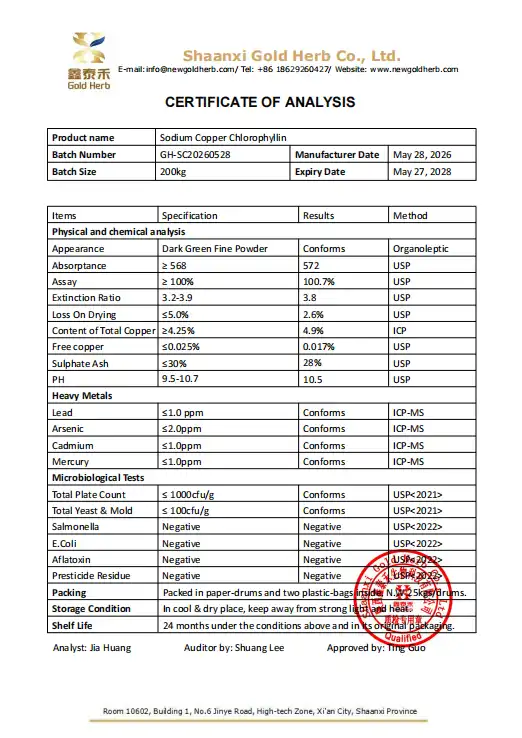
Certificate of Analysis 【Request Latest COA】
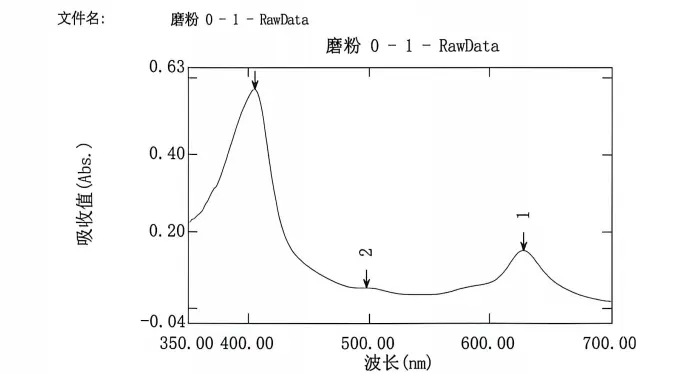
Chromatogram
Understanding Sodium Copper Chlorophyllin: Composition and Mechanism of ActionThe Chemical Transformation from Chlorophyll to Copper Complex
Alfalfa, mulberry, and fescue chlorophyll have a magnesium-centered porphyrin ring. Alkaline hydrolysis replaces magnesium with copper in industrial processes. Meanwhile, phytol chains are removed to form sodium salts. This structural alteration solves two significant issues: it doesn't dissolve well in water and breaks down fast in light, heat, and acidity. Finally, E141(ii) or CAS 11006-34-1 is a fine, dark green to blackish-green powder that is more stable.
How Antioxidant Activity Works at the Molecular Level
Copper-centered porphyrins eliminate free radicals by donating electrons. This method removes reactive oxygen species that cause oxidative stress in living organisms, a study shows. Besides being an antioxidant, the molecule binds to poisons to eliminate them. It's good for body deodorization. It reduces inflammation by modifying cell communication, according to bioactivity studies. These consequences need additional research to be completely understood.
Manufacturing Standards Critical to B2B Quality Assurance
Product production includes natural extraction and semi-synthetic change. The alkaline hydrolysis process must be carefully regulated to replace all copper while preserving the porphyrin ring. Purity, organic-free copper content, and E-value color strength are quality parameters. International rules from JECFA and USP limit free copper ions for safety. Global sourcing teams need batch stability and traceability from FDA, ISO9001, HACCP, HALAL, and Kosher manufacturers.

Key Benefits and Applications of Sodium Copper Chlorophyllin in B2B Sectors
Nutraceutical Applications Driving Product Differentiation
In the food supplement business, this ingredient can be used for more than one thing. It fits in with the clean-label movement because it has antioxidant properties. This lets brands meet consumer demand for actives that come from natural sources. Formulation managers like that it doesn't break down during the packaging and tableting steps, so they don't have to worry about that happening. This substance can also be used to remove smells from inside products that help people, especially older people and people with ostomies, who have trouble with smells. It has been used safely in businesses for decades, and the daily amount is generally between 100 mg and 300 mg.
Natural colorants are another area of growth, and Sodium Copper Chlorophyllin is a well-known choice in this area. Plant-based pigments are safer than man-made colors and are closely watched by officials. They add bright green colors to drinks, sweets, and dairy products without making them less stable when they are cooked or baked. It doesn't lose its color at high temperatures like spirulina or green extracts do, which is something that food scientists like about it.
Cosmetic and Skincare Industry Adoption
This part is used in skin care products by cosmeticians because it looks natural and green and has healing antioxidant properties that make the skin feel better. Easy to mix with water, it can be added to serums, toners, and gel-based products without much trouble. The material can be used in toothpastes and mouthwashes to color and freshen the breath because it has mild bacteriostatic qualities. This ingredient helps brands back up claims that their products are natural while keeping the formula stable across a pH range. The market for personal care products is moving toward botanical actives.
Emerging Opportunities in Functional Foods and Animal Nutrition
People who make functional drinks use this extract to make their drinks look better and be healthier. The antioxidants in it back up what the company says without changing the taste too much. People aren't the only ones who use animal feed. This is because the people who make them want to find natural ingredients that might help animals stay healthy. Researchers who study these applications are always coming up with new possible uses. However, the rules that govern them are different in each market. Buying teams that are always on the lookout for new ingredients should also be on the lookout for these new areas, as they could be places to grow in the future.

Sodium Copper Chlorophyllin vs. Alternatives: Making the Right Procurement Decision
Comparative Analysis Against Natural Chlorophyll and Spirulina
When looking at choices, this substance is different from others in a number of ways. Natural chlorophyll is still oil-soluble and very fragile; it breaks down quickly during processing into dark pheophytin. Even though spirulina has chlorophyll in it, it also has other proteins and possible allergens that make it less useful in clean formulations. Liquid chlorophyll mixtures often have natural forms that need to be kept cool and don't last as long. The copper complex, on the other hand, is much more stable at high temperatures. It can handle cooking, baking, and long-term keeping at room temperature without losing much colour.
Comparing the antioxidant potency of different substances shows that natural chlorophyll has bioactivity, but its instability during production and storage makes it less useful in finished products. The copper derivative stays active throughout production cycles, which makes sure that the benefits claimed by the company reach end users. This dependability is very important when checking whether a product really works during regulatory review or third-party testing.
Powder vs. Alternative Form Factors
Powder versions have clear benefits for business-to-business buying. Gold Herb's dark green fine powder is easy to flow for automatic manufacturing, makes keeping track of goods easier, and lets you precisely control dosing. When you buy powder in bulk, you can get it at a lower price per unit and it will last longer if you store it in light-resistant, airtight containers. Some suppliers offer capsule or liquid forms, but these usually come with higher costs and more complicated shipping. Powder forms that work with a variety of delivery methods, from drinks to topical treatments, are helpful for manufacturers who need to make changes.
Cost-Effectiveness and ROI Considerations
Prices are different for different levels of purity, order quantities, and approval needs. Premium suppliers, like Gold Herb, can charge fair prices because they have a track record of quality and a wide range of certifications. They have been producing in this way for over three years and work with some of the best research and development institutions in the world. When procurement professionals figure out the total cost of ownership, they should include failure rates, the cost of reformulating because of unstable ingredients, and the cost of following the rules. Even though it might cost more per unit, high-quality powder with confirmed stability data often gives a better return on investment. This is especially true in situations where product consistency directly affects a brand's image.
How to Source Quality Sodium Copper Chlorophyllin: Supplier and Brand Insights
Essential Supplier Evaluation Criteria
Finding a trusted manufacturing partner means looking at a lot of different factors. Traceability of raw materials, multiple stages of purity testing, and written group consistency methods should all be part of quality control systems. Lead times are shorter when suppliers keep stock on hand all the time. For example, Gold Herb and other well-known partners offer shipping within 24 hours for regular orders. The ability to manufacture is just as important. For example, can the supplier meet requests for changes to the formulation, different packaging, or higher purity grades? Companies that have their own research and development (R&D) teams offer technical support that goes beyond just completing orders.
Compliance with certification is another important part of the review. Having a wide range of certificates, such as ISO9001, HACCP, HALAL, and Kosher, shows that you are committed to meeting the needs of a wide range of markets. International buyers should make sure that sellers give full paperwork packages that include Certificates of Analysis, third-party test results, and regulatory compliance statements that are in line with EU-CE standards or EFSA rules for the target market.
Geographic Considerations and Supply Chain Optimization
A lot of providers are based in Asia, but strategic buying is putting more and more value on distributed transportation networks. Gold Herb keeps permanent stock in U.S. warehouses for Sodium Copper Chlorophyllin, which means that orders can be fulfilled within 3–5 business days within the U.S., and there are no long delays for international shipping. This physical presence also makes it easier to talk to people in the same time zone, which speeds up the process of answering technical questions and making changes to orders. Access to local warehouses is very helpful for buying teams that have to deal with tight production plans or just-in-time inventory systems.
OEM and Private Label Partnership Benefits
Brands that want to stand out can benefit from providers that offer customisation services. Gold Herb's OEM/ODM services help with recipe development with short rounds of less than 20 days. These services cover dosage forms like powder, liquid, and microcapsules. With private label agreements, distributors can quickly get their products on the market with well-known brands that are made to a high standard. The best way for these partnerships to work is for providers to be flexible with minimum order numbers while still meeting quality standards for both small and large production runs. When negotiating terms, you should talk about lead times, quality guarantees, and protections for intellectual property.

Ensuring Safety and Compliance: Side Effects, Dosage, and Regulatory Considerations
Clinical Safety Data and Usage Guidelines
This compound has a good safety rating when used within the suggested ranges, based on decades of industrial use. The usual amount to take as a supplement is 100 to 300 mg per day, but different situations may need different doses. Reported side effects are still pretty low, though they can include slight stomach problems when taken in large amounts. Free copper content is the most important safety factor, and good producers keep a close eye on it by checking for chelation stability. Products that meet JECFA standards keep copper inside the porphyrin structure, which stops copper ions from escaping by accident.
Navigating International Regulatory Frameworks
Different places have different rules, so buying teams have to make sure they are following the rules for target areas. The compound is approved by the FDA in the United States as a colour additive for certain food uses when used according to set rules. It is controlled in European markets as E141(ii) under food ingredient rules, and the EFSA is always checking to make sure it is safe. Asian markets, like China and Japan, have their own approval processes and standards for cleanliness. When suppliers offer market-specific documentation packages, they make it a lot easier for importing companies to follow the rules. Gold Herb's wide range of certifications meets all of these different needs, making it easy to enter the markets in over 30 countries.
Proper Handling and Storage Protocols
Following best practices for storage is important for keeping the integrity of Sodium Copper Chlorophyllin. The powder should be kept in cool, dry places in cases that are tightly shut and won't let light in. Natural chlorophyll is more stable in light, but UV light that lasts for a long time weakens the colour and reduces the antioxidant action. Logistics for transportation should keep heat exposure to a minimum during shipping, especially for areas that are sensitive to temperature changes. The terms and conditions of the purchase should make it clear what the storage temperature ranges are and how much light is allowed. Suppliers who provide stability data under different conditions help manufacturers set the right shelf-life parameters for finished products.
Conclusion
Sodium Copper Chlorophyllin is a flexible and scientifically proven ingredient that can be used in many different industries, such as food, cosmetics, and nutraceuticals. It is a better option than natural chlorophyll and other plant extracts because it is more stable, consistently works as an antioxidant, and is accepted by most governing bodies. Professionals in procurement should judge suppliers based on how well they make things, how many certifications they have, and how well their logistics meet operational needs. As more markets want organically derived ingredients that are backed by rigorous science, this copper complex offers the two benefits of botanical origin and industrial stability that make a product successful.

FAQ
Q1: What makes Sodium Copper Chlorophyllin superior to natural chlorophyll for manufacturing applications?
Natural chlorophyll is very unstable and dissolves easily in oil. It breaks down quickly in light, heat, and acidic conditions, turning into ugly brown substances. The copper product dissolves in water, stays stable at high temperatures during pasteurisation and baking, and keeps its bright green colour for a longer time. This means that it can be sold economically in water-based forms where natural forms fail.
Q2: Can this ingredient be incorporated into acidic beverage formulations?
While it is usually stable in neutral to slightly acidic pH conditions, conditions below pH 6 may lead to precipitation. To keep substances in suspension in acidic delivery systems, formulation scientists often use stabilisers, hydrocolloids, or pH buffering systems. Talking to experienced sources like Gold Herb can help make formulas work better in certain pH ranges.
Q3: How does one identify reliable bulk suppliers for B2B procurement?
Check out suppliers based on their manufacturing certifications (FDA, ISO9001, HACCP), documentation of batch consistency, technical support, and logistics infrastructure. Operational maturity is shown by suppliers who keep permanent inventory and can fulfil orders quickly. Before making big purchases, make sure the quality claims are true by asking for Certificates of Analysis, stable data, and third-party test results.
Partner with a Trusted Sodium Copper Chlorophyllin Supplier
Gold Herb is ready to help you meet your buying needs with high-quality ingredients backed by strong quality systems and the ability to ship products all over the world. As an experienced manufacturer with more than 200 customers in more than 30 countries, we keep all the necessary certifications up to date, such as FDA, ISO9001, HACCP, HALAL, and Kosher, to meet the needs of your specific market. Our U.S. warehouse network makes sure that orders are filled quickly, and our strong relationship with Academician Li Xiaokun's team and Wenzhou University gives us technical help that goes beyond basic supply.
Our team can help you with a variety of needs, such as bulk powder for large-scale production, customised OEM formulations, or private label development. We offer flexible solutions with lead times as short as 5–7 days through our expedited green channel services. We encourage people in charge of research and development, formulation, and purchasing to ask for detailed product specifications, samples, or technical consultations. Visit newgoldherb.com or email us at info@newgoldherb.com to learn more about how our Sodium Copper Chlorophyllin powder can help your products stand out by providing uniform quality and a steady supply.
References
1. Ferruzzi, M.G., & Blakeslee, J. (2007). "Digestion, absorption, and cancer preventative activity of dietary chlorophyll derivatives." Nutrition Research, 27(1), 1-12.
2. Kephart, J.C. (1955). "Chlorophyll derivatives—Their chemistry, commercial preparation and uses." Economic Botany, 9(1), 3-38.
3. Tumolo, T., & Lanfer-Marquez, U.M. (2012). "Copper chlorophyllin: A food colorant with bioactive properties?" Food Research International, 46(2), 451-459.
4. Dashwood, R.H. (1997). "Chlorophylls as anticarcinogens (review)." International Journal of Oncology, 10(4), 721-727.
5. Egner, P.A., et al. (2001). "Chlorophyllin intervention reduces aflatoxin-DNA adducts in individuals at high risk for liver cancer." Proceedings of the National Academy of Sciences, 98(25), 14601-14606.
6. Scotter, M.J. (2011). "Methods for the determination of European Union-permitted added natural colours in foods: A review." Food Additives & Contaminants: Part A, 28(5), 527-596.

Send Inquiry
Related Industry Knowledge
- When to take 5-hydroxytryptophan?
- Best way to take Fisetin: Detailed Guide for Consumers
- Fenugreek Extract Manufacturing Process and Industry Applications
- Cistanche Tubulosa Extract for Endurance, Recovery & Wellness Support
- What Are the Benefits of Milk Thistle for Liver Health?
- What Is Cistanche Tubulosa Extract? Uses, Benefits & Science Explained
- High Purity Sodium Copper Chlorophyllin Powder Manufacturer for Supplements
- 5-Hydroxytryptophan vs Melatonin: Which Is Better for Sleep?
- Cyanotis Arachnoidea Extract vs Spinach Ecdysterone Source Comparison
- Top Applications of Urolithin A in Nutraceutical and Cosmetic Formulations