
Blue spirulina extract Nutrition: What Does It Contain?
Sep 08, 2026
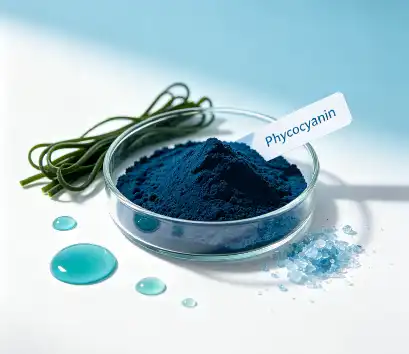
Blue spirulina extract is a water-soluble pigment-protein complex from the cyanobacterium Arthrospira platensis grown for its high nutrient content. The algae is appreciated for nutraceuticals, functional foods, and cosmetics for its unique chemical C-Phycocyanin that gives the algae its magnificent sapphire-blue colour. “This ingredient is a powerhouse of protein, antioxidants, B vitamins and critical minerals, providing proven functional value as well as meeting the growing clean-label demand. For R&D team members, procurement managers, or formulation scientists, this unique mixture is a strategic must-have for anyone looking for high-impact botanical actives.
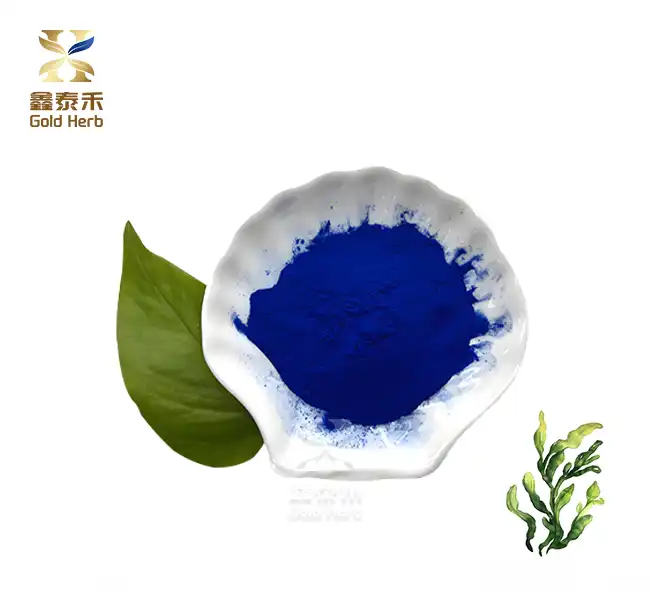
Blue Spirulina Phycocyanin Powder Information
|
Product Name |
Blue Spirulina Phycocyanin Powder |
|
Source |
Spirulina platensis |
|
Main Component |
Phycocyanin |
| CAS Number | 11016-15-2 |
| Molecular Formula | C34H39N3O6 |
| Molecular Weight | 585.71 |
|
Appearance |
Blue Powder |
|
Color |
Natural Blue |
|
Solubility |
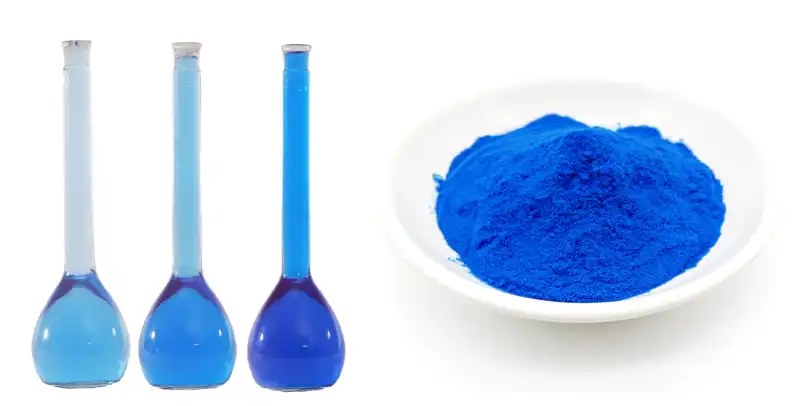
Soluble in Water |
|
Testing |
UV / HPLC |
| Solubility | Water Soluble |
| pH Stability | Stable at pH 5.0–9.0 |
| Heavy Metals (Pb) | ≤10 ppm |
| Loss on Drying | ≤8% |
| Certificate | FDA, ISO9001, HACCP, HALAL, Kosher |
|
Shelf Life |
24 Months |
|
Packaging |
1kg Foil Bag / 25kg Drum |
Phycocyanin Specification Options
Gold Herb supplies different phycocyanin grades for various formulation requirements.
|
Grade |
Phycocyanin Content |
Application |
|
E18 |
≥18% |
General food coloring applications |
|
E25 |
≥25% |
Beverages and nutrition powders |
|
E30 |
≥30% |
Products requiring stronger blue color |
|
E40 |
≥40% |
Higher concentration pigment applications |
What Is Blue Spirulina Extract Made Of?
The Phycocyanin Complex at Its Core
It is a pigment protein complex obtained by water extraction of dried biomass of Arthrospira platensis. C-Phycocyanin is the major active ingredient. E value is a measure of goodness of fit. High-grade phycocyanin is typically >40% protein and stable at pH 4.5-8.0 and hence may be formed into a wide variety of formulation matrices. Usually E6 to E40 depending on concentration.
Vitamins, Minerals, and Accessory Nutrients
Blue spirulina extracts are high in phycocyanin, iron, magnesium, potassium, calcium, and vitamins B1, B2, and B12. The minor touches make it seem like you might pitch this to popular health goods and sports nutrition products. The extract also contains some gamma linolenic acid, a beneficial fatty acid that reduces oedema, and beta carotene, a pro-vitamin A pigment with antioxidant potential.
How Does the Extraction Method Shape Nutritional Quality?
The pharmaceutical grade of phycocyanin was prepared by spray drying and aqueous cold extraction processes. The bioactive integrity is preserved much better than for high-heat treatments. Improved techniques of cell disruption, such as ultrasonic cell disruption and high-pressure homogenisation, may boost yield and potency. The extraction technique influences purity, fluorescence activity, and microbiological load, all key quality problems for bulk B2B procurement.
Functional Benefits That Drive Formulation Decisions
Health advantages of blue spirulina extract: A peer-reviewed study by specialists in the domain outlines the nutritional profile of blue spirulina extract. If formulation teams understand the processes, they may be able to use research to substantiate their product claims.
The basic elements of functioning are confirmed by the present investigation.
- General antioxidant activity: Phycocyanin is a general antioxidant. It functions by scavenging oxygen radicals, hydroxyl radicals, and alkoxy radicals, thereby avoiding oxidative cascades that damage and age cells. This is particularly true for nutrition firms attempting to improve the health and vitality of cells.
- Immune modulation support: Natural phycocyanin from blue spirulina extract boosts the number of antibody-generating cells and enhances immune cell activity to strengthen the body's defenses. Active ingredient for supplement firms producing SKUs for immunity with research-supported label claims.
- Stimulation of hematopoietic activity. The cyanobacteria need phycocyanin, the key molecule to do their work. It is crucial in medicinal nutrition and TCM-based formulations since it lowers blood cell loss, aids in the restoration of hematopoietic stem cells, and stimulates cell regeneration.
- Oxygenation and Restoration of ovarian cells have shown that phycocyanin may enhance the oxygen-carrying capacity of ovarian cells, help stimulate cell growth, and reduce oxidative stress in certain tissues, making it a unique ingredient for women’s health goods.
- Inhibition of the tumor cell: Preliminary research has shown that phycocyanin may inhibit the growth of many cancer cell lines, such as breast, liver, lung, and stomach cancer cells. No, it would be nice to see more clinical research to support these results.
These qualities are advantageous and allow the blue spirulina extract to be used in many different applications, such as cosmetics, nutraceuticals, and functional meals. Single-source components allow formulation teams to place clear labels and the right bioactive content.
How Does Blue Spirulina Extract Compare With Other Superfood Actives?
Versus Chlorella and Wheatgrass
Chlorella is a useful supplement for claims of chlorophyll density and cleansing. Wheatgrass is packed with nutrients and has a high concentration of enzymes. Blue spirulina extract is remarkable in that it possesses one highly concentrated bioactive element, phycocyanin, with a specific purity grade, a specific E-value, and excellent monitoring. Chlorella and wheatgrass do not. Phycocyanin extract offers a technical advantage for businesses seeking scientifically validated active compounds in precise doses.
Powder vs. Capsule Format
It may be added to beverages, gel tablets, nutrition bars, and skin serums as a blue powder. Powder is the most versatile to work with and most cost-effective at scale. Forms may be easily inserted into shells by the end consumer, but they are harder to produce and weaker when heated. The business-to-business sector should still acquire powder in opaque containers for bulk purchasers.
Organic vs. Conventional Grade
The organic certification of the blue spirulina extract indicates no pesticide residue, validates non-GMO status, and matches the clean-label claims that retail buyers in Europe and North America are increasingly demanding. Food and supplement grades are acceptable but may require further verification in controlled markets. Labelling standards for the target market should be checked by procurement teams before settling on a grade.
Procurement Considerations for B2B Buyers
A price per kilogram is insufficient for commercial-scale procurement of phycocyanin. The constancy of quality from batch to batch and the complexity of documentation and supplier credentials might be the actual cost of an ingredient collaboration. Procurement criteria are certified alignment and UV-method testing sheets. Regulated markets need batch-to-batch homogeneity in E-value, protein content, and microbial load. Private label and OEM customization options for powder particle size, concentration grades, and container shapes may provide additional sourcing value for enterprises with unique formulations. Geography is important too. Suppliers that stock inventory in the U.S. can send urgent orders to clients in 3-5 business days, a huge logistical benefit for companies with short production cycles.
Application Guidance for Formulation Teams
The best use of blue spirulina extract is in applications where the pH is maintained at 4.5-8.0, and the temperature is not allowed to go over 60°C to protect the protein-pigment complex. It evaporates from clear liquids, fizzy tablets, stick packs, protein powders, and water-based beauty serums. The suggested use levels are between 0.1 and 1.0%, depending upon the application and the strength of color required. The antioxidants and anti-inflammatories in cosmetics help support claims of protecting cells and defending against environmental damage. It provides a traceable natural equivalent for FD&C Blue No. 1 in functional beverages that satisfies clean-label standards without compromising visual appeal. In formulation compatibility testing, one must consider the ingredient’s sensitivity to UV light and high heat; microencapsulation is a great way to improve shelf stability in challenging processing environments.
Conclusion
Blue spirulina extract is not only a colorant but also a specific bioactive with a defined nutritional content and proven functional properties. It is one of the most strategically beneficial plant-based actives available to B2B formulators today, thanks to its antioxidant power, immune-supporting advantages, and clean-label credentials. “Health-conscious markets mean procurement teams with a better understanding of their make-up and quality parameters can source more consistently and build products that resonate.”
FAQ
1. How does blue spirulina extract differ from regular spirulina powder?
Regular spirulina powder is a whole-biomass product containing phycocyanin alongside chlorophyll, carotenoids, and lipids. Blue spirulina extract, specifically phycocyanin, is an isolated, concentrated pigment-protein with a defined E-value and protein purity typically exceeding 40%. For formulations requiring a neutral-tasting, stable blue colorant with antioxidant activity, the extract significantly outperforms whole spirulina powder.
2. Is phycocyanin safe for use in large-scale supplement manufacturing?
Phycocyanin sourced from Arthrospira platensis has a well-established safety profile and is recognized as safe by multiple global regulatory bodies. Products carrying FDA compliance, ISO 9001, and HACCP certifications confirm manufacturing process integrity. Procurement teams should request full COA documentation and third-party test reports before approving a supplier.
3. How can buyers verify supplier authenticity and batch quality?
Request UV-method test reports for each batch, confirm the phycocyanin E-value against the specification, and validate certifications directly with issuing bodies. Reputable suppliers provide traceable documentation from cultivation through final spray-dried powder. OEM capabilities, sample availability, and responsiveness to technical questions are reliable indicators of a supplier's operational maturity.
Partner With Gold Herb—Your Trusted Blue Spirulina Extract Supplier
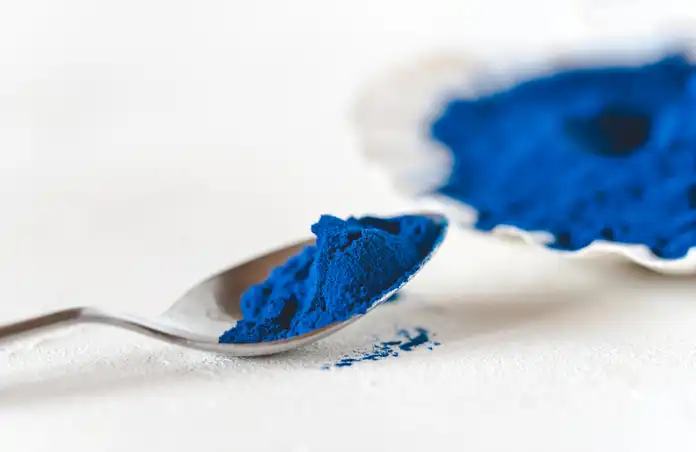
Gold Herb supplies FDA-, ISO 9001-, HACCP-, HALAL, and Kosher-certified blue spirulina extract powder with UV-verified purity, consistent E-values, and full batch documentation. Our U.S. warehouse enables 3–5 business-day fulfillment, and our team supports custom concentration grades and OEM formulation development. Request your sample today and experience the Gold Herb quality standard firsthand. Contact us at info@newgoldherb.com.
References
1. Romay, C., González, R., Ledón, N., Remirez, D., & Rimbau, V. — Current Protein & Peptide Science, 2003.
2. Deng, R. & Chow, T.J. — Cardiovascular Therapeutics, 2010.
3. Strasky, Z., Zemankova, L., Nemeckova, I., et al. — Food & Function, 2013.
4. Ou, Y., Zheng, S., Lin, L., Jiang, Q., & Yang, X. — Chemico-Biological Interactions, 2010.
5. Benedetti, S., Benvenuti, F., Pagliarani, S., et al. — Journal of Applied Phycology, 2004.
6. European Food Safety Authority (EFSA) Panel on Dietetic Products, Nutrition and Allergies—EFSA Journal, 2014.

Send Inquiry
Related Industry Knowledge
- Is silymarin easily absorbed?
- PQQ Powder: Benefits, Forms, Dosing
- What does taking berberine do for your body?
- What is garcinia cambogia extract?
- What is rutin good for?
- Ergothioneine: an antioxidant with high potential
- What are the benefits of fisetin?
- How Fenugreek Supports Energy, Appetite and Daily Wellness
- Ashwagandha Benefits for Stress, Sleep & Daily Wellness
- What Is Astaxanthin? Benefits, Uses, and Market Potential