
Creatine Monohydrate: Benefits, Dosage, Safety, and Who Should Take It
Sep 16, 2026
Creatine monohydrate is the most studied performance ingredient in sports nutrition today. It is a natural molecule in skeletal muscle, and it has a direct effect on the regeneration of adenosine triphosphate, the main energy currency that muscles may use during high-intensity exercise. If you’re a supplement firm purchasing raw material in bulk, a private-label manufacturer developing a pre-workout brand, or a gym owner white-labeling a creatine powder, it’s crucial to understand this chemical from the ground up. This is what the research really says about the advantages, dosage, safety, and who benefits the most.
Specifications& Technical Parameters
Our creatine powder is available in different packaging options for bulk ingredient purchasing.
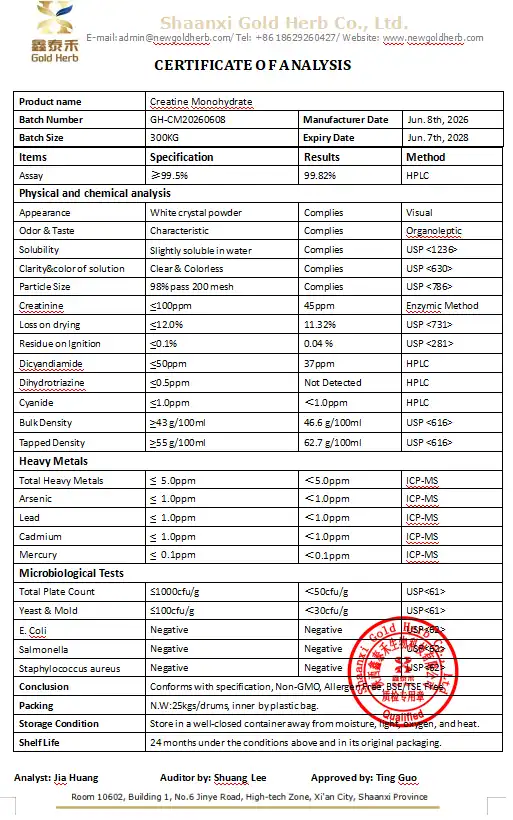
| Item | Specification |
|---|---|
| Product Name | Creatine Monohydrate Powder |
| Ingredient Type | Sports Nutrition Ingredient |
| Purity | 99% |
| Source | Synthetic / Fermentation-derived |
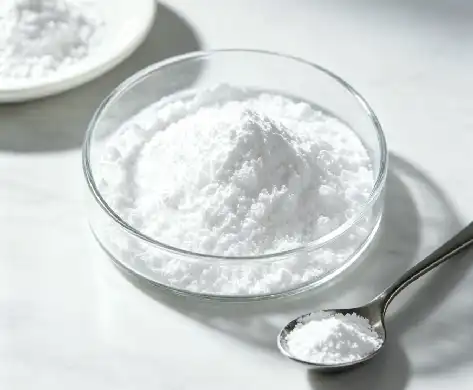
| Appearance | White Fine Powder |
| CAS No. | 6020-87-7 |
| Molecular Formula | C₄H₉N₃O₂·H₂O |
| Molecular Weight | 149.15 g/mol |
| Test Method | HPLC |
| Solubility | Slightly Soluble in Water |
| Shelf Life | 24 Months |
| Packaging | 1 kg Bag / 5 kg Carton / 25 kg Fiber Drum |
| Storage | Cool, Dry Place |
| MOQ | Flexible |
Quality Assurance
Certificate of Analysis (COA) for Creatine Monohydrate Powder [Request COA]
Understanding Creatine Monohydrate
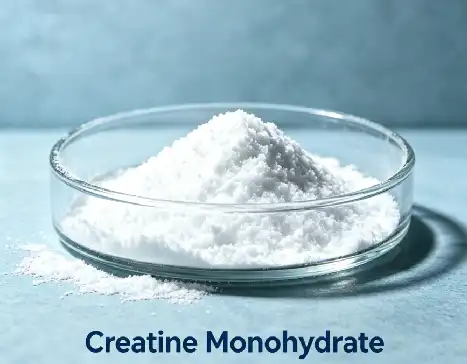
What it is & how it works: Creatine Monohydrate is a white solid powder, odourless, soluble in water. It is composed of sarcosine and cyanamide, both sources of amino acids. Inside cells, it combines with ADP to generate ATP by adding a phosphate group. During strong muscular contractions, it is swiftly converted back to ATP. That's why creatine pills are recognised for improving performance in pretty much every element.
For individuals wishing to buy the compound, it is offered in two primary particle categories: the normal 80-mesh and the micronised 200-mesh. The 200-mesh variant will dissolve in water with a lot less grit and is the best option for ready-to-mix powders, gummies, and blended pre-workout snacks. For filling hoppers, the 80-mesh size is adapted. This is the best way to make capsules and tablets. Gold Herb sells both types in 25kg barrels. HPLC test purity $\ge$ 99.9%. Chemical formula: C4H9N3O2.H2O.
Key Benefits Backed by Research
Research-backed major advantages: Creatine monohydrate's performance impact has been shown in controlled trials spanning more than 30 years. It is important for producers and end users to know that these four advantages have been tried and proven, and they work.
- Enhancement of Athletic Performance: Creatine phosphate loading may rapidly replenish ATP levels after short periods of vigorous activity like weight training and sprinting. A meta-analysis published in the Journal of Strength and Conditioning Research in 2003 found average strength gains of 8% and increases in power generation of up to 14% above placebo groups.
- Creatine Increases Muscle Growth: Creatine increases your training volume and decreases tiredness between workouts, therefore enhancing lean muscle accretion. It pulls water into the muscle cells from inside the cells, which volumises the cells and increases anabolic signalling.
- Enhanced Recovery Post-Exercise: Clinical studies have shown that creatine supplementation reduces markers of muscle damage after eccentric exercise sessions. This implies a shorter recovery window and increased tolerance to training frequency.
- Pure steady-state aerobic output showed no effect from creatine monohydrate, but larger phosphocreatine reserves improve sports that need repeated explosive bursts such as rowing, cycling intervals, and team-field athletics.
To boost athletic performance: If you were doing short bursts of high-intensity exercise such as running or weight lifting, creatine phosphate pills would assist in refilling your ATP levels quickly. A 2003 meta-analysis published in the Journal of Strength and Conditioning Research indicated that individuals who completed the exercises acquired as much as 14% more power and averaged 8% more strength than those in control groups.
Dosage and Usage Guidelines
A usual plan starts with a loading phase of 20 g per day, spread out over five to seven days in four 5 g meals. Muscles quickly use up all of their phosphocreatine stores. Taking 3–5 g every day keeps those levels high without adding more. Others don't go through the loading phase at all and hit saturation in three to four weeks at 3–5 g daily. This is a gentler way that may be easier to incorporate into a daily routine.
A lot of people have talked about when to work out. Eating after working out may help you keep your muscles longer, but it's more important to be consistent than to be exact about when you eat. When you mix creatine with carbs or protein, it may help the body take it in a little better through insulin-mediated transport.
If you're an OEM product maker who needs to figure out dosage forms, 200-mesh micronized powder is easy to mix in single-serve and ready-to-drink packages. If a customer wants an easy-to-measure dose, capsule machines that use 80-mesh standard powder can give each capsule the exact amount of 1 g.
Common Questions and Myths Addressed
Of all the supplements on the market, creatine monohydrate has one of the most extensively studied profiles. The Journal of the International Society of Sports Nutrition published a major review by Kreider et al. That healthy people who took supplements for five years at doses of up to 30 g per day were included in long-term research evaluations.
Still, there are a lot of common mistakes. A lot of people worry that creatine is bad for the kidneys because creatinine, which is made when you use creatine, is often used to see how well the kidneys are working. People who take creatine supplements may have changes in creatinine levels when their creatinine level is high. When differences in individual tolerance do happen, it's usually because of taking a lot of pills at once. This approach is usually adjusted by giving the doses at different times of the day.
There is a change in muscle water content during creatine monohydrate loading, but it's only short-term and takes place in the muscles, not the skin. When the loading is done, muscle water content generally returns toward its usual level.
You should know that WADA, USADA, and other major sports groups do not ban creatine if you are a business buyer who works with sports events. Many brands want to get NSF Certified for Sport or Informed Sport. They need banned-substance test results that show they don't have DCD or DHT.
Comparison with Other Creatine Forms
People often say that creatine hydrochloride and creatine ethyl ester are better than creatine monohydrate, but tests have shown that neither is significantly better. Creatine HCl dissolves better in smaller amounts, which is good for formulators who want to make low-liquid forms. However, famous product lines usually don't switch to it because of its high price. It is not as stable as ethyl ester and is thought to change into creatine more quickly before being absorbed.
It is still the cheapest, most well-studied, and generally accepted raw material in this group when it comes to buying. People who buy it don't have to look for other material grades because it comes with an 80-mesh and 200-mesh standard ladder. It makes sense to mix it with HMB or water to make your own pre-workout drinks. This OEM service is available from Gold Herb, and small-batch trial amounts start at 1 kg.
Who Should Take Creatine Monohydrate?
More people benefit from creatine monohydrate than most buyers initially realize. The most obvious people who use creatine are strength athletes and bodybuilders. But it also helps endurance athletes who compete in mixed-effort events, people who want to keep their muscle mass, and vegetarian athletes who need to get creatine from food but don't eat meat or fish. Because it wasn't made with any animal products, the compound is 100% vegan-friendly and has both HALAL and Kosher certification.
Because they can be changed, private-label brands can go after a lot of different types of customers, from fitness centers that focus on performance to wellness lines that help people age in a healthy way, all without changing the main ingredient.
Related Ingredients
Pure BCAA Powder
L-Carnitine Powder
Beta-Alanine Powder
L-Glutamine Powder
Alpha GPC Powder
Conclusion
One of the few ingredients in sports nutrition with a solid body of evidence that cannot be contested is creatine monohydrate. Its ATP-regenerating system makes your strength, power, recovery, and mixed-effort endurance better over time in a way that you can see. It comes in two different mesh sizes—80 and 200—so it can be used on lines that make pills, powder, gummies, and mixed recipes. If business-to-business buyers want purity, certifications, and a steady supply, they should buy from a trusted manufacturer that offers HPLC testing, full COA batch traceability, and a flexible order structure.
FAQ
1. What is the difference between 80-mesh and 200-mesh creatine powder?
Eighty-mesh is a coarser powder size that works well with tools that fill pills and tablets. It is micronized to make the pieces of 200-mesh smaller. This makes it easier to dissolve in water and better for powder mixes and sweets. Most people who buy powder goods under their own brands choose 200-mesh.
2. What does research say about creatine monohydrate and kidney function?
Yes, as long as healthy people take the right amount. Several long-term studies, like the one by Kreider et al., have examined creatine use and kidney function.
3. Can I request a small trial batch before committing to a bulk order?
You can get samples from Gold Herb, and they do small OEM runs that start at 1 kg. You can also get blends that are made just for you, like electrolytes or creatine with HMB. It takes 7–15 working days to make the item.
4. Does your creatine contain any animal derivatives?
No, Gold Herb's creatine monohydrate powder is made with chemicals and is HALAL and Kosher-approved. This means that all veggie, halal, and kosher foods can be used with it.
Source Your Next Creatine Monohydrate Order With Gold Herb
The company Gold Herb that makes creatine monohydrate is a good one. More than 80 countries buy 80- and 200-mesh bulk powder from them in 25 kg drums. These are sold to factories, brands, and private-label sellers. Kosher, ISO9001, HACCP, and the FDA have all approved it, and there is stock in a U.S. warehouse that can be sent out quickly. To get a sample or a special price right away, email our team at info@newgoldherb.com.
References
1. Kreider, R. B., et al. Journal of the International Society of Sports Nutrition, 2017.
2. Branch, J. D. International Journal of Sport Nutrition and Exercise Metabolism, 2003.
3. Lanhers, C., et al. European Journal of Sport Science, 2017.
4. Rawson, E. S., & Volek, J. S. Journal of Strength and Conditioning Research, 2003.
5. Antonio, J., & Ciccone, V. Journal of the International Society of Sports Nutrition, 2013.
6. Lemon, P. W. R. Canadian Journal of Applied Physiology, 2002.

Send Inquiry
Related Industry Knowledge
- Creatine Monohydrate: Benefits, Dosage, Safety, and Who Should Take It
- Resveratrol Powder Manufacturing Process and Purity Testing Guide
- Fisetin Benefits: The Underrated Flavonoid That May Help You Age Better
- Urolithin A: Benefits, Uses and Mitochondrial Health Support
- Why Kava Extract Is Popular in Modern Wellness Supplements
- Fenugreek Research: Health Benefits, Applications & Safety Guide
- Boswellia Extract Powder vs Curcumin: Which for Joint Health Products
- The Truth About Garcinia Extract: The Secret To Effective Weight Loss?
- Ergothioneine for Brain Health: Neuroprotective Benefits Explained
- Urolithin A for Mitochondrial Health: A High-Value Ingredient for Nutraceutical Brands