
How Is Piperine Powder Bulk Used in Nutraceuticals?
Sep 10, 2026
Piperine powder bulk serves as one of the most strategically valuable ingredients in modern nutraceutical formulation. Derived from the fruit of Piper nigrum, it delivers two distinct advantages that few botanical actives can match simultaneously: it amplifies the absorption of co-administered nutrients, and it contributes its own biological activity—including antioxidant and metabolic support properties. For R&D directors, formulation managers, and procurement teams sourcing high-performance ingredients, understanding how bulk piperine extract integrates into supplement systems is essential for building differentiated, high-efficacy products.
Product Specifications
| Product Name | 98% Piperine Powder/ Black Pepper Extract Powder |
|
Botanical Name |
Piper nigrum L. |
| CAS Number | 94-62-2 |
|
Plant Part Used |
Fruit |
|
Active Ingredient |
Piperine ≥98% |
|
Test Method |
HPLC |
|
Appearance |
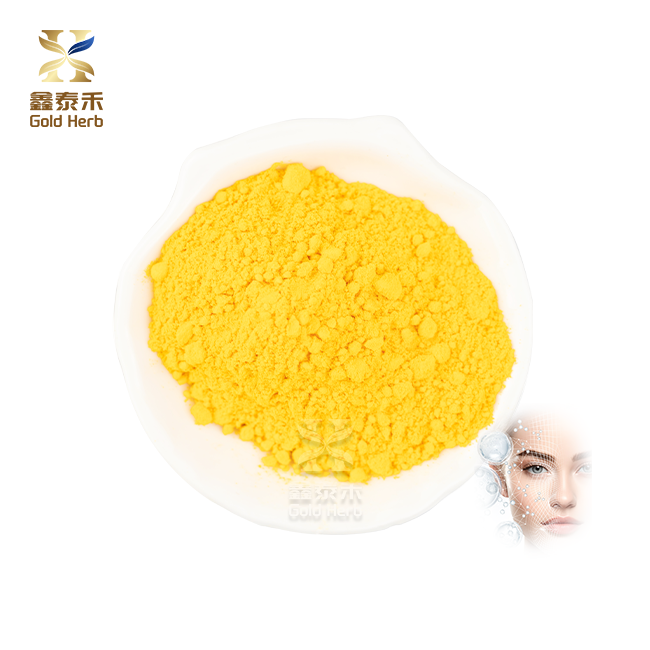
Yellow to Light Yellow Powder |
|
Particle Size |
80 Mesh |
|
Moisture |
≤5% |
|
Shelf Life |
24 Months |
|
Packaging |
1 kg Aluminum Foil Bag / 25 kg Fiber Drum |
Quality Assurance
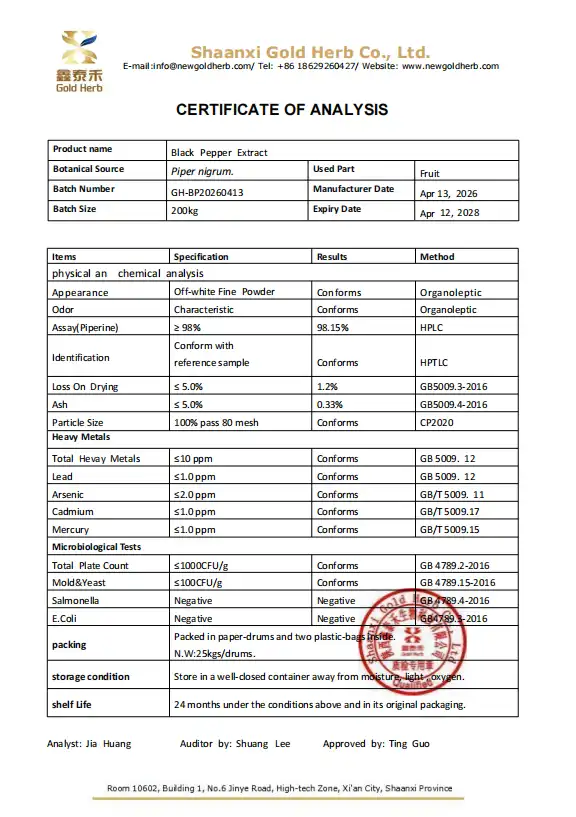
Certificate of Analysis (COA) for Specification Powder [Request COA]
Understanding Piperine Powder and Its Role in Nutraceuticals
What Makes Piperine Distinct from Standard Black Pepper Extract?
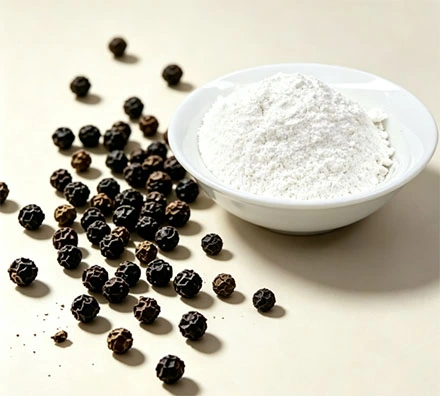
Piperine is an alkaloid that is mostly found in black pepper plants. It is not the same as pepper powder or low-quality products. High-quality piperine powder bulk, which has been tested and found to be 95% or 98% pure using HPLC, gives an exact and repeatable active content that can't be found in raw spice mixtures. Standardization like this makes it good for making nutraceuticals, where consistency from batch to batch affects claims about the product and how well it works for customers.
Core Functional Roles in Supplement Systems
Piperine powder bulk works in a number of well-known ways that make it an essential ingredient in the building of nutraceuticals. It stops some enzymes from breaking down drugs and makes the intestines more permeable, which makes nutrients work in the body for longer. In a study published in Planta Medica in 1998, piperine increased the absorption of curcumin by 2,000% when given together with 20 mg of curcumin. This result has had a huge impact on how curcumin and piperine are combined today.
Piperine improves absorption and also protects cells from oxidative stress by scavenging free radicals. It also increases the production of digestive enzymes to help with stomach pain and may speed up thermogenesis and fat metabolism, which could help with weight control products. Because these functions combine, piperine powder bulk is not a single-use addition but a multi-use one.
Comparative Insights: Bulk Piperine Powder vs. Alternative Ingredients
Piperine and Curcumin—Complementary, Not Competitive
A common procurement question is whether piperine and curcumin fight for space in the formula. They don't. Curcumin doesn't dissolve well in water and is quickly cleared from the body by the liver. Piperine powder in bulk directly fixes both of these problems. The combination has been proven by science and business, which is why piperine powder bulk is almost always used with curcumin-based supplements.
Generic Piperine vs. Branded Extracts
Piperine products with a brand name, like Bioperine®, cost a lot more than generic versions. The practical performance gap gets a lot smaller when a seller offers high-purity piperine powder bulk that is standardized at 95% or 98% and has been fully checked by a third party and is certified under FDA, ISO9001, HACCP, Halal, and Kosher standards. Generic high-purity piperine powder bulk is a good choice for procurement teams that want to keep label claims honest while also keeping an eye on cost-per-unit. This is only true if the supplier provides consistent analytical data and proof of origin.
The difference between organic and regular piperine also has an impact on how the market is positioned. Brands that want to be seen as "clean label" or "certified organic" need providers who can provide the right certification paperwork. This has a direct effect on compliance during regulatory review.
Selecting the Right Bulk Piperine Powder Supplier: Key Criteria for B2B Clients
Purity, Certification, and Traceability Requirements
When choosing a supplier for piperine powder bulk, you need to do more than just talk about price. A procurement-ready supplier relationship meets the following criteria:
- Analytical verification: purity at 95% or 98% was proven by HPLC, and certificates of analysis were given for each batch. This protects against label claims that aren't true and regulatory exposure.
- Global certifications: FDA registration, ISO9001 quality management certification, HACCP food safety routine, and Halal/Kosher certification all show that a seller follows quality standards that are known all over the world.
- Batch-to-batch consistency: Companies that make nutraceuticals can't stand differences in the amount of active ingredients. Suppliers must show that their process controls keep the amount of piperine in the product within certain limits during all production runs.
- Customization capability: Some mixtures need certain particle sizes, packaging forms, or co-processed blends. Suppliers who can help with OEM/ODM and offer powder, liquid, and microcapsule types have a big edge.
These factors together show if a supplier can be a long-term partner instead of just a one-time buyer.
Logistics and Lead Time Considerations
Supply consistency is just as important for foreign B2B buyers as ingredient quality. Reliable suppliers keep stock on hand so that orders can be filled quickly, even for small batches that need to be made quickly when production schedules change. Verified relationships with major global transportation providers make sure that paperwork, the integrity of the cold chain, and customs compliance are all taken care of in a planned way instead of an ad hoc one.
Best Practices for Using Bulk Piperine Powder in Nutraceutical Manufacturing
Dosage, Stability, and Formulation Guidelines
Piperine dosages used in nutraceuticals have been tested in clinical settings and are usually between 5 mg and 20 mg per serving. The lower end of this range has been shown to improve bioavailability when combined with curcumin or other actives that are not well absorbed. Formulation experts should know that piperine powder bulk doesn't dissolve well in water but does dissolve in ethanol and acetic acid. This affects the choice of container and the steps used for wet granulation.
During production, stability needs to be constantly controlled. To keep the active ingredients fresh for as long as possible, piperine powder bulk should be kept in its original, tightly sealed packages that are kept away from light and moisture. This is especially important when piperine is added to fizzy pills, stick packs, or other forms that are more likely to be processed.
Formulators who use sustained-release or nanoemulsion delivery systems say that their products taste better and have longer activity windows. This helps them stand out in competitive supplement categories like weight management, digestive health, and metabolic health.
Future Trends and Market Outlook for Bulk Piperine Powder in Nutraceuticals
Emerging Applications Driving Market Expansion
The world market for piperine powder bulk is growing beyond curcumin co-formulation. Cognitive health products are becoming more popular. Companies that are making formulas to improve memory, focus, and happiness are interested in piperine because it protects neurons and changes serotonin levels. There is more and more clinical evidence that piperine can change the immune system, which is why it is still used in anti-inflammatory and metabolic health products.
New delivery technologies, such as liposomal encapsulation, nanoemulsions, and sustained-release frameworks, are making piperine powder bulk more useful in a wider range of product forms. These technologies solve the problems with stability and solubility that stopped it from being used in healthy drinks and food-grade products before. When suppliers can offer personalized ingredient forms along with detailed technical paperwork, they put their B2B clients ahead of rivals who are still using traditional capsule and tablet delivery.
Conclusion
In terms of strategy, piperine powder bulk has no equal in the world of nutraceutical formulation. Because it improves the absorption of other nutrients and also has antioxidant, gut, and metabolic effects on its own, it is a rare ingredient that can add value to more than one type of product at the same time. The quality bar for getting piperine keeps going up as the demand for clean labels grows and delivery technology gets better. Product lines that meet both regulatory requirements and consumer expectations will be made by procurement teams that put certified purity, supplier transparency, and technical support at the top of their list of priorities.
FAQ
1. What is the typical MOQ for bulk piperine powder?
Depending on the quality and the supplier's availability, the minimum order quantity is usually between 25 kg and 100 kg. When production schedules change at the last minute, suppliers that offer emergency small-batch green-channel services can handle lower volumes with faster lead times.
2. How do I verify the quality of piperine extract powder before purchasing?
Ask for a certificate of analysis that shows the purity was tested using HPLC and that a third-party lab has confirmed it. Having suppliers who are certified by FDA, ISO9001, HACCP, Halal, and Kosher adds another layer of quality guarantee. Instead of depending on generic product datasheets, you should always check batch-specific documents.
3. Are there known interactions or safety considerations for piperine?
Piperine stops some cytochrome P450 enzymes from working, which means that when given with other drugs, it can change how certain compounds are broken down. When formulating goods that contain piperine and sensitive ingredients, the formulation team should look at the clinical literature and regulatory guidelines. This is less of a problem in normal nutraceutical uses because people stick to set dosage amounts.
4. Can piperine powder be used in functional food and beverage formats?
Yes, as long as the supplier has material that is certified to be food-safe and has stability data for the conditions that will be used for processing. Formats that are encapsulated or nanoemulsion make them more compatible with drinks and functional food materials.
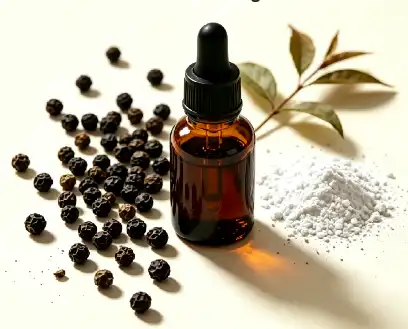
Partner with Gold Herb for Certified Piperine Powder Bulk Supply
Gold Herb sells large piperine powder bulk that is 95% to 98% pure, has been tested by HPLC, and is approved by FDA, ISO9001, HACCP, Halal, and Kosher standards. It is also backed by U.S. warehouse stock that can be shipped in 3 to 5 business days. As a reliable piperine powder bulk supplier, we offer samples, support for OEM/ODM, and dedicated technical help from an R&D team led by academics. To get a sample or price quote, email us at info@newgoldherb.com.
References
1. Shoba, G. et al. — "Influence of Piperine on the Pharmacokinetics of Curcumin in Animals and Human Volunteers." Planta Medica, 1998.
2. Srinivasan, K.—"Black Pepper and Its Pungent Principle—Piperine: A Review of Diverse Physiological Effects." "Critical Reviews in Food Science and Nutrition, 2007.
3. Meghwal, M. & Goswami, T.K. — "Piper nigrum and Piperine: An Update." Phytotherapy Research, 2013.
4. Butt, M.S. et al. — "Black Pepper and Health Claims: A Comprehensive Treatise." Critical Reviews in Food Science and Nutrition, 2013.
5. Kesarwani, K. & Gupta, R.—"Bioavailability Enhancers of Herbal Origin: An Overview. "Asian Pacific Journal of Tropical Biomedicine, 2013.
6. Lambert, J.D. et al.—"Piperine Enhances the Bioavailability of the Tea Polyphenol (-) Epigallocatechin-3-gallate in Mice. "Journal of Nutrition, 2004.

Send Inquiry
Related Industry Knowledge
- Blue spirulina extract Nutrition: What Does It Contain?
- Echinacea extract:properties, uses, and supplementation
- What is echinacea extract good for?
- Echinacea Extract: Active Compounds, Benefits and Market Trends
- Why Is Black Pepper Extract Powder Used in Supplement Formulations?
- Ashwagandha Extract Guide: Active Compounds, Benefits & Dosage
- Red Beet Powder vs Beetroot Juice: Which for Supplements?
- Ergothioneine for Cellular Protection: Benefits, Science, and Longevity Potential
- Fisetin for Anti-Aging: Senolytic Power Explained for B2B Buyers
- How Resveratrol Powder Is Used in Anti-Aging R&D