
What is the difference between astaxanthin and zeaxanthin?
Jun 24, 2026
Astaxanthin and zeaxanthin are both carotenoids, but they are very different in how they are made, what they do biologically, and where they come from. Astaxanthin, which comes mostly from microalgae like Haematococcus pluvialis, is a special kind of antioxidant that can get into cells and work there. The human macula is where zeaxanthin, which is mostly found in marigold flowers, gathers to block blue light and protect against oxidative stress. High-purity Zeaxanthin Powder, which is 98% pure, is a luxury ingredient for nutraceutical and beauty products that helps with bioavailability and formulation stability issues that procurement professionals face today.
Understanding Astaxanthin and Zeaxanthin: Key Characteristics
While both carotenoids are antioxidants, they are very different in how they are built and what they do in the body. These differences affect how each works in human cells and help researchers figure out the best ways to use new products.
Chemical Structure and Molecular Differences
There is a keto group at each end of astaxanthin's chemical chain, which makes it physically different from zeaxanthin, which has hydroxyl groups. The way each molecule interacts with lipid membranes is changed by this small chemical difference. Because of its special structure, astaxanthin can cover the whole lipid membrane and protect cells on both sides from oxidative damage. Zeaxanthin's hydroxyl-based structure lets it mix deeply with retinal tissue, which is why it is so important for eye health products.
Natural Sources and Extraction Methods
Most of the time, astaxanthin comes from krill oil, fish, or microalgae like Haematococcus pluvialis. Zeaxanthin, on the other hand, is mostly taken from marigold flowers using methods like saponification and condensation. The Zeaxanthin Powder we sell comes from Tagetes erecta, which guarantees that the source is real and that the (3R,3'R)-isomer purity meets human biological needs. This isomer specificity solves a major problem in the industry: manufactured or poorly derived carotenoids often have fewer bioactive stereoisomers, which makes them less effective.
Biological Distribution and Function
Astaxanthin is found in many parts of the body, like the skin, muscles, and the circulatory system. Zeaxanthin is mostly found in the macula lutea, which is the center part of the eye that lets you see clearly and in great detail. Because it only builds up in certain places, zeaxanthin can't be replaced in eye health vitamins, especially ones that meet AREDS2 formulation guidelines.
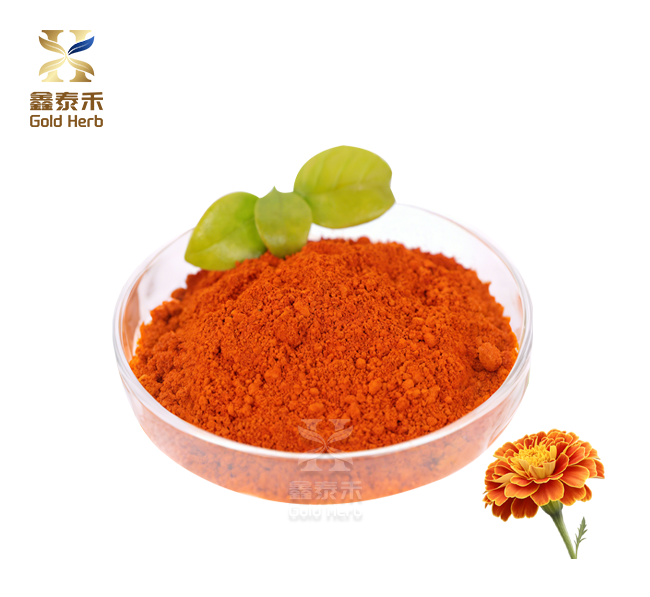
Our Lutein and Zeaxanthin Powder, which has 98% pure lutein and zeaxanthin, is an improved answer to common manufacturing problems. Using the right storage methods, this orange-yellow to deep orange solid powder (CAS Number: 144-68-3) protects against oxidative breakdown and keeps the quality the same from batch to batch. This consistency gets rid of the problems that come up with buying when there is variation from batch to batch, making sure that the product always works well.

Astaxanthin vs Zeaxanthin: Functional and Health Benefits Comparison
Both carotenoids are good for you, but they work in different ways and affect different parts of your body. Knowing about these differences helps buying managers choose ingredients that are in line with certain health claims and rules.
Antioxidant Capacity and Mechanisms
As some tests have shown, astaxanthin is up to 550 times more effective than vitamin E at getting rid of free radicals. Singlet oxygen and peroxyl radicals can be neutralized by it, which makes it useful for skin and heart health. Zeaxanthin's antioxidant action is mostly found in the retina, which blocks high-energy blue light and gets rid of reactive oxygen species that build up from daily light exposure.
According to research, the amount of zeaxanthin in the macula is directly linked to how well you see and how well you protect your eyesight against getting worse with age. We sell Zeaxanthin Powder that raises the optical density of macular pigment, which helps with long-term vision and meets pharmaceutical-grade quality standards.
Target Health Applications
Astaxanthin is good for your health in many ways, like keeping your skin flexible, helping your muscles recover, and keeping your heart healthy. Because it's widely available, formulators can make goods for heart health, anti-aging skin care, and sports nutrition. Through its concentrated antioxidant protection mechanisms, zeaxanthin helps with eye and brain function, and skin glow.
There are many ways that our Lutein and Zeaxanthin Powder can help you. Better vision clarity and defense against oxidative stress help the eyes. The possible cognitive boost comes from the buildup of carotenoids in neural tissues, which may help with memory and mental sharpness. Protection of cells against external factors leads to better skin radiance, which addresses worries about premature aging in cosmetic formulas.
Complementary Roles in Formulations
A lot of high-quality eye health products contain both carotenoids and other nutrients that work well together, such as vitamin E and omega-3 fatty acids. This method works together to improve many areas of eye health, from the health of the tear film to the health of the retina. Astaxanthin is a more general antioxidant that works with zeaxanthin to protect the macula specifically. Together, they make products that are good for people who care about their health.
The dual-action method also creates chances in the functional food and drink industries, where companies are looking for natural products that can make more than one health claim. By combining these pigments, brands can make their goods stand out in crowded markets while still following clean-label rules.
Procurement Considerations: Choosing Between Astaxanthin and Zeaxanthin Powder
When you do strategic buying, you have to look at more than just basic requirements. To make sure a product is successful in the long run, procurement must find a balance between quality, compliance, cost-effectiveness, and source dependability.
Quality Standards and Certifications
Pharmaceutical-grade carotene powders have to meet strict safety and quality standards. Certifications like FDA registration, ISO9001, HACCP, HALAL, and Kosher make sure that the way products are made meets foreign standards. These certifications help with governmental compliance issues in a wide range of foreign areas, from the Middle East to North America.
At Gold Herb, our Zeaxanthin Powder has full approval coverage, which makes it easy to get into markets in different places. We've been making things for more than three years and have relationships with more than 200 customers in 30+ countries. This shows that we can consistently deliver quality products and keep our supply chain reliable.
Bioavailability and Formulation Compatibility
It is hard for the body to use raw pure carotenoids because they are lipophilic. Micronization and microencapsulation are two advanced processing methods that can turn unstable oleoresins into powders that can flow freely and don't break down easily when exposed to oxygen. Concerns about food-grade safety are addressed by these technologies, which also make it easier to use different dose types.
Proper storage conditions, such as a tight lid, shade, and controlled temperature, are important for keeping our product's recipe stable. This focus on stability makes sure that finished goods stay effective for as long as they're stored, which lowers the chance of customer complaints and product returns.
Supplier Vetting and Supply Chain Transparency
Reliable providers let you track everything from where the raw materials come from to how they were tested at the end. Procurement teams can check claims and follow quality assurance rules when there is clear paperwork, such as third-party test results and certificates of analysis. Supplier ties based on technical help and quick contact cut down on delays and speed up the time it takes to make a product.
Gold Herb's dual-driven model blends getting high-quality raw materials from around the world and changing cutting-edge technology. Our strategic relationship with Ancooin Biotechnology and our work with Academician Li Xiaokun's team give us strong expert support for choosing ingredients and proving that they work. This scientific basis makes sure that every batch meets the high standards needed for beauty and nutritional uses.

Zeaxanthin Powder: Detailed Insights for B2B Clients
Procurement experts can make smart choices that improve product performance and market positioning by knowing the technical details and application factors of carotene ingredients.
Purity Profiles and Dosage Guidelines
Our Zeaxanthin Powder is 98% pure, which is one of the best amounts you can buy in a store. Based on the health claim and the group being studied, a clinical study shows that doses between 2 and 10 mg daily are effective. Formulators can get beneficial doses from smaller serving sizes when the ingredients are more pure. This makes things easier for customers and lowers the cost of formulating.
The purity of the (3R,3'R)-stereoisomer makes sure that the cellular action is in line with what humans need. This isomer specificity sets expensive ingredients apart from synthetic options that might contain inactive stereoisomers, which has a direct effect on how well the product works and how happy the customer is.
Extraction Technology and Source Authentication
To get pure zeaxanthin from marigold flowers naturally, the fatty acids are removed through saponification, and then the zeaxanthin is crystallized. This method keeps the original stereoisomer structure while getting purity levels high enough for pharmaceutical use. Source identification through chemical fingerprinting and botanical proof makes sure that the whole supply chain is consistent and can be tracked.
Our extraction methods are in line with Good Manufacturing Practices, and we test for quality at many steps of the production process. This methodical approach solves the problem of batch-to-batch consistency, which is a common problem for buying teams that have to handle big output needs.
Integration with Complementary Ingredients
When zeaxanthin and lutein are combined, they make the macular pigment complex that is important for eye health. The ratio of zeaxanthin to lutein in human eye cells is about 1:5. However, formulation ratios may be different depending on the health claim. When you mix zeaxanthin with vitamin E, ascorbic acid, or zinc, you get products that work better together and protect cells in more than one way.
With our lutein and Zeaxanthin Powder, you can get both carotenoids in one ingredient, which makes formulating easier. This mix handles complicated formulations while ensuring accurate ratio control and making quality assurance methods easier to follow. Preliminary studies show that the immune system and heart health can be improved, which means that the benefits could go beyond typical eye health categories.
Astaxanthin and Zeaxanthin Market Trends and Future Outlook
The global market for carotenoids keeps growing as more people learn about them and more research backs them up. Knowing how markets work helps buying pros predict changes in demand and gain a competitive edge.
Growing Demand Drivers
Vision health goods are becoming more popular around the world because people are living longer. The widespread use of digital devices raises worries about blue light exposure, opening up chances for protective carotenoid formulations. Clean-label trends support natural ingredients over manufactured ones, which makes consumers more likely to think positively about carotenoids that come from plants.
Technological Innovation
As mining technology improves, it makes the yield more useful and has less of an effect on the environment. Microencapsulation methods improve stability and bioavailability, which solves long-standing problems with manufacturing. Enzymatic and supercritical fluid extraction are two cleaner ways to process materials that are in line with green goals.
Regulatory Landscape
A lot of big markets, like the US, EU, and Asia-Pacific, are constantly changing their rules and regulations. Market entry is ensured by FDA registration and following new food rules, and health claims can be backed up with the right paperwork. A proactive regulatory approach lowers the barriers to entry into a market and shortens the time it takes for new formulas to reach the market.

Conclusion
Astaxanthin and zeaxanthin work in health products in different but related ways. Astaxanthin is a powerful antioxidant that helps keep your heart, skin, and muscles healthy. Zeaxanthin, on the other hand, is essential for vision protection formulas because it concentrates on the macular area. High-purity Zeaxanthin Powder at 98% standard solves important problems in the business, like bioavailability, formulation stability, and batch consistency. Brands can be successful in growing carotene markets if they make smart purchasing choices that take into account quality certifications, source dependability, and new technology. When R&D teams and buying professionals understand these differences, they can make goods that meet strict scientific standards and appeal to health-conscious customers looking for natural, effective solutions.
FAQ
1. What makes zeaxanthin different from astaxanthin in supplement formulations?
Zeaxanthin is mostly found in the center of the retina, where it blocks blue light and protects photoreceptor cells by acting as a localized antioxidant. Astaxanthin is found in all of the body's cells and protects the whole body from free radicals. Zeaxanthin has hydroxyl groups in its structure, while astaxanthin has keto groups. These differences affect how the two molecules combine with membranes. Because of these changes, zeaxanthin works best in supplements for eye health, while astaxanthin works best in supplements for heart health and sports nutrition.
2. How should B2B buyers evaluate zeaxanthin powder quality?
Check the purity requirements to make sure the concentration is at least 98% and that the right amount of (3R, 3'R)-stereoisomer is present. Check for certificates like FDA, ISO9001, HACCP, and standards specific to the market like HALAL or Kosher. Ask a third party to check that there are no contaminants and that the strength is correct. Check the security of the provider by asking for customer references, seeing proof of their production capacity, and seeing how quickly they respond to technical questions. Quality risks are reduced by testing samples before placing large orders.
3. Can astaxanthin and zeaxanthin be combined in single formulations?
Putting both carotenoids together makes products that work better together and affect more than one health route. Supplements for eye health use both zeaxanthin and astaxanthin, which protect the macula and provide wider antioxidant defense. Managing solubility, checking for stability in storage, and finding the best dose for each substance are all things that need to be thought about when formulating. Using the right packaging technology keeps the substance from breaking down and makes sure it is always bioavailable.
Partner with Gold Herb for Premium Zeaxanthin Powder Supply
Gold Herb sells pharmaceutical-grade Zeaxanthin Powder that meets the strict needs of companies around the world that make nutraceuticals, cosmetics, and functional foods. Our requirement for 98% purity solves problems with absorption, and our many certificates, such as FDA, ISO9001, HACCP, HALAL, and Kosher, make sure that we follow all the rules in all global markets. We offer not only materials but also full formulation support throughout the whole process of making your product. This is possible thanks to our strategic partnerships with top research institutions and Academician Li Xiaokun's technology team.
Our U.S. warehouse network lets us quickly complete orders within 3–5 business days, and we can offer customized solutions that cover formulation, dosage form, and packing requirements to shorten the time it takes to make a new product. We solve problems with supply chain reliability that cause production plans to slip by keeping more than 1 ton of standard specifications in stock all the time and offering emergency green-channel services that can deliver custom orders in 5 to 7 days. We have over 200 users in more than 30 countries who trust our quality and professional know-how. Get in touch with our team at info@newgoldherb.com right away to talk about your needs with a Zeaxanthin Powder seller who is dedicated to your success.
References
1. Bernstein, P.S., et al. "Resonance Raman Measurement of Macular Carotenoids in Normal Subjects and in Age-Related Macular Degeneration Patients." Ophthalmology, vol. 109, no. 10, 2002, pp. 1780-1787.
2. Naguib, Y.M. "Antioxidant Activities of Astaxanthin and Related Carotenoids." Journal of Agricultural and Food Chemistry, vol. 48, no. 4, 2000, pp. 1150-1154.
3. Age-Related Eye Disease Study 2 Research Group. "Lutein + Zeaxanthin and Omega-3 Fatty Acids for Age-Related Macular Degeneration." JAMA, vol. 309, no. 19, 2013, pp. 2005-2015.
4. Kidd, P. "Astaxanthin, Cell Membrane Nutrient with Diverse Clinical Benefits and Anti-Aging Potential." Alternative Medicine Review, vol. 16, no. 4, 2011, pp. 355-364.
5. Bone, R.A., et al. "Distribution of Lutein and Zeaxanthin Stereoisomers in the Human Retina." Experimental Eye Research, vol. 64, no. 2, 1997, pp. 211-218.
6. Landrum, J.T., and Bone, R.A. "Carotenoids in the Retina and Lens: Possible Acute and Chronic Effects on Human Visual Performance." Archives of Biochemistry and Biophysics, vol. 385, no. 1, 2001, pp. 28-40.

Send Inquiry
Related Industry Knowledge
- How to take echinacea extract?
- How to Choose High-Quality Zeaxanthin Powder?
- What Is Zeaxanthin? Benefits, Uses and How It Works
- Kava Extract: Uses, Benefits and Industry Trends
- How long does it take for Berberine Hydrochloride to lower cholesterol?
- What Is Ginkgo Biloba Leaf Extract Powder Used For in Pharma R&D
- Why Resveratrol Is Known as the “Longevity Molecule”
- GMP Resveratrol Powder for Pharmaceutical Applications
- Evaluating Ergothioneine Powder for Cellular Health & Antioxidant Applications: Key Considerations for Formulators
- GMP Sodium Copper Chlorophyllin Powder Manufacturing