
Where to Buy Pharmaceutical-Grade Gymnema Sylvestre Extract Powder?
Mar 20, 2026
When sourcing pharmaceutical-grade Gymnema sylvestre extract powder, procurement teams need to look beyond a product name or a low per-kilogram price. More essential is whether the extract has a well-defined specification, whether the amount of gymnemic acid can be validated by an acceptable analytical technique, and whether the provider can offer consistent documentation from batch to batch. These data are especially significant when the ingredient is being investigated for nutraceutical, functional food, cosmetic, or other regulated product development. Gymnema sylvestre is a botanical substance, derived traditionally from the leaves of the Gymnema sylvestre plant. The commercial extracts may be prepared in varying concentration levels based on the source material, the extraction procedure, and the intended use. So the ideal product for a customer is not just the extract with the greatest declared concentration. It is the product that has the specification, testing, documentation, packaging, and supply capacity that meets the completed product criteria. One of the suppliers to consider when customers are reviewing standardised Gymnema sylvestre extract powder is Gold Herb. Its declared quality processes and certifications may give a basis for supplier assessment, but procurement teams should still require recent product specifications and batch documents before issuing a commercial order.
What Defines a High-Quality Gymnema Sylvestre Extract?
Botanical Source and Standardization
The first thing to do in analysing a Gymnema extract is to know precisely what the source is offering. Typically, Gymnema sylvestre extract is prepared from leaves of the botanical material, but final composition relies on aspects including quality of raw material, extraction solvent, concentration method, and standardisation needs.
That’s why customers should not compare two goods only based on the words “Gymnema extract powder” on the specification sheet. One provider may give a relatively low concentration extract suitable for use in broad botanical products; another supplier would offer a standardised extract with a set gymnemic acid specification. The two materials may have drastically different formulation qualities even if they have identical product names.
When a firm wants more uniformity across manufacturing batches, standardisation may be very helpful. Rather than depending on the inherent variability of the plant material, the provider establishes a goal marker or active element and confirms it by analytical testing. With Gymnema products, gymnemic acids are often employed as an essential specification criterion. The precise proportion should always be validated with the provider and should never be presumed to be universal.
Extraction Process and Analytical Control
The extraction process directly affects the composition and physical qualities of the resulting powder. Botanical compounds are extracted by using a variety of extraction techniques, including water and ethanol, although the process itself might include multiple steps, such as extraction, filtering, concentration, drying, and grinding.
The essential thing for procurement specialists isn’t whether a supplier claims their process is “advanced.” The provider should be able to describe enough of the process to show that the final material can be reliably manufactured. This may provide information on botanical origin, extraction solvent, goal of standardisation, drying process and quality control processes.
No less crucial are the analytical tests. HPLC may be used to quantify specific ingredients where the technique is acceptable for the product and verified for the intended application. A current Certificate of Analysis identifying the specification, test method, outcome, and acceptance criteria. Looking at numerous batch COAs will give you a better impression of consistency than looking at a single sample.


How Should Buyers Verify Pharmaceutical-Grade Specifications?
Review the Specification Before Comparing Prices
A professional purchase should not begin with a quote but with a specification sheet. Before asking for a quote on a large order, buyers should indicate the required botanical identity, extract ratio or standardisation level, appearance, moisture, particle size, gymnemic acid specification, microbiological limits, heavy metal limits, and other parameters required for the finished product.
The phrase “pharmaceutical-grade” should also be seen as a specification question rather than a promise per se. Varying markets and applications may have varying quality and documentation requirements; hence the supplier should be able to clarify which production and quality standards apply to the material delivered.
If the buyer is producing a regulated product, the requirements of the target market must be checked before finalising the raw material. A specification of one supplement or cosmetic composition may not automatically meet the criteria of another application.
Examine COAs and Batch-to-Batch Consistency
One of the most essential papers in a B2B ingredient purchase is a Certificate of Analysis, which ties a certain manufacturing batch with its test findings. Buyers may see the real analytical numbers and compare them to the agreed specification, instead of having to accept a vague assertion like “high purity”.
Based on the supplier specification and the customer needs, the COA for Gymnema sylvestre extract powder might comprise identification, assay or marker content, moisture, microbiological testing, and contaminant testing. Buyers may additionally require supporting documentation for heavy metals, pesticides, residual solvents, allergens, GMO status, or other characteristics, as appropriate to the completed product.
Also, examine whether the testing is done internally, externally, or using a mix of both. Where the client wants independent confirmation, chosen parameters may be further verified by third-party laboratory testing. The purpose is not to compile paperwork for the sake of compiling paperwork but to create a traceable link between the specification provided and the actual batch delivered.

Where Can Procurement Teams Find a Suitable Gymnema Extract Supplier?
Evaluate Manufacturing Capability, Not Just Trading Experience
B2B customers may source Gymnema goods via trade businesses, ingredient wholesalers, online marketplaces and direct producers. It can function in both sourcing models, but the amount of technical openness may vary.
A direct manufacturer might be of particular value when the customer demands a bespoke specification, a regular bulk supply, technical documentation, or batch consistency over the long term. A trading business or distributor might be advantageous if local inventory, lower order amounts, or regional logistics are more relevant.
The secret is knowing who is really in charge of the production process. Buyers should question whether the extract is made by the provider or if it is purchased from another company. If the material changes hands many times, the possibility of getting comprehensive batch traceability and consistent technical information may be more challenging.
For this reason, the assessment of the supplier should cover the manufacturing location, the quality-management system, the testing capabilities, the production capacity, the packaging alternatives, and the ability to handle repeat orders.
Check Certifications in Their Proper Context
Certifications may be an indicative proof of a supplier’s management and manufacturing methods, but should be evaluated carefully. For example, ISO 9001 is a quality management system, and HACCP is a system for food safety hazards and control points. Kosher and HALAL certifications certify that particular criteria unique to each certification are met.
A supplier may also submit paperwork about GMP systems, organic manufacturing, facility registration, or other market-specific criteria. However, purchasers should examine in any case the actual name of the certificate, the organization granting it, the scope, the facility covered, and the validity term instead of assuming that every certification refers directly to the goods.
Gold Herb says it has certifications and quality systems such as FDA-related registration or compliance, ISO9001, HACCP, HALAL, and Kosher credentials. For commercial purchases, the buyer should get the latest paperwork and verify that the certification scope includes the appropriate site and product category.

What Should You Compare When Buying Gymnema Extract in Bulk?
Concentration, Purity, and Application Fit
The greatest concentration is not always the best option for commercial use. A concentrated extract could be good for a formulation requiring a low inclusion level, but a different specification may be more suitable for another application due to cost, taste, solubility, processing behaviour, or formulation compatibility.
This is especially true for Gymnema products, since botanical extracts may vary in colour, flavour, dispersibility, and content depending on the extraction and drying method. A technical sample should thus be tested under the identical circumstances under which the substance will finally be applied.
Whenever feasible, buyers should provide the provider with the planned use. A technically competent provider may therefore be able to propose an appropriate standard rather than merely stating the greatest concentration available.
MOQ, Lead Time, Packaging, and Storage
Price is only one piece of the puzzle when shopping for Gymnema sylvestre extract. The minimum order quantity may greatly affect the real cost of a new product. Ordering too much material might generate wasteful inventory, especially before market demand is established.
Lead time is just as critical for firms that operate planned production runs. A supplier could give a good price but be less competitive if it takes several weeks longer than planned to restock. So the buyer should check on the sample lead time, the usual manufacturing lead time, available stock, and estimated timetable for repeat purchases.
Consideration should also be given to packaging and storage conditions. Depending on the content and packaging, botanical powders are often vulnerable to external factors such as moisture, heat and excess light. The supplier shall offer sufficient packing information and suggested storage conditions to allow the item to stay within specification throughout shipment and storage.
Documentation for International Procurement
International purchasers must review the documents before issuing the purchase order. The needed package might be composed of COA, specification sheet, safety paperwork, origin information, production information, allergy statement, GMO statement, and applicable certification papers depending on destination market and use.
Import regulations vary greatly from country to country. Therefore, it is ideal if the buyer provides the destination country and intended application at an early stage of the sourcing process. This enables the supplier to anticipate probable documentation needs before the cargo leaves the production plant, rather than after the items have been sent.
Clear documentation also enhances internal quality control. If each order, procurement, quality assurance, and manufacturing team is using the same specification and document criteria, then they are all working to the same parameters.

How Does Gymnema Extract Fit Different Product Formulations?
Nutraceutical and Functional Product Development
Gymnema sylvestre extract is commonly considered for botanical and nutraceutical formulations where a standardized plant extract is required. Depending on the finished product, the powder may be incorporated into capsules, tablets, powdered blends, or other delivery formats.
Formulators should evaluate more than the marker concentration. Taste, color, powder flow, moisture, compatibility with excipients, and processing conditions can all affect the finished product. A laboratory sample can help determine whether the selected grade behaves as expected before the manufacturer commits to a larger purchase.
Marketing and labeling requirements should also be reviewed separately from the technical specification. Statements about the intended function of a finished product may be regulated differently in different markets, so buyers should avoid assuming that an ingredient specification automatically permits a particular product claim.
Cosmetic and Other Botanical Applications
Gymnema sylvestre extract may also be considered for cosmetic or personal-care formulations where botanical ingredients are part of the product concept. In these cases, the buyer may have different priorities from a nutraceutical manufacturer, including color, odor, compatibility with the formulation base, microbiological quality, and documentation relevant to cosmetic raw materials.
This illustrates why the phrase “best Gymnema extract” has no universal answer. The appropriate product depends on the formulation, regulatory market, dosage format, technical specification, and purchasing volume.
Conclusion
Sourcing pharmaceutical-grade Gymnema sylvestre extract powder requires careful consideration of quality standards, supplier capabilities, and application requirements. The extract's proven benefits in blood glucose management, weight control, and metabolic health support make it valuable across pharmaceutical, nutraceutical, and functional food applications. Success depends on identifying suppliers who combine technical expertise with reliable supply chain performance and comprehensive quality assurance. Gold Herb exemplifies these qualities through FDA, ISO 9001, HACCP, HALAL, and Kosher certifications, backed by advanced extraction capabilities and global distribution infrastructure. Building strategic partnerships with qualified suppliers ensures access to high-quality ingredients that support product innovation and market success.
FAQ
1. What makes pharmaceutical-grade Gymnema sylvestre extract powder different from standard grades?
Pharmaceutical-grade Gymnema sylvestre extract powder goes through more thorough testing and cleaning procedures than normal grades. Higher levels of purity are reached with exactly measured gymnemic acid concentrations, which are usually between 25% and 75%. This is proven by HPLC testing. This grade comes with a lot of paperwork, tests for contaminants by a third party, and high-quality standards that are needed for pharmaceutical and therapeutic uses.
2. What is the typical minimum order quantity for wholesale purchasing?
Different providers have different minimum order amounts, but for pharmaceutical-grade products, they are usually between 25 and 100 kilograms. Gold Herb keeps more than a ton of standard specs in stock, which lets customers place smaller orders at first and offers savings for buying in bulk. Depending on the specific needs and handling difficulty, customized specs may need higher minimum orders.
3. How should Gymnema sylvestre extract powder be stored to maintain potency?
To store the extract properly, it needs to be kept in its original, tightly sealed containers away from light, heat, and moisture. Temperatures below 25°C and relative humidity below 60% are the best conditions for storage. Gymnemic acid amounts stay the same when stored properly, and breakdown that could affect product effectiveness and shelf life is stopped.
4. What documentation is required for international shipping?
For international shipping, you usually need Certificates of Analysis, Material Safety Data Sheets, business bills, packing lists, and any necessary certifications, like HALAL or organic certificates. Gold Herb offers complete paperwork packages that meet international rules and make it easier to clear customs in markets around the world.
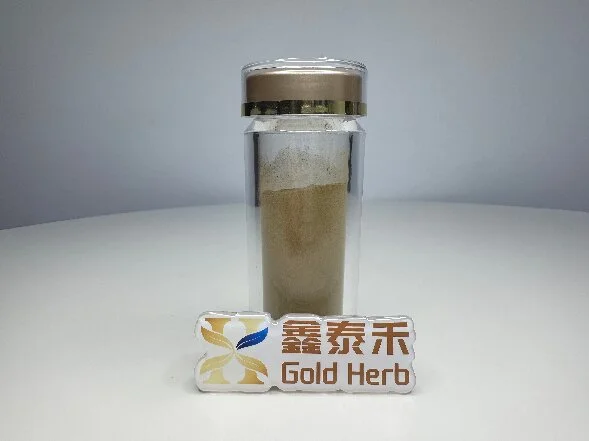
Partner with Gold Herb for Premium Gymnema Sylvestre Extract Powder
Gold Herb stands as your trusted Gymnema sylvestre extract powder manufacturer, combining cutting-edge extraction technology with rigorous quality standards to deliver pharmaceutical-grade botanical ingredients. Our standardized extracts containing 25% to 75% gymnemic acids undergo comprehensive HPLC testing and carry complete certification packages including FDA, ISO9001, HACCP, HALAL, and Kosher approvals. With over 200 satisfied customers across 30+ countries and a permanent U.S. warehouse inventory, we guarantee fast delivery within 3-5 business days while maintaining competitive pricing through our global supply chain optimization. Our technical team, supported by industry-academia partnerships, provides comprehensive formulation assistance and regulatory guidance to accelerate your product development timeline. Contact info@newgoldherb.com to discuss your Gymnema sylvestre extract powder requirements and discover how our customizable solutions can enhance your product portfolio while meeting the most demanding quality specifications.
References
1. Journal of Ethnopharmacology: "Gymnema sylvestre: A Comprehensive Review on Phytochemistry and Pharmacological Activities in Metabolic Disorders," Volume 289, 2022.
2. International Journal of Pharmaceutical Sciences Research: "Quality Assessment and Standardization Parameters for Gymnema sylvestre Extract: A Critical Analysis," Volume 13, Issue 4, 2022.
3. Phytotherapy Research: "Gymnemic Acids and Their Role in Blood Glucose Management: Clinical Evidence and Mechanisms of Action," Volume 36, Issue 2, 2022.
4. Food and Chemical Toxicology: "Safety Assessment and Toxicological Profile of Standardized Gymnema sylvestre Extract for Nutraceutical Applications," Volume 158, 2021.
5. Natural Product Communications: "Comparative Analysis of Extraction Methods and Quality Parameters for Pharmaceutical-Grade Gymnema sylvestre Preparations," Volume 17, Issue 3, 2022.
6. Journal of Functional Foods: "Applications of Gymnema sylvestre Extract in Functional Food Development: Formulation Challenges and Market Opportunities," Volume 89, 2022.

Send Inquiry
Related Industry Knowledge
- Top Urolithin A Benefits for Muscle, Energy, and Anti-Aging
- Silymarin Benefits: The Best Natural Liver Support Supplement
- Silymarin Benefits: Liver Support, Detox & Antioxidant Effects
- 5-Hydroxytryptophan for Sleep & Mood Support | Natural Serotonin Booster Explained
- Berberine Hydrochloride for weight loss: Benefits, and what you need to know
- What are the 4 benefits of Lotus Leaf Extract?
- What Is 5-Hydroxytryptophan (5-HTP)? Benefits, Uses, and Safety
- Why AKBA Content Matters in Boswellia Extract Powder?
- Fisetin Ingredient Guide: Health Benefits and Commercial Applications
- Is Gardenia Blue Color Approved in EU & USA Markets?