
Saw Palmetto Fruit Powder for Hair and Scalp Wellness
Sep 09, 2026
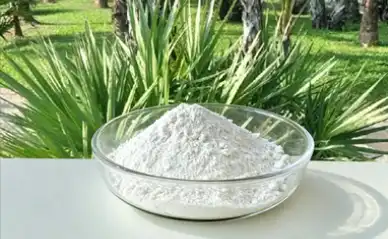
Saw palmetto fruit powder has earned its place as one of the most studied botanical ingredients in the hair wellness space. Derived from the ripe berries of Serenoa repens, a palm native to the southeastern United States, this off-white to white powder is standardized to 25% fatty acids and verified by gas chromatography. Its primary mechanism—inhibiting 5-alpha-reductase to reduce DHT—directly addresses androgenetic alopecia at a biochemical level. For B2B formulators, it offers a clean-label, plant-derived ingredient with multi-functional positioning across supplements, topicals, and functional nutrition.
Product Specifications
[Request COA]
| Parameter | Specification |
|---|---|
| Product Name | Saw Palmetto Powder |
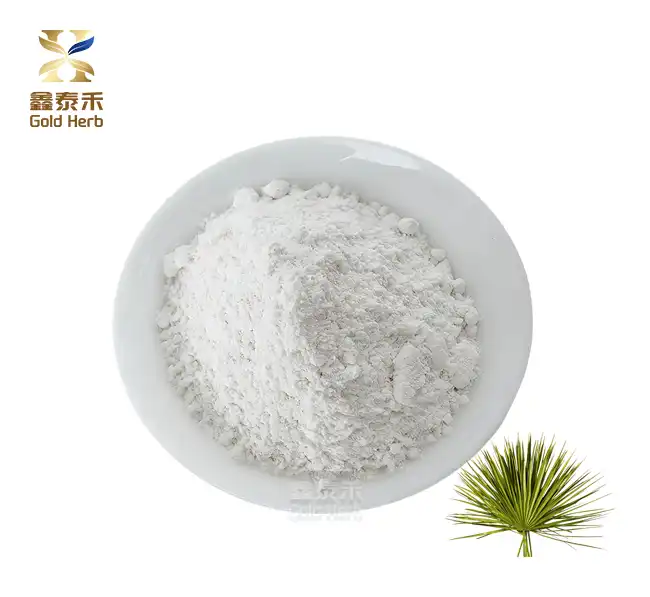
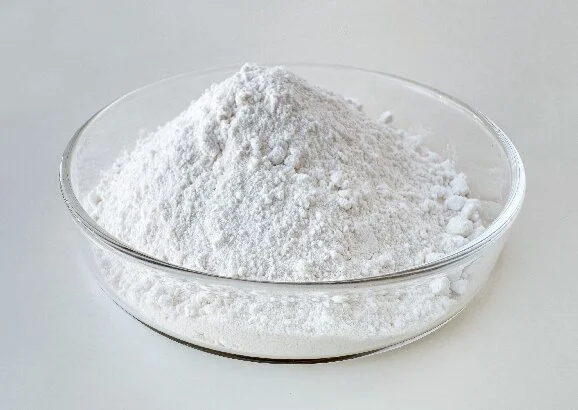
| Appearance | Off-white, white, or slightly yellowish fine powder |
| Active Components | Total Fatty Acids 15%–30%, Free Fatty Acids≥8% |
| CAS Number | 489-32-7 |
| Test Method | GC |
| Part Used | Fruit |
| Loss on Drying | ≤5.0% |
| Ash Content | ≤6.0% |
| Particle Size | 100% pass 80 mesh |
| Solubility | Insoluble in water; freely soluble in ethanol (≥90%) |
| Total Aerobic Count | ≤10³ CFU/g |
| Yeast & Mold | ≤100 CFU/g |
| Shelf Life | 2 years |
| Storage | Store in tightly closed original container, protected from light |
| Certifications | FDA, ISO9001, HACCP, HALAL, Kosher |
Understanding Saw Palmetto and Its Role in Hair and Scalp Wellness
Serenoa repens berries have been used for hundreds of years in traditional medicine, but modern standardization has made them a precise ingredient. A special group of fatty acids—mainly lauric acid, myristic acid, and oleic acid—along with phytosterols, especially beta-sitosterol, makes up the extract's bioactive profile.
The DHT-Hair Follicle Connection
The enzyme 5-alpha-reductase changes free testosterone into dihydrotestosterone. When DHT levels are high, they connect to androgen receptors in hair follicles. This makes the hair follicles shrink and fall out. A random study released in 2012 in the journal Evidence-Based Complementary and Alternative Medicine found that 60% of people with mild to moderate androgenetic alopecia who took saw palmetto fruit powder extract by mouth had more hair after 24 weeks. The fatty acid-phytosterol matrix in standardized powder works together to slow down this enzyme pathway without messing up the body's hormones like medication options do.
Scalp Anti-Inflammatory Benefits
In addition to blocking DHT, the powder has anti-inflammatory properties that can be measured. The damage to hair follicles is sped up by chronic inflammation of the scalp, and the lipophilic compounds in saw palmetto fruit powder have been shown to change the activity of prostaglandins and cytokines. Its ability to control both hormones and inflammation makes it useful for hair loss products as well as head care products that aim to balance sebum and improve sensitivity.
How to Use Saw Palmetto Fruit Powder for Optimal Results?
B2B product makers who want to make effective, market-ready recipes need to know the right way to use the saw palmetto fruit powder and how much to use.
Dosage and Delivery Formats
Clinical research backs up a daily dose range of 160–320 mg of pure extract taken by mouth. Standardized powder with 25% fatty acids allows for accurate and scalable doses in two-piece hard-shell capsules, compressed pills, and sachet powders, which are easier to work with than softgel production lines. For B2B development, these are the main delivery methods that can be used:
- Oral capsules/tablets: The most common form is oral pills or tablets containing saw palmetto fruit powder. The 25% fatty acid requirement lets doses stay within the label's limits of 320 mg per serving. Keeping the powder's moisture level below 5% helps keep it stable on the shelf and prevents lipid hydrolysis from occurring during storage.
- Topical serums and scalp treatments: Water-dispersible grades with cyclodextrin or gum arabic carriers can be added to shampoos and serums for the scalp that you leave on. Cosmetic chemists have added saw palmetto fruit powder extract to lines of products that stop hair loss. It works well with biotin and caffeine.
- Functional drink blends: For food technologists, water-dispersible powder types work with wellness sachets and protein shakes, but testing the stability of the emulsion is still an important step in the formulation process.
These transportation choices give producers a lot of freedom. Picking the right style depends on the type of people you want to buy your product from, the rules that apply, and the nutrition profile you want.
Safety and Regulatory Considerations
Saw palmetto fruit powder has a long history of being safe. In the United States, the ingredient is generally thought to be safe for use in supplements. Saw palmetto fruit powder from Gold Herb is certified by the FDA, ISO9001, HACCP, HALAL, and Kosher. These certifications cover a wide range of standards in North America, Europe, and the Middle East.
Comparing Saw Palmetto Powder with Other Forms and Alternatives
Powder vs. Liquid Extract vs. Whole Berry
Whole berry powder has about 10–12% native fatty acids and needs to be taken in large amounts to work as well as other powders. Liquid liposterolic extract is the best for clinical use, but it can be hard to handle in bulk because it is oxidatively unstable. One way to bridge this gap is with standardized extract powder, like Gold Herb's 25% fatty acid formula. It focuses the active lipid fraction onto a carrier substrate, which makes stable solid dose forms possible while keeping the key bioactive ratios that were confirmed by GC analysis.
Saw Palmetto vs. Other Androgenic Hair Loss Agents
When it comes to a B2B marketing plan, where you stand in the market versus your competitors is important. Beta-sitosterol is another 5-alpha-reductase inhibitor, but it doesn't have the complex fatty acid structure that helps Saw palmetto fruit powder get into the hair better. As a pharmaceutical agent, finasteride is known to have hormonal side effects that have led people to look for natural alternatives. Saw palmetto fruit powder is unique because it has been scientifically proven to work, comes from plants, and can be used with natural and clean-label products, all of which are things that supplement and personal care customers really like.
Organic vs. Conventional Sourcing
Organic saw palmetto fruit powder costs more, but it helps brands that want to present themselves as having clean labels and sustainable sources. For consistency from batch to batch, GC-based fatty acid profiling and phytosterol quantification are required, no matter whether the product is organic or not. There is still a known risk of adulteration with coconut or palm kernel oil, which can be identified by abnormal lauric or palmitic acid ratios. This is why it is important to be able to trace the supplier and keep chromatogram documentation.
Procurement Strategies for Sourcing Quality Saw Palmetto Powder
Key Supplier Qualification Criteria
When R&D leaders, sourcing managers, and formulation scientists look at saw palmetto fruit powder suppliers, they need to pay attention to a number of technical and business criteria. Full GC chromatogram documentation, a COA with heavy metals testing, and confirmed fatty acid profile ratios are all things that a trustworthy supplier should offer. Suppliers should also show that they can use DNA barcoding to verify species identity and explain how the samples were extracted. Supercritical CO₂ extraction is best for keeping active chemicals without leaving behind any liquid contamination.
Gold Herb has an open quality control system that includes tracking the origin of raw materials, extracting and cleaning them, testing the finished product, and sending in paperwork packages that are good enough for FDA and EU compliance checks.
Bulk Purchasing and Customization Options
When you buy botanical actives like saw palmetto fruit powder in bulk, you should think about how long they will last, where they should be stored, and how many you need to order in order to meet production schedules. Gold Herb can be customized in terms of powder particle size, dosage form, and packaging layout. Formula development cycles for OEM/ODM are finished in 20 days, and standard specifications can be shipped within 24 hours of an order being confirmed.
Building Business Value with Saw Palmetto-Based Products
The world market for hair loss treatments was worth about USD 3.6 billion in 2023, and it's expected to keep growing until 2030, thanks to more people wanting to use natural and hormone-friendly methods. Saw palmetto fruit powder-based goods can grow in three areas: the androgenetic alopecia supplement market, the luxury scalp care market, and the functional nutrition market.
When brands talk about the mechanism—5-alpha-reductase inhibition backed by GC-verified fatty acid content—along with their clean sourcing credentials, they consistently do better in both retail and direct-to-consumer channels than brands that just say they use botanicals. Stories about sustainable sources, especially those that involve wild-harvested Serenoa repens from Florida and Georgia, help premium goods stand out even more. B2B2C tactics that give cosmetic and supplement brands approved ingredient dossiers cut down on regulatory red tape and speed up time-to-market.
Conclusion
Saw palmetto fruit powder, which has been tested for GC and is standardized to 25% fatty acids, is a scientifically sound ingredient that can be used in many ways by companies that make hair care, skin care, and men's health supplements. It has a well-known mechanism of action, a proven safety profile, and can be used with a variety of dosage forms, which makes it a good choice for formulation teams. For B2B buyers who have to worry about ingredient quality, regulatory compliance, and supply reliability, picking a certified, traceable supplier is the key difference between products that work and ones that don't.
FAQ
1. What makes standardized saw palmetto powder more effective than whole berry powder?
Standardized extract powder focuses the bioactive fatty acid fraction onto a carrier substrate. This lets precise formulas with lower doses be made. Only 10–12% of saw palmetto fruit powder is made up of native fatty acids, so much more is needed to get the same effect. Standardized powder is also better at keeping its shape over time and flowing easily for automatic sealing.
2. How do I verify authenticity when sourcing this ingredient?
Ask the supplier for a GC chromatogram. There is a certain amount of lauric, myristic, and oleic acids in real Serenoa repens powder. Any change from this profile, especially too much lauric acid that looks like coconut oil, is a sign of adulteration. DNA barcoding adds proof at the species level.
3. What certifications should a compliant supplier hold?
Look for FDA approval, ISO9001, and HACCP at the very least. For foreign sales, HALAL and Kosher approvals make it easier to get into new markets. European regulatory submissions are backed up by EU-CE documentation.
4. Is this ingredient suitable for topical cosmetic applications?
Grades that are water-dispersible and use cyclodextrin or gum arabic as carriers can be added to shampoos and serums for the scalp. Standard hydrophobic saw palmetto fruit powder works better for dose types that are taken by mouth.
Partner with Gold Herb for Reliable Saw Palmetto Fruit Powder Supply
Gold Herb is a reliable company that makes saw palmetto fruit powder. Their powder is GC-verified and measured for 25% fatty acids. They also have FDA, ISO9001, HACCP, HALAL, and Kosher certificates. With stock in U.S. warehouses that can be shipped in 3–5 business days, full customization support, and a technical team that is only for brands, we help them confidently move from concept to market. To get a sample, email info@newgoldherb.com right now.
References
1. Prager, N. et al. — Evidence-Based Complementary and Alternative Medicine, 2012
2. Rossi, A. et al. — Journal of the American Academy of Dermatology, 2012
3. Marks, L. S. et al. — Urology, 2001
4. Chatterjee, S. et al. — Phytomedicine, 2011
5. Agbabiaka, T. B. et al. — Annals of Pharmacotherapy, 2009
6. Wessels, F. et al. — Frontiers in Pharmacology, 2023

Send Inquiry
Related Industry Knowledge
- HMB Powder Manufacturing Guide for Sports Nutrition Brands
- What does resveratrol powder do?
- Best Kava Extract for Stress, Sleep and Mental Wellness
- The Truth About Ergothioneine for Skin and Anti-Aging
- Natural Resveratrol powder for Anti-Aging Formulations
- Why Resveratrol Is Known as the “Longevity Molecule”
- Stability of Gardenia Blue Color in Heat Processing
- Ergothioneine Powder: A Powerful Antioxidant for Cellular Protection
- Why Ergothioneine Is a Trending Ingredient in Longevity and Antioxidant Supplements
- Why 5-Hydroxytryptophan(5-HTP) Is a Popular Ingredient in Mood and Sleep Supplements